
Ocean Zones: The Layer Cake
The Vertical Planet
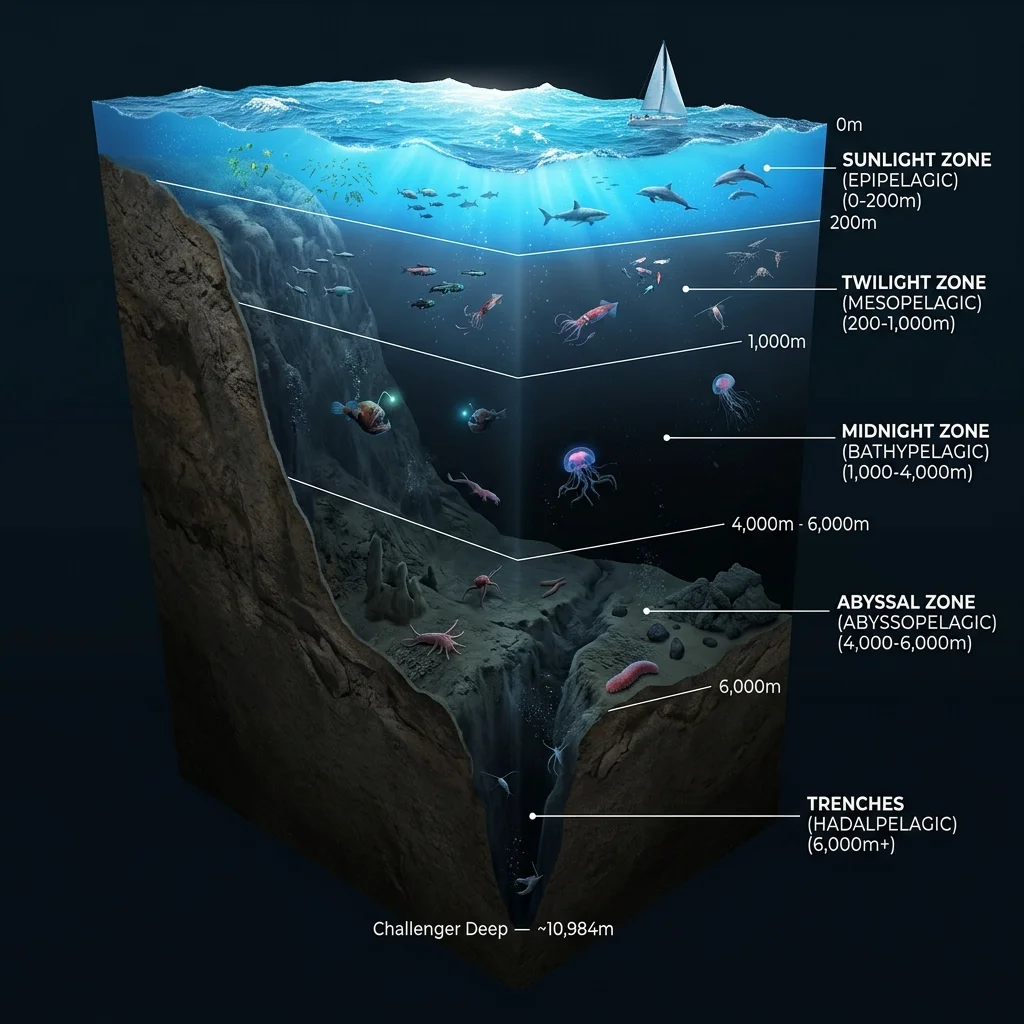
The ocean is not just a pool of water. It is a Layer Cake. As you dive deeper, the world updates. The light disappears, the temperature drops to freezing, and the pressure builds until it can crush a nuclear submarine like a soda can. Each layer is a different planet with different alien rules.
1. The Epipelagic Zone (Sunlight Zone: Surface to 200m)
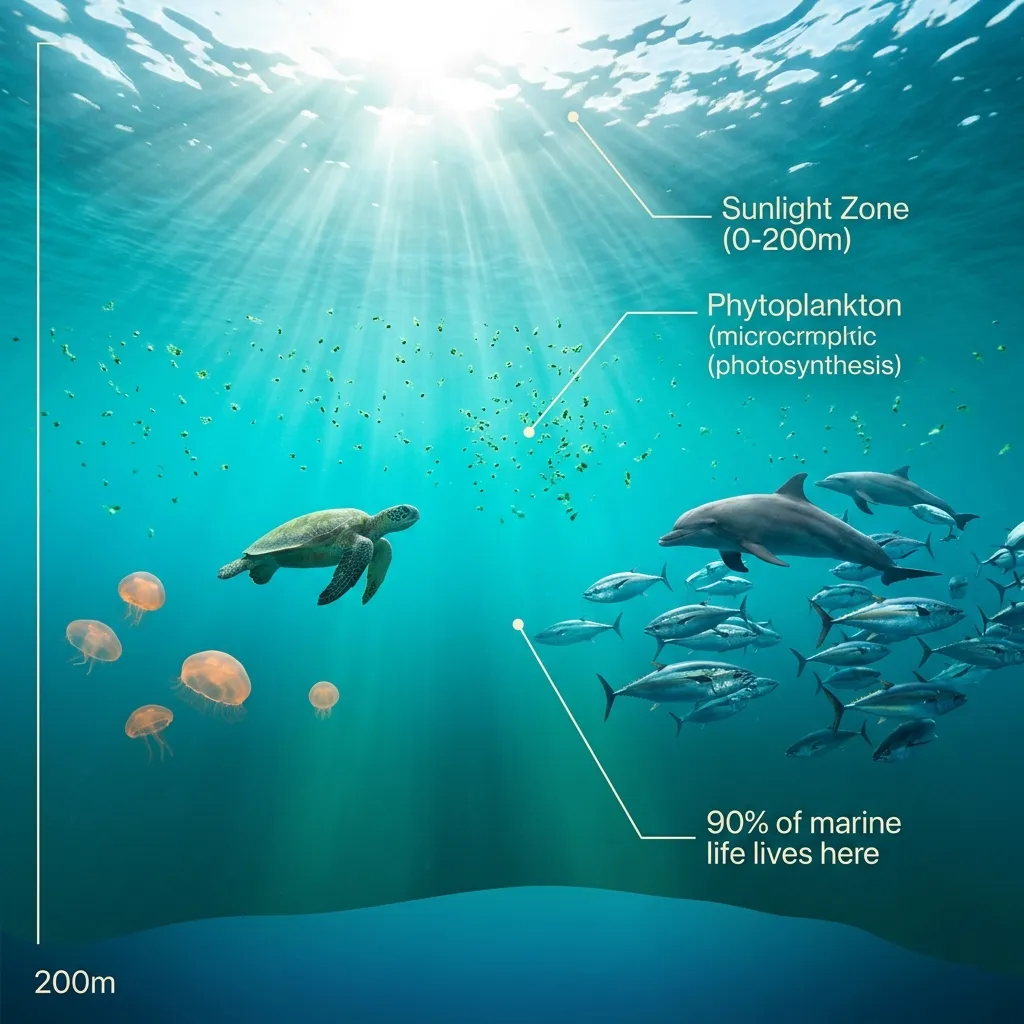
This is the penthouse. This is where you swim. There is enough sun for Photosynthesis, so billions of microscopic plants (Phytoplankton) grow here. Because the plants are here, the food is here. 90% of marine life lives in this thin top skin. Sharks, Tuna, Dolphins, Turtles, and Jellyfish. It is blue, warm, busy, and happy.
2. The Mesopelagic Zone (Twilight Zone: 200m to 1000m)
The sun is gone. Only a faint, ghostly blue glow filters down. It is too dark for plants. The animals here are weird. They have massive eyes (like the Vampire Squid) to catch the tiny scraps of light. Many are transparent to hide from predators. The Great Commute (Diel Vertical Migration): This zone hosts the largest migration on Earth. Every night, billions of strange fish hide in the Twilight Zone during the day, then swim UP to the surface at night to eat the plankton under the cover of darkness. They swim back DOWN at dawn. It is a nightly rush hour of billions of tons of biomass.
3. The Bathypelagic Zone (Midnight Zone: 1000m to 4000m)
Pitch black. Zero sunlight works here. The only light comes from Bioluminescence—monsters making their own light. The Anglerfish dangles a glowing lure to attract prey. Other fish have glowing bellies to blend in with the faint light from above (Counter-illumination). The pressure here is immense. Fish don't have air sacs (Swim Bladders), or they would be crushed. Instead, they are made of squishy jelly that doesn't compress (like the famous Blobfish). They drift like ghosts, waiting weeks for a meal to fall from above.
4. The Abyssopelagic Zone (The Abyss: 4000m to Floor)
"Abyss" comes from the Greek for Bottomless. It covers 60% of the Earth's surface. It is the largest habitat on Earth, yet we know less about it than the surface of Mars. It is a freezing, silent desert of grey mud. Walking here are blind crabs, sea spiders the size of dinner plates, and strange worms. They live in total silence.
Marine Snow
What do they eat? There are no plants. They eat Marine Snow. It is a constant blizzard of white flakes falling from the surface miles above. What is the snow? It is dead stuff. Dead plankton, fish poop, shark scraps, and dust. The deep ocean is the planet's recycling bin. The animals down there are the janitors, eating the trash that falls from the party upstairs.
Science vs. Fiction: The Kraken
Could giant sea monsters exist in the deep? Yes. We know the Giant Squid (size of a school bus) and the Colossal Squid exist. We have only seen them a handful of times alive. But we know they are there because Sperm Whales dive 2,000 meters deep to hunt them. We often find whales coming back to the surface with giant sucker-scars on their faces—battle wounds from a fight in the dark that no human has ever seen.
Deep Sea Gigantism
Things get big down here. It is called Abyssal Gigantism. Crabs grow legs that span 12 feet (Japanese Spider Crab). Isopods (which are usually the size of a pill bug) grow to the size of a cat. Why? We think it is because of the cold and the scarcity of food. Being big makes you more efficient. You can travel further with less energy. Also, the high oxygen levels in cold water might allow bodies to grow beyond normal limits. It is a land of giants.
Fast Facts
- The Challenger Deep: The deepest point is the Mariana Trench (Hadal Zone), 7 miles down. The pressure is 8 tons per square inch. That is like having an African Elephant stand on your thumb.
- Trieste: In 1960, two men (Piccard and Walsh) took a submarine to the bottom. The window cracked halfway down, but they kept going. They stayed for 20 minutes. We didn't go back for 50 years until James Cameron (director of Titanic) built his own sub to go there for fun.
- Red Light: Most deep-sea fish cannot see the color Red. (Red light waves don't travel far in water). So many deep sea predators are bright red. To us, they are colorful. To the ocean, they are invisible. It is a cloak of invisibility.
Diagram Prompts
- Ocean Zones: Vertical strip of the ocean. Top: Sunlight Zone (Blue, Turtle). Middle: Twilight Zone (Dark Blue, Squid). Bottom: Midnight Zone (Black, Anglerfish). Bottommost: Abyss (Grey, Crab). Label altitudes in meters.
- Marine Snow: Dark blue water. White flakes drifting down like snow. A spooky fish with a big mouth catching the flakes. Label: "Eating Dead Stuff."
- Abyssal Gigantism: A normal Pill Bug (size of a coin) next to a Deep Sea Isopod (size of a cat). Label: "The Deep Makes You Big."