
Volcano Eruption: The Earth's Pimple
The Earth's Pimple
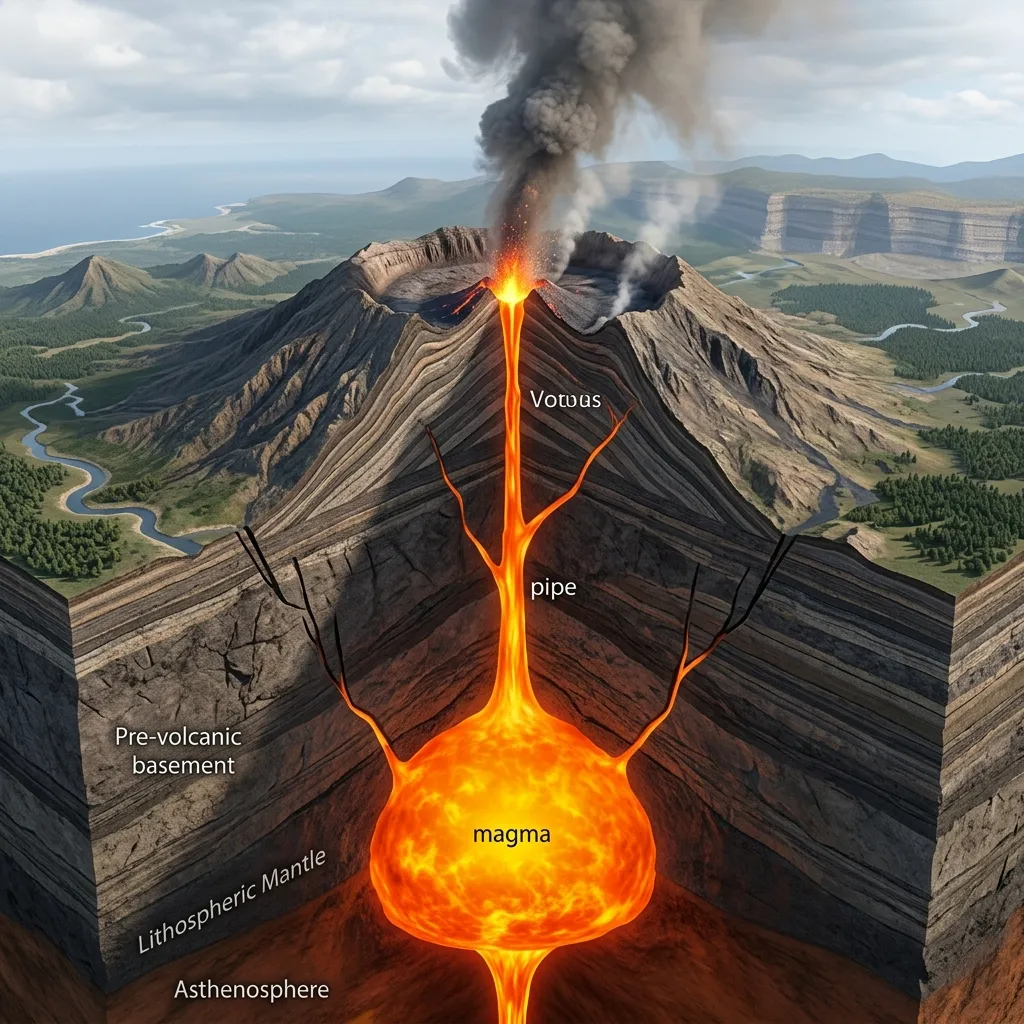
Imagine a bottle of soda. Shake it up. Hard. Now imagine the bottle is made of rock, and the soda is liquid rock at 2,000°F. That is a volcano. A volcano is not a mountain; it is a Vent. It is a chimney that connects the molten interior of the Earth (The Mantle) to the cool surface (The Crust). When the pressure deep underground gets too high—usually because gas bubbles are expanding—the lid blows off. We think of the Earth as solid ground. But we are actually floating on a churning ocean of liquid fire. A volcano is just a reminder of what is beneath our feet.
Magma vs. Lava: What's the Difference?
Geologists are very picky about names. It is the same stuff, but the location matters.
- Magma: Molten rock that is underground. It is full of trapped gas (steam, carbon dioxide, sulfur) under immense pressure.
- Lava: Molten rock that has broken the surface. Once it erupts, the gas escapes (like opening a soda). So, Magma is the "Soda in the bottle." Lava is the "Soda on the floor."
The Honey Factor (Viscosity)
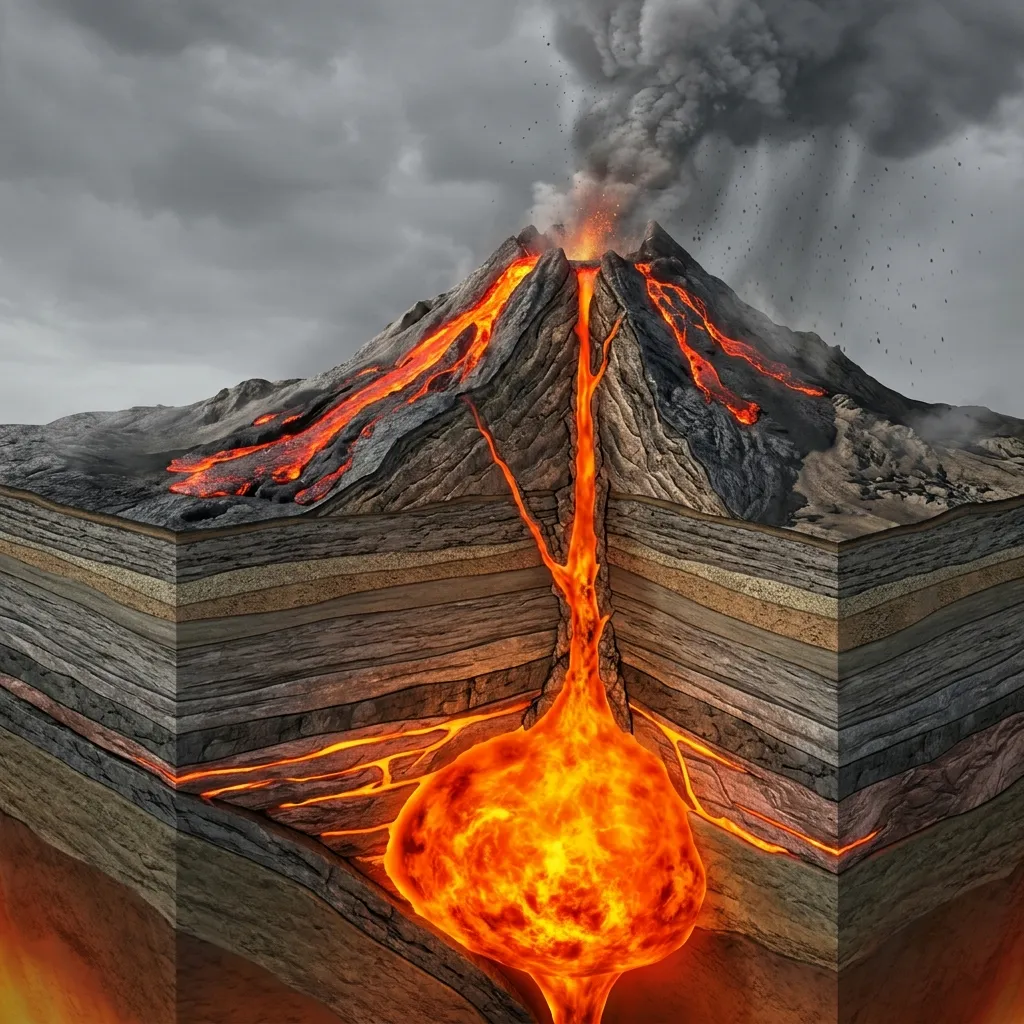
Why do some volcanoes explode (Boom!) and others just ooze (Drip)? It depends on how "sticky" the magma is. This is called Viscosity.
- Runny Magma (Low Viscosity): Like water or maple syrup. If gas bubbles form, they can escape easily. Burp. These volcanoes don't explode. They just dribble lava. (Example: Hawaii. You can walk right up to the lava flow safely).
- Sticky Magma (High Viscosity): Like peanut butter or toothpaste. It is full of Silica (glass). The gas bubbles get trapped. They can't escape. The pressure builds... and builds... and builds... until the entire mountain shatters. (Example: Mount St. Helens. The explosion was 500 times stronger than the Hiroshima atomic bomb).
The Ring of Fire
Where do you find volcanoes? They aren't random. 75% of all volcanoes on Earth are located in a circle around the Pacific Ocean. We call it The Ring of Fire. This is where the massive Tectonic Plates are crashing into each other. Specifically, the Pacific Plate is sliding underneath the Asian and American continents (Subduction). As the plate dives down into the hot Mantle, it melts. This creates a blob of fresh magma that rises up like a lava lamp bubble and punches through the crust to form a volcano.
Pompeii: The Time Capsule
The most famous eruption in history happened in 79 AD. Mount Vesuvius in Italy erupted. But it didn't just spew lava. It spewed a Pyroclastic Flow. This is a terrifying avalanche of superheated gas and ash moving at 450 mph. You cannot outrun it. The city of Pompeii was buried instantly under 20 feet of ash. The ash cooled and hardened like cement. It preserved the city perfectly for 2,000 years. When archaeologists dug it up, they found loaves of bread still in the oven. They found graffiti on the walls. They found people frozen in their final moments—sleeping, hugging, or eating.
The Year Without a Summer
Volcanoes can freeze the world. In 1815, Mount Tambora in Indonesia exploded. It was the largest eruption in recorded history. It blocked the sun so effectively that the following year (1816) was called "The Year Without a Summer." In July, snow fell in New York. Crops failed across Europe and China. Starvation killed 100,000 people. But it also gave us a monster. Mary Shelley was stuck indoors on a rainy vacation during that cold summer. Bored, she wrote a horror story: Frankenstein. The monster was born from a volcano.
Supervolcanoes: The Planet Killers
A normal volcano can destroy a city. A Supervolcano can destroy civilization. Underneath Yellowstone National Park in the USA, there is a magma chamber the size of a city. It is sleeping. If it were to erupt, it wouldn't just make a lava flow. It would eject so much ash into the atmosphere that it would block out the sun for 10 years. It would cause a "Volcanic Winter." Farming would fail globally. Don't worry—geologists say it likely won't erupt for another 100,000 years. But the ground in Yellowstone is slowly rising... breathing.
Fast Facts
- New Land: Volcanoes are destructive, but they are also creators. Hawaii is made entirely of volcano vomit. Every time Kilauea erupts, it adds new land to the island. It is the only place on Earth where the country is getting bigger without war.
- Lightning: During a big eruption, you often see massive lightning bolts shooting out of the ash cloud. This is "Volcanic Lightning." It is caused by the billions of tiny pieces of rock crashing into each other, generating static electricity.
- Olympus Mons: The largest volcano in the solar system isn't on Earth. It is on Mars. Olympus Mons is the size of France and 3 times taller than Mount Everest. It grew so big because Mars has no tectonic plates, so the volcano stayed over the same "hot spot" for billions of years.
Diagram Prompts
- Anatomy: Cross-section of a composite volcano. Pipe: Central Tube. Chamber: Magma Pool. Vent: Crater. Eruption: Ash cloud high in sky. Label: "The Pressure Valve."
- Viscosity: Two volcanoes. Left (Shield): Flat, runny lava (Hawaii). Right (Cone): Steep, exploding ash (St Helens). Label: "Sticky vs. Runny."
- Ring of Fire: Map of the Pacific Ocean. A ring of red dots (Volcanoes) surrounding it. Arrows showing plates crashing. Label: "The Ring of Fire."