
The Garden War
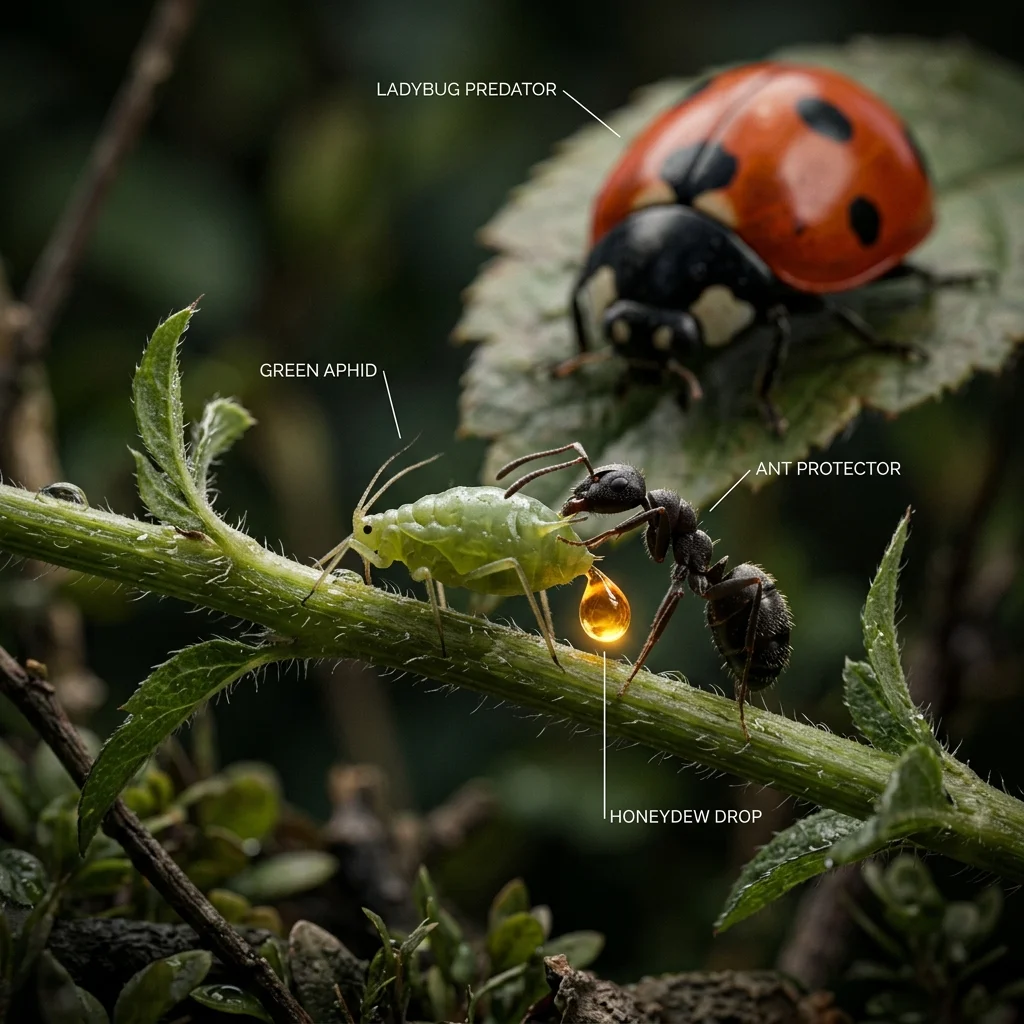 Macro photograph style illustration. A green Aphid is drinking from a plant stem. An Ant is standing behind it, tapping the aphid with its antennae. The Aphid releases a drop of honeydew for the ant. A Ladybug looms in the background like a tank.
If you lie down on the grass and look closely at a rose bush, you will see a war zone. It is a battle for survival happening on a microscopic scale. The villains are the Aphids. They are tiny, soft-bodied green or black specks. To a plant, they are vampires. An aphid has a needle-like mouth called a Stylet. It stabs the stylet directly into the plant's vein (phloem) and drinks the sugary sap. A single aphid is annoying, but aphids never come alone. They come in thousands. They can suck a plant dry until its leaves curl up, turn yellow, and die.
Enter the Tank: The Ladybug
Suddenly, a monster arrives. It is a Ladybug (or Lady Beetle). To us, ladybugs are cute little red bugs. To an aphid, a ladybug is a biologically engineered tank. It has a hard, armored shell (Elytra) that protects its wings. It has powerful chewing jaws (Mandibles). And it has an unending appetite. An adult ladybug can eat 50 aphids a day. Over its lifetime, one single ladybug will destroy 5,000 aphids. This makes them the gardener's best friend. Farmers actually buy bags of live ladybugs and release them into crop fields as "Biological Warfare" instead of using chemical poisons.
The Ant Farmers
But the war isn't fair. The aphids have hired mercenaries. Ants. Ants love sugar. Aphids drink so much sugary sap that they can't digest it all. They poop out the excess sugar as a clear, sweet liquid called Honeydew. Ants are addicted to honeydew. So, ants have become farmers. They treat the aphids like dairy cows. An ant will walk up to an aphid and tap it gently with its antennae (tickling it). The aphid responds by squeezing out a drop of fresh honeydew for the ant to drink. This is called Mutualism (Symbiosis). In return, the ants protect their herd. If a ladybug tries to attack an aphid, the ants will swarm the ladybug, bite its legs, and chase it off the plant. It is a Mafia protection racket: "Give us the sugar, and nobody gets hurt."
The Oldest Profession
Ants didn't just learn this recently. We have found amber fossils from 50 million years ago showing ants carrying aphids. This means ants invented agriculture long before humans did. Humans started farming only 12,000 years ago. Ants have been breeding, herding, and protecting their livestock since the time of the dinosaurs. Some ants even build "barns" (shelters made of dirt) over the aphids to protect them from the rain. Other species clip the wings of the aphids so they can't fly away, forcing them to stay in the herd forever. It is ruthless, industrial farming.
The Clone Army
Why are there so many aphids? Because they have a superpower: Cloning. In the spring and summer, female aphids don't need male aphids to reproduce. They give birth to live babies without mating (Parthenogenesis). Even crazier? The baby aphid is born already pregnant with the next generation inside it. This is called "Telescoping Generations" (like Russian nesting dolls). This allows one single mom to become a great-grandmother in just a few weeks. One aphid can turn into 600 million aphids in a single season if left unchecked. This is why the predators (Ladybugs) have to be such efficient killers—they are fighting an enemy that multiplies faster than mathematics.
The Baby Dragon
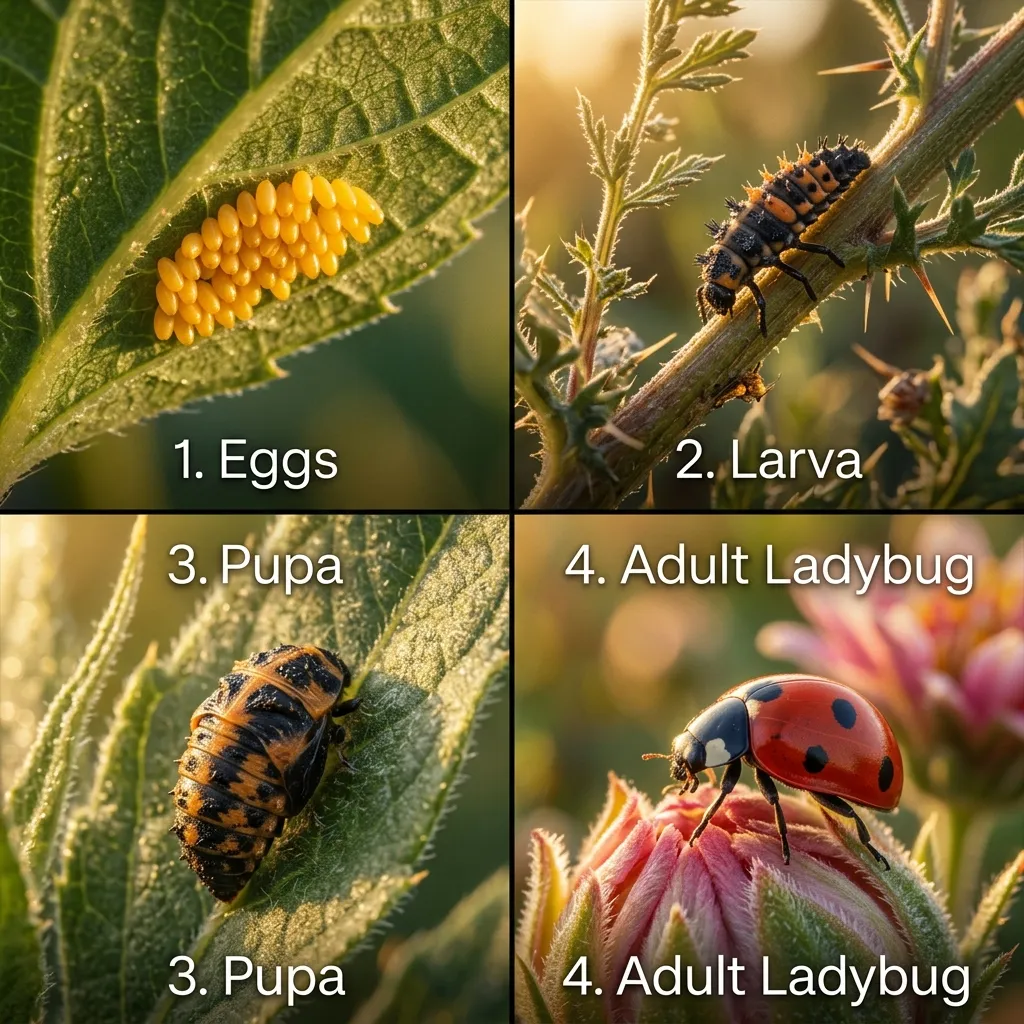
You know what an adult ladybug looks like. But would you recognize a baby ladybug? Most people would kill it, thinking it is a pest. The Ladybug Larva looks nothing like its parent. It looks like a tiny, black-and-orange alligator covered in spikes. It doesn't fly. It crawls along the leaves. And it is even hungrier than the adult. A baby ladybug is a relentless eating machine that does nothing but gorge on aphids for 2 weeks straight so it can grow big enough to turn into a pupa (cocoon) and metamorphose into the cute red beetle we all know.
Fast Facts
- Warning Colors: Why are ladybugs red? In nature, red means "STOP." It warns birds that the beetle tastes terrible. If a bird pecks it, the ladybug "reflex bleeds"—it squirts a foul-smelling yellow liquid from its knees that tastes bitter.
- Zombie Aphids: A tiny horror movie villain called the Parasitoid Wasp lays its egg inside a living aphid. The baby wasp eats the aphid from the inside out. Finally, the aphid dies and turns into a hard "Mummy," and the adult wasp bursts out of its back (just like the movie Alien).
- Hibernation: In winter, ladybugs gather in massive groups—sometimes millions of them—huddled together under logs or inside attics to share body heat. It is a massive ladybug cuddle puddle!