
Not All Bees Have a Hive
When we imagine a bee, most of us picture a golden-yellow honeybee living in a crowded, buzzing hive alongside 50,000 sisters, gathering nectar to make honey. However, this popular image only represents a tiny fraction of the bee population.
In reality, 90% of all bee species on Earth are solitary bees. They have no queen. They make no honey. Many of them do not even have a stinger.
A solitary bee, such as a Mason Bee or a Leafcutter Bee, lives completely alone. A single female does all the work of an entire hive by herself. She finds the pollen, builds her own nest, and carefully lays and protects her eggs without any help.
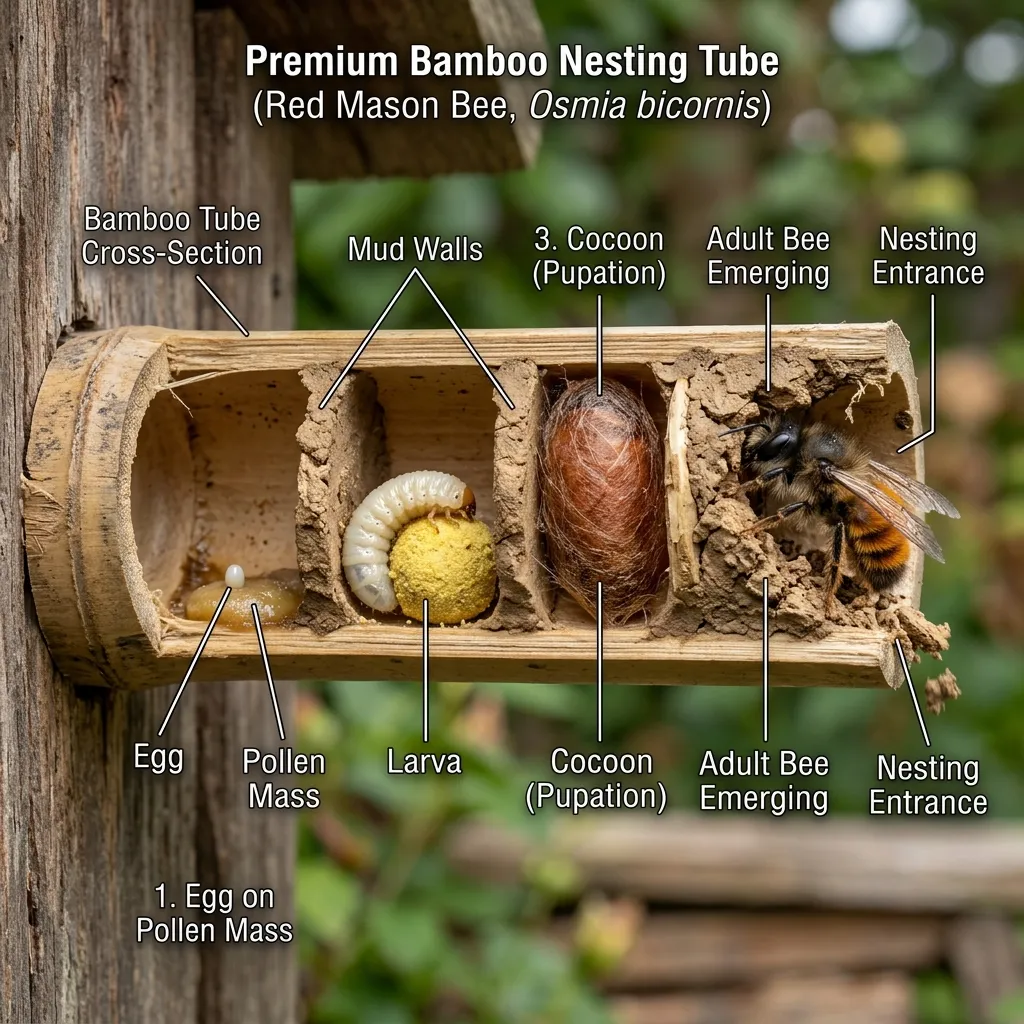 Lifecycle of a Mason Bee inside a bamboo tube
The Housing Crisis
In nature, solitary bees are true opportunists. They constantly search for tiny, dark holes that they can use as safe nurseries. They love nesting in hollow plant stems, abandoned beetle tunnels carved into dead trees, or small cracks inside old stone walls.
However, humans tend to keep their neighborhoods very neat. We chop down dead trees, pull up hollow reeds, and pave over natural dirt banks. Because we clear away these messy, natural habitats, wild solitary bees are currently facing a severe housing crisis. They are losing the places they need to raise the next generation.
This is exactly why building a Bee Hotel is so important. A bee hotel is simply a collection of artificial tunnels, often made from bundles of bamboo canes or blocks of drilled wood. By hanging one in a garden, you recreate the natural homes these vital insects have lost.
Step Inside the Hotel Room
The way a solitary bee constructs her nursery inside one of these tubes is a fascinating display of natural engineering:
- Check-in: A female bee finds an empty tube and thoroughly inspects it to make sure it is safe and clean.
- The Bedroom: She flies all the way to the back of the dark tube and lays a single, tiny egg.
- The Lunchbox: She packs a sticky ball of rich pollen and nectar right next to the egg. This will serve as the baby's only food supply when it hatches.
- The Wall: To protect her baby, she carefully seals the room off.
- Mason Bees gather wet mud to build tiny, hard brick walls.
- Leafcutter Bees use their jaws like scissors to cut perfect circles out of green leaves to create a green, wallpapered room.
- Repeat: She then backs up and builds another room directly in front of the first one, then another. A single six-inch piece of bamboo might contain a row of up to eight separate bedrooms.
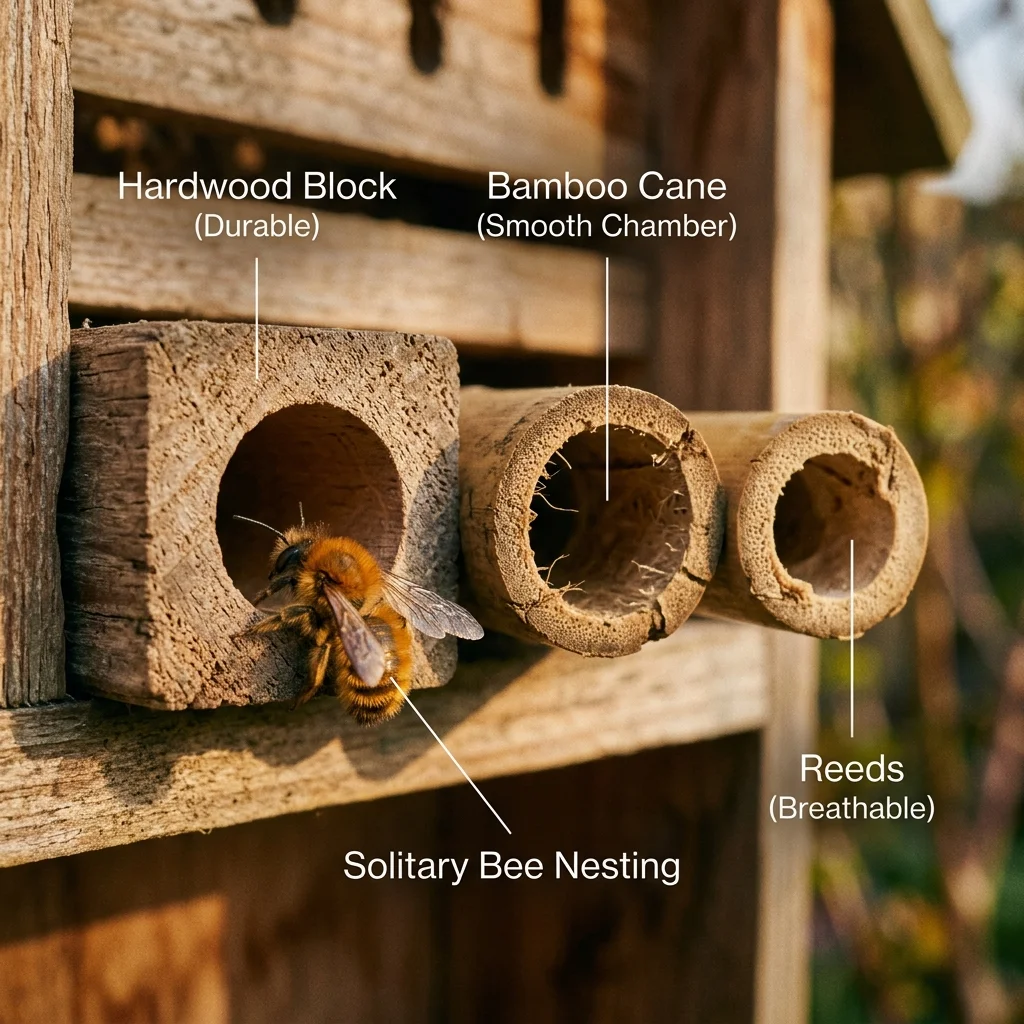 Comparison of Solitary Bee Nest Materials
The Long Winter Sleep
By the end of the summer, the mother bee's incredibly hard work is done. But her babies remain safely sealed inside the hotel.
During the freezing winter, the egg safely hatches into a larva, eventually eating the packed pollen lunchbox. It then spins a waterproof cocoon and enters a deep, protective sleep. The thick wood of the bee hotel shields them from ice and hungry birds.
When the bright spring sunshine finally warms the wood, the young bees wake up. They chew straight through the mud or leaf walls built by their mother and emerge into the world as fully grown adults, immediately ready to help pollinate your garden.
Super-Pollinators
Why go to the trouble of building a bee hotel? Because solitary bees are some of the hardest working creatures on the planet.
A normal honeybee is very neat. She moistens the pollen she collects and packs it tightly into special "pollen baskets" on her legs. She tries her hardest not to drop a single grain.
A Mason Bee, however, is beautifully messy. She carries dry pollen loosely on stiff hairs under her belly. As she flops onto a flower, she spills this dry pollen everywhere, spreading it rapidly from plant to plant. Because of this clumsy, natural dusting, she accidentally pollinates up to 100 times more flowers than a neat honeybee. If you want more blooming flowers or fruit on your trees, supporting solitary bees is the key.
Fast Facts
- Gentle Giants: Solitary bees are incredibly gentle. Male bees do not even possess stingers. Females have a stinger, but because they have no communal hive or honey to defend, they will rarely ever sting unless physically trapped or crushed.
- Heavy Duty Digging: Carpenter Bees are the giants of the solitary bee world. They possess jaws strong enough to drill perfectly round holes directly into solid timber blocks or wooden decks.
- The Sneaky Cuckoo: Just like the famous bird, there are "Cuckoo Bees". They refuse to build their own nests. Instead, they wait for a Mason Bee to leave her hotel room, quickly sneak inside, and lay their own egg on the hard-earned pollen ball.