
The Lion's Tooth
Adults hate them. They call them weeds. They poison them. They dig them up. Kids love them. They make wishes, flower crowns, and whistles. The Dandelion (from the French Dent de Lion = "The Tooth of the Lion") is actually a botanical super-soldier. It can grow in a crack of concrete. It can survive a drought. It can travel for miles. It is a master of survival engineering.
The Impossible Parachute
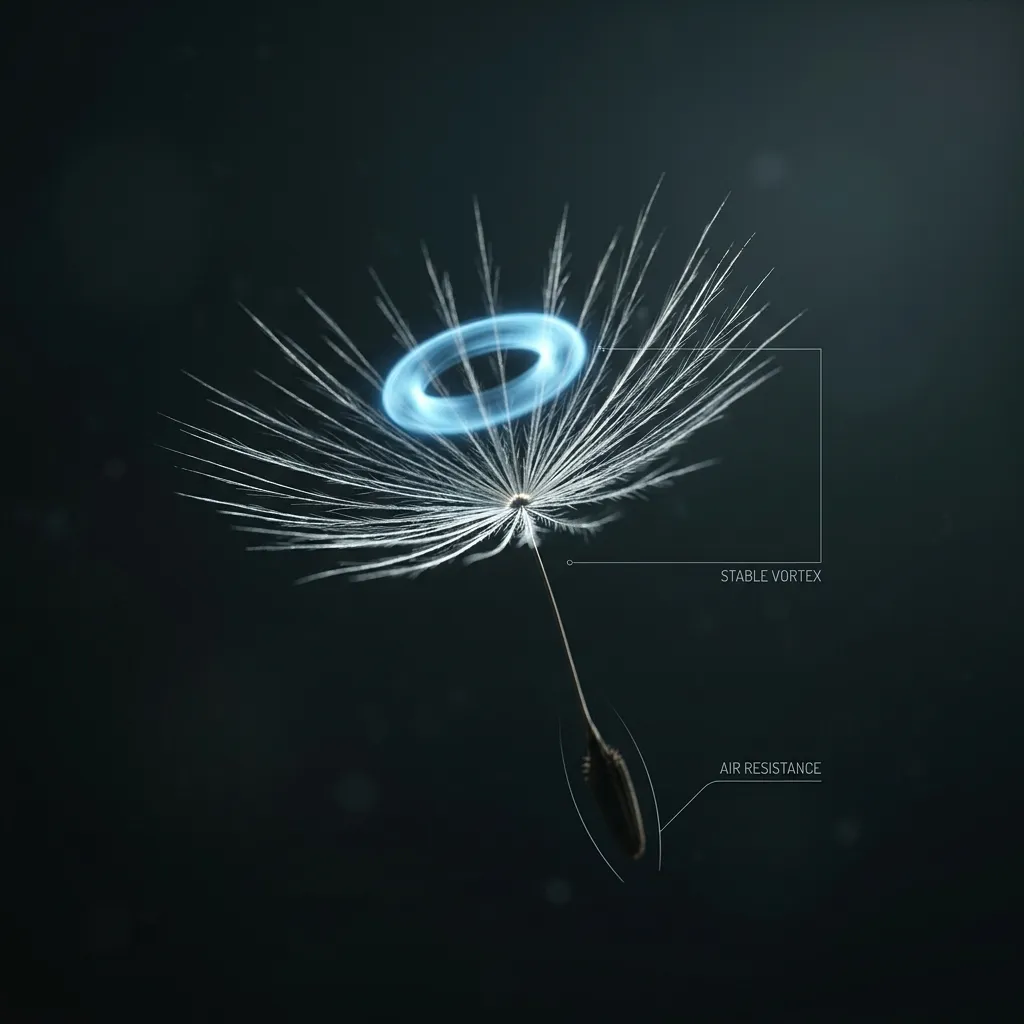
When the yellow flower dies, it turns into a white puffball (Clock). Each seed is attached to a tiny parachute called a Pappus. For years, scientists thought it just worked like a normal parachute (drag). They were wrong. A dandelion seed is 4x more efficient than a human parachute. In 2018, physicists put them in a wind tunnel and discovered a new form of flight. The bristles of the parachute are spaced perfectly apart. When air flows through them, it creates a separated bubble of spinning air right above the seed. This is called a Separated Vortex Ring. This vortex acts like a low-pressure vacuum cleaner that sucks the seed upward. It is so stable that a dandelion seed can travel 100 kilometers on a windy day, crossing oceans to conquer new lands.
Attack of the Clones
Most flowers need a partner. They need a bee to bring pollen from another flower to make seeds (Sexual Reproduction). Not the Dandelion. It has evolved a superpower called Apomixis. It can make seeds all by itself, without any pollen. This means that every single seed is an exact genetic Clone of the mother using Asexual reproduction. This is why dandelions take over a lawn so fast. They don't need to wait for a date. They just copy-paste themselves a thousand times.
The Soil Fixer
Gardeners should love them. Dandelions are nature's drillers. They have a massive Taproot that can punch 3 feet deep into hard, compacted clay. This breaks up the soil, allowing air and water to get down for other plants. Even better, the deep root mines calcium and other minerals from deep underground and pulls them up to the leaves. When the dandelion dies and rots, it deposits those minerals on the surface, essentially fertilizing the grass around it. It is a free aeration and fertilizer service.
Hydraulic Engineering
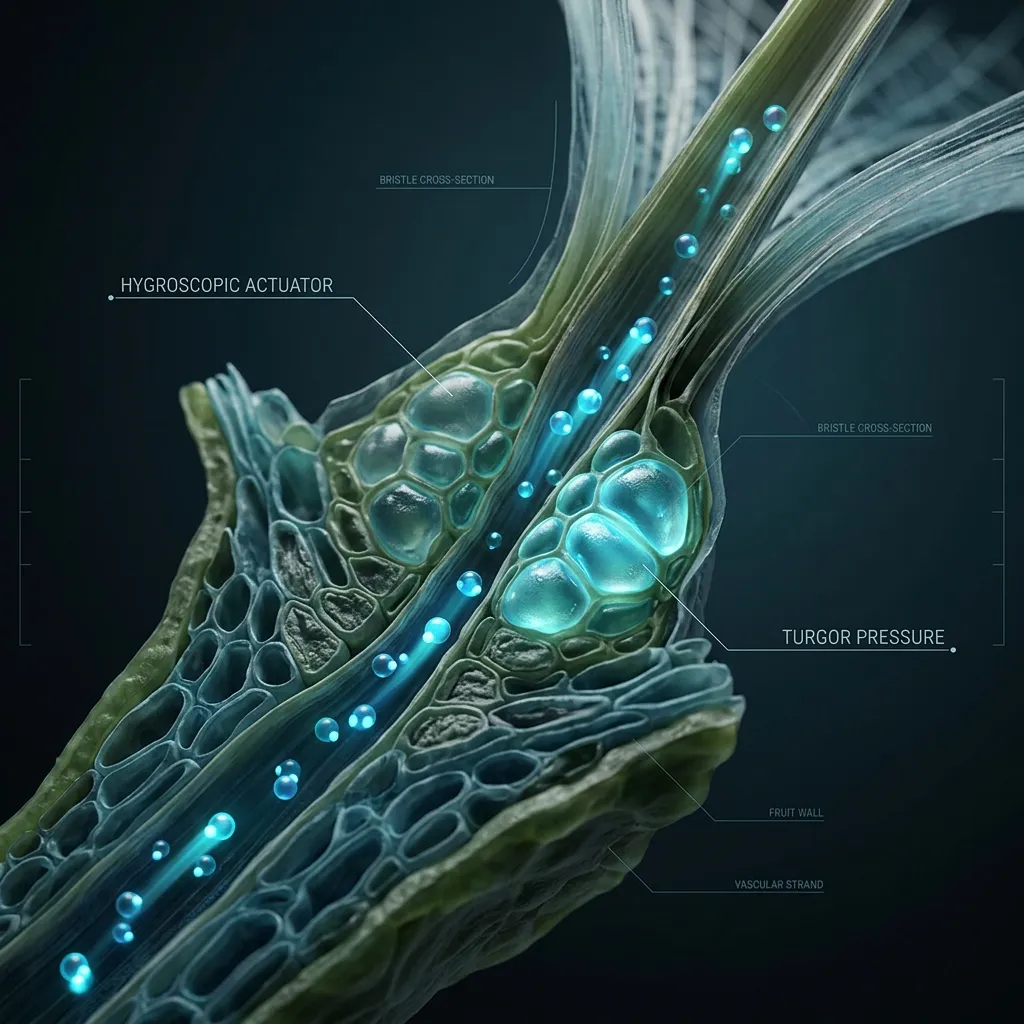
Have you ever tried to break a dandelion stem? It is hollow. It feels like a straw. So how does it hold up a heavy flower head in a strong wind? Turgor Pressure. The stem is a hydraulic tube. It is filled with water pressure. It works exactly like a garden hose. When the hose is empty, it is floppy. When you turn on the water, it becomes rigid and strong. The dandelion pumps water into its stem cells until they are pressurized like balloons. This allows the plant to stand tall and flexible using almost no wood or heavy fibers. It is cheap, fast engineering. If you cut the stem, the pressure drops, and white latex bleeds out to seal the wound instantly.
You Can Eat It
Every single part of the dandelion is edible.
- Leaves: Used in fancy salads (it tastes bitter, like arugula). It is higher in Vitamin A and C than spinach.
- Flowers: Can be fried in batter (fritters) or fermented to make Dandelion Wine.
- Roots: Roasted and ground to make a caffeine-free coffee substitute (it tastes like chicory). In fact, humans brought dandelions to America on purpose! The Pilgrims packed them as a food crop. It wasn't until the invention of the "Perfect Green Lawn" in the 1950s that we decided they were enemies.
Fast Facts
- Rubber Tires: Snap a dandelion stem. White milk comes out. That is Latex. During World War II, the Japanese cut off the rubber supply. The US government planted emergency fields of dandelions to harvest the milk to make tires for Jeeps and planes. Today, scientists are breeding "Super Dandelions" to replace rubber trees.
- The Clock: The "Clock" (puffball) is weather-sensitive. The seeds know when it is wet. If it rains, the parachute closes up like an umbrella to protect the seed. When the sun comes out and the air is dry (perfect flying weather), it opens back up.
- First Meal: Because they bloom so early in Spring (before other flowers), dandelions are often the only food source for hungry bees waking up from winter hibernation. Killing dandelions kills bees.