
The Bashful Botanist
When we think of plants, we typically think of slow, almost imperceptible growth—a vine creeping up a wall over months, or a sunflower taking all day to turn its face toward the light. Plants don't jump, and they certainly don't run away. But the Mimosa Pudica completely shatters that expectation.
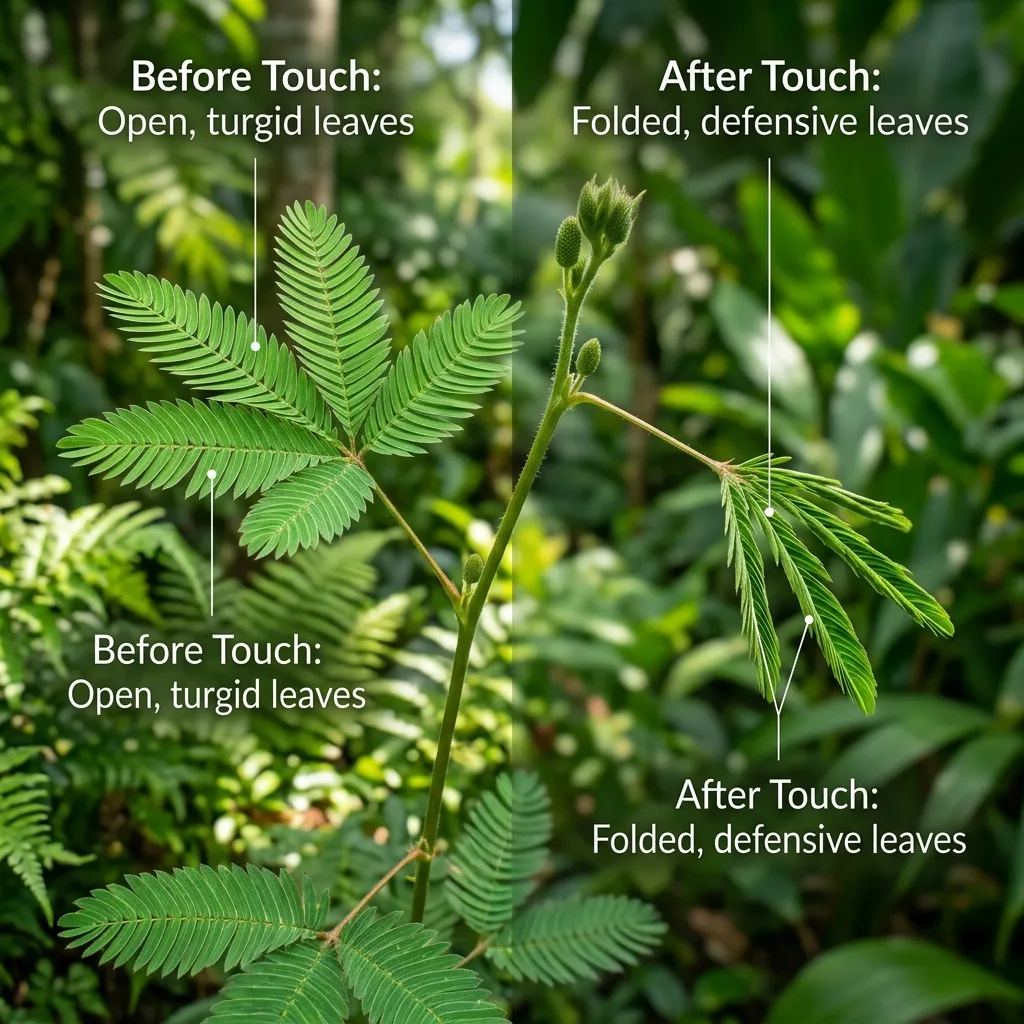
At first glance, this creeping herb looks just like an ordinary, delicate fern. However, if you gently run your finger across its soft, feathery leaflets—or even blow on it too hard—the plant reacts instantaneously. In less than a second, the tiny leaflets fold dramatically inward upon themselves, and the entire stem droops heavily toward the ground, making the plant look as though it has completely died and withered away. Because of this incredibly fast, defensive reaction, its Latin name translates to "bashful" or "shrinking," and it is widely known as the Touch-Me-Not or the Shy Plant.
Mastering Hydraulic Engineering
The Mimosa Pudica doesn't have muscles or a nervous system, so how does it move so fast? It uses highly advanced biological hydraulic engineering, driven entirely by rapid changes in water pressure (known as turgor pressure).
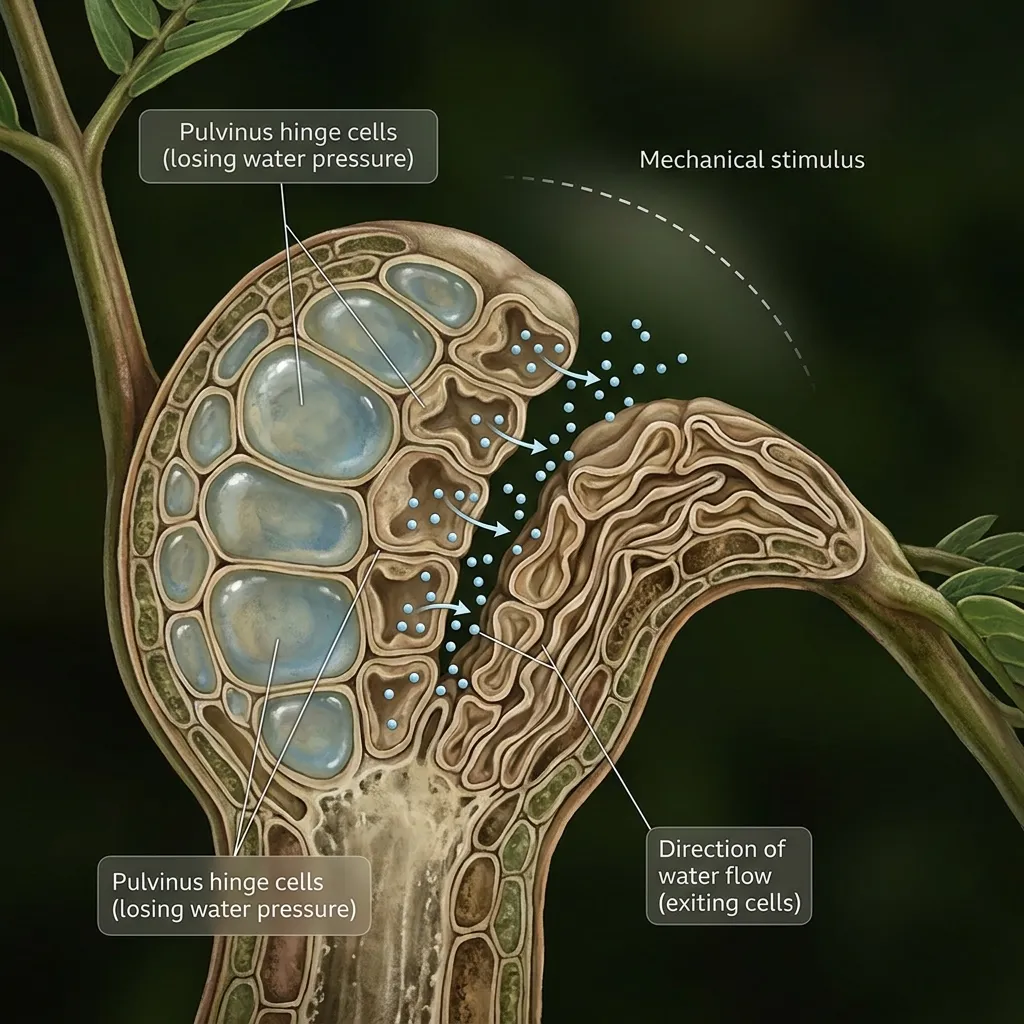
At the base of each individual leaflet, and at the base of the main stem, sits a tiny, specialized swelling called a pulvinus. When the delicate hairs on the leaves sense physical touch (mechanical stimulation), the plant instantly fires an electrical signal. This signal commands the cells in the pulvinus to rapidly pump out potassium ions. Water naturally follows these ions, draining completely out of the cells in a fraction of a second. Imagine letting all the air out of a balloon at once; the cells instantly deflate and collapse, causing the leaf to snap shut and the stem to droop limply.
The Art of Defense
Why expend so much precious energy doing this? Botanists believe this rapid movement is a brilliant, multi-layered defense mechanism:
- Startle and Shake: The sudden, aggressive movement scares off insects that try to land on the leaves to lay eggs or chew holes.
- Playing Possum: By tightly folding up its lush green leaves, the plant dramatically reduces its surface area. It exposes its sharp, thorny stems and successfully disguises itself as a shriveled, dead, and highly unappetizing twig, convincing grazing herbivores like deer or cows to look elsewhere for a meal.
After the danger has passed, usually within 10 to 20 minutes, the plant slowly pumps the water back into the pulvinus, reopening its leaves and readying itself to play dead all over again.