The Giant Stinker
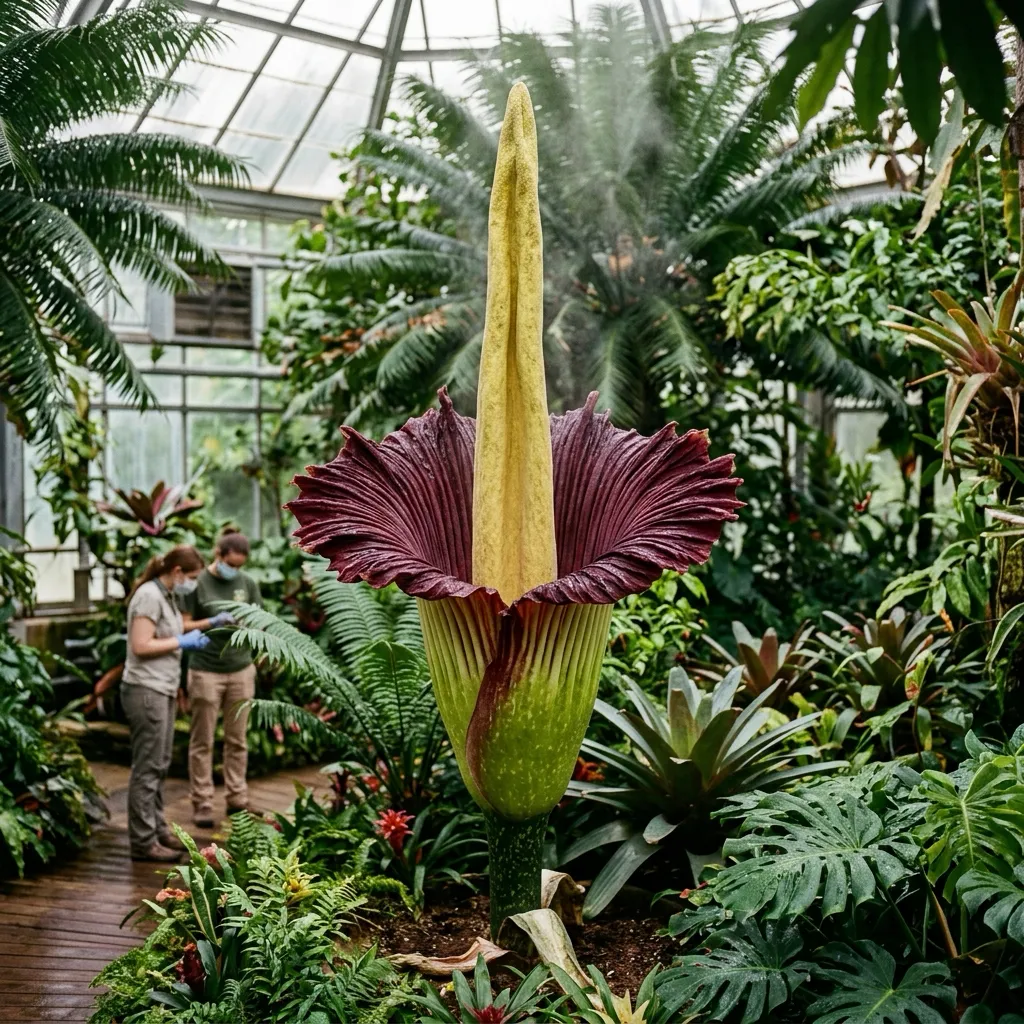
Deep in the rainforests of Sumatra, Indonesia, grows a botanical marvel that looks like it belongs on an alien planet. The Titan Arum (Amorphophallus titanum), commonly known as the Corpse Flower, is not your average daisy. It is a genuine giant, producing an unbranched inflorescence (a cluster of flowers arranged on a single stem) that can tower over humans, reaching heights of more than 3 meters (10 feet).
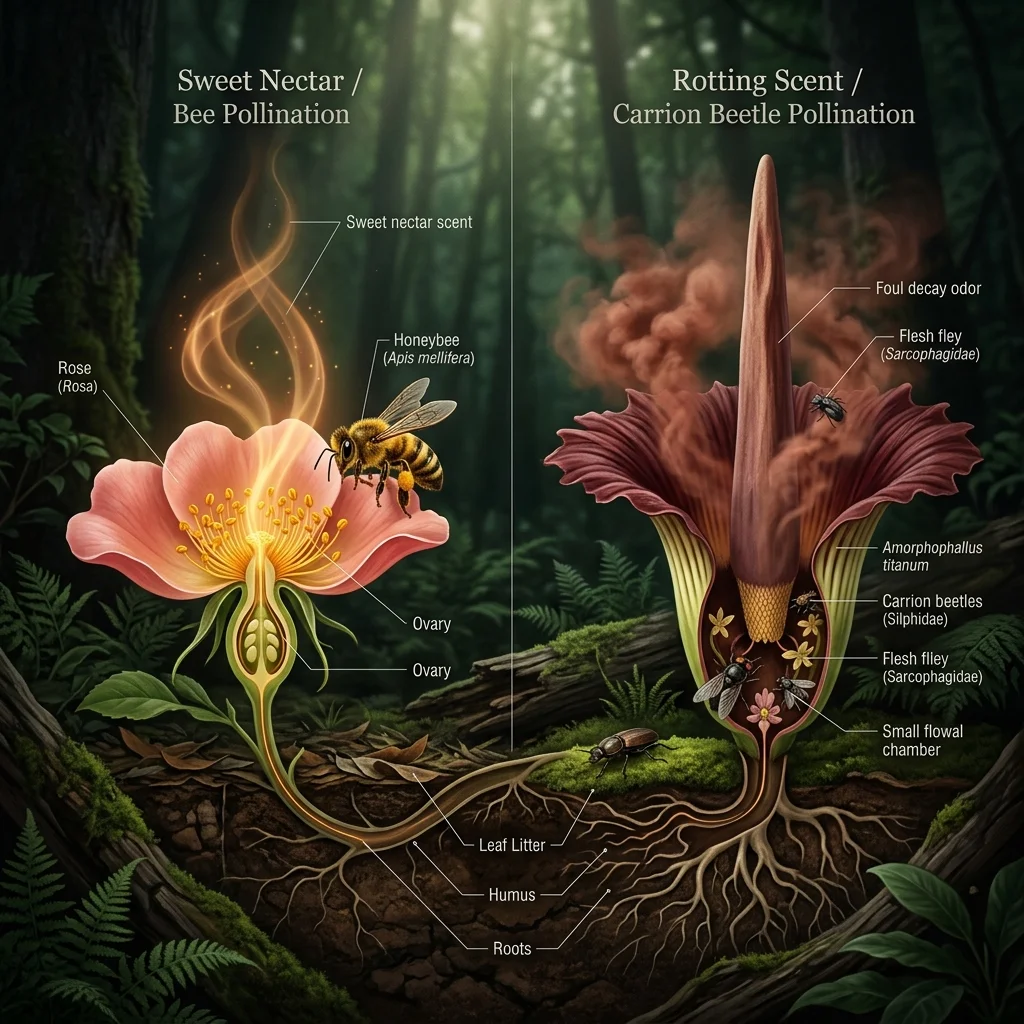
What makes this plant truly legendary, however, is its scent. While a rose might offer notes of sweet perfume and a peony brings a fresh floral aroma, the Corpse Flower lives up to its gruesome name. When it blooms, it unleashes a powerful, stomach-churning stench that has been compared to a potent mix of rotting fish, old cheese, sweaty socks, and a dead carcass left in the hot sun.
A Whiff of Deception
Why would a flower choose to smell so awful? The answer lies in its brilliant strategy for survival. Traditional sweet-smelling flowers are trying to attract bees and butterflies, but the Corpse Flower targets a very different crowd: carrion beetles and flesh flies.
These insects spend their lives searching for dead meat to use as a breeding ground for their larvae. The Corpse Flower pulls off an incredible trick to lure them in. Not only does it produce the chemical compounds found in rotting flesh, but it also physically heats up! During its peak bloom, the central spike (called the spadix) can reach human body temperature—around 98°F (36.7°C). This heat helps vaporize the smelly perfumes, sending them wafting far and wide through the dense jungle canopy.
Tricked by the smell and the heat, the beetles and flies rush to the flower, expecting to find a dead animal. As they crawl frantically around the plant's base looking for a spot to lay their eggs, they become completely coated in sticky pollen. When they finally realize they've been duped and fly away in search of an actual meal, they unwittingly carry the pollen to the next blooming Corpse Flower they find.
A Fleeting Spectacle
To conserve energy, the Titan Arum spends most of its life essentially hiding underground as a massive tuber. It blooms incredibly rarely—sometimes only once every 7 to 10 years! When it finally does put on its grand, stinky show, the bloom only lasts for a brief 24 to 48 hours before collapsing. Catching it in action is one of the rarest, most foul-smelling events in nature.