
Space SuitsDRAFT
Step inside a personal spacecraft designed for one. Discover how space suits protect astronauts from the deadly vacuum, extreme temperatures, and dangerous radiation of the final frontier.
Space Suits: A One-Person Spaceship
A One-Person Spaceship
A space suit is not clothes. It is a Wearable Spaceship. Space is trying to kill you in three ways:
- Vacuum: The lack of air would make your blood boil.
- Temperature: In the sun, it's 250°F. In the shade, it's -250°F.
- Micrometeoroids: Tiny space dust hits you at 17,000 mph. The suit (EMU - Extravehicular Mobility Unit) stops all of this.
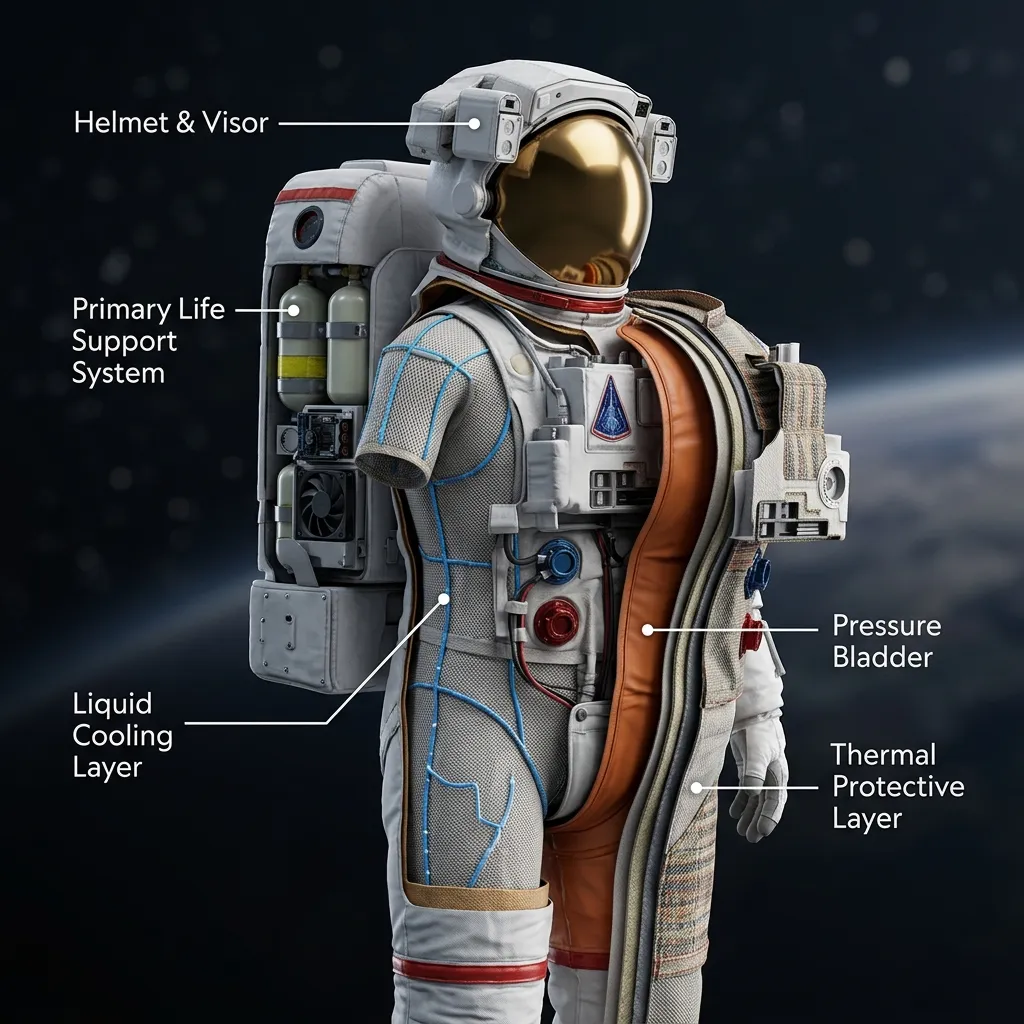
The Layers of Survival
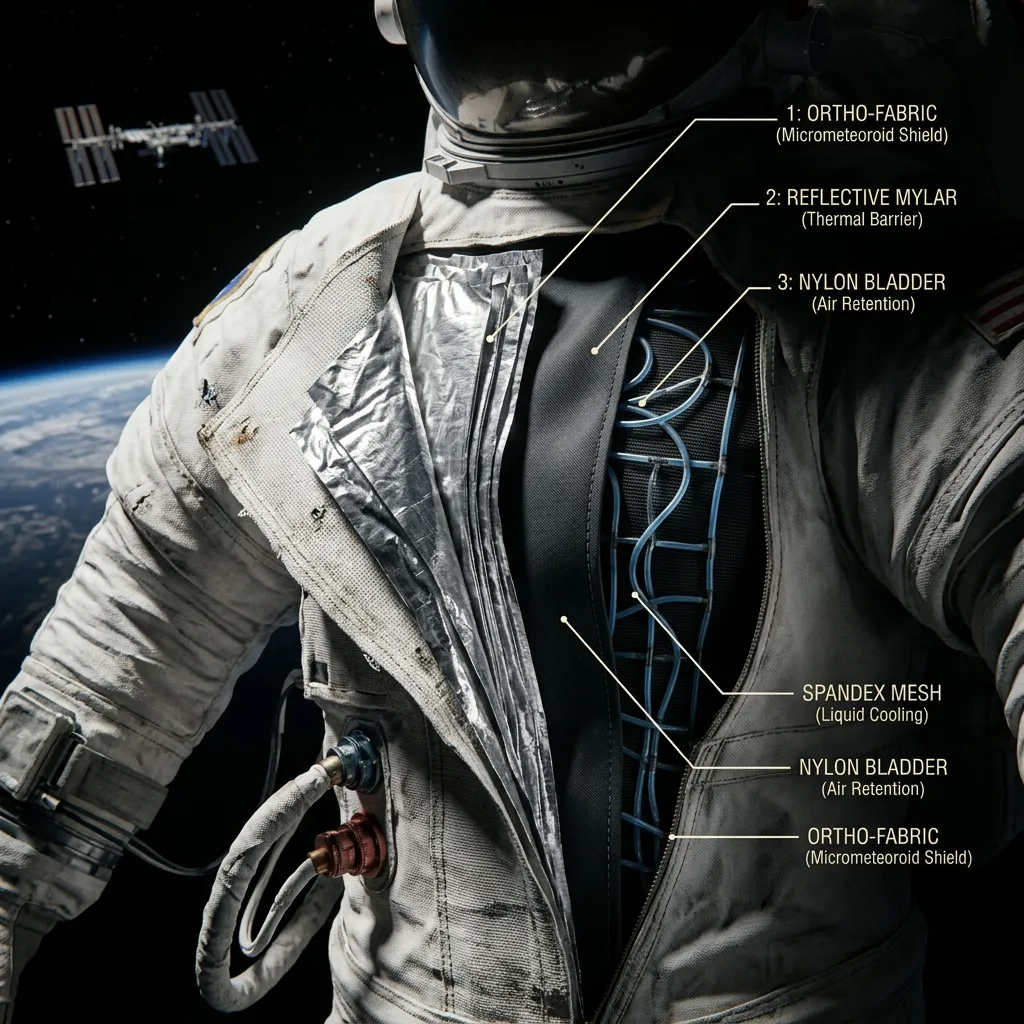
The suit has 14 layers of high-tech fabric.
- The Inner Layer (Cooling): Astronauts wear "Long Johns" woven with 300 feet of plastic tubing. Cold water pumps through these tubes to keep them from overheating.
- The Bladder (Pressure): A rubber balloon layer that squeezes your body to simulate Earth's air pressure.
- The Armor (Protection): Layers of Kevlar (used in bulletproof vests) stop tiny space rocks.
- The Outer Skin: White fabric to reflect the blinding solar radiation.
Scratching Your Nose
Once the helmet is locked, you cannot touch your face. If your nose itches, you will go crazy. NASA solved this with a low-tech fix: Velcro. There is a patch of rough Velcro stuck to the inside of the helmet. If an astronaut has an itch, they rub their nose against the Velcro pad. (They also use it to block a sneeze if they are fast enough).
The Real Enemy (Moon Dust)
We used to worry about aliens. The real enemy is dirt. Moon dust (Regolith) is not like Earth sand. Earth sand has been tumbled by wind and water for millions of years. It is round and smooth. The Moon has no wind or water. So the dust grains are microscopic shards of jagged glass. They are razor sharp. During the Apollo missions, the dust chewed through the Kevlar boots of the astronauts. It clogged the zippers and scratched the helmet visors. If they had stayed a few days longer, their suits would have failed completely. Future Mars suits need new armor to survive the glass sandstorms.
Fast Facts
- The Cost: A single NASA space suit costs about $12 million. It is a custom-built machine, not a fashion item.
- Fingernails: The gloves are pressurized and stiff. Fighting against the pressure to close your hand causes "Fingernail Delamination"—your fingernails can fall off after a long spacewalk.
- Diapers: Yes, they wear diapers (MAG - Maximum Absorbency Garment). A spacewalk can last 8 hours. There are no bathrooms in space.
Diagram Prompts
- Suit Layers: Detailed exploded view of an Astronaut's Suit arm. Layer 1 (Skin): Cooling underwear with water tubes. Layer 2: Rubber bladder (Air pressure). Layer 3: Kevlar/Mylar (Bulletproof vest). Layer 4 (Outer): White "Orthofabric" to reflect sun. Label: "The Wearable Earth."
- Cooling System: Outline of an astronaut body. Blue veins showing the water tubes running all over the skin. Red arrows showing heat leaving the body into the Backpack (PLSS). Label: "Liquid Cooling."
- Pressure: A diagram showing a balloon in a vacuum chamber. Without Suit: Balloon expands and pops. With Suit: Balloon held tight by outer fabric. Label: "Holding It Together."