
Northern Lights
The Big Idea
Witness the spectacular neon light show of the polar skies. Discover how solar winds collide with the Earth's magnetic field to create the dancing, colorful curtains of light known as the Aurora Borealis and Aurora Australis.
Key Vocabulary & Concepts
Hands-On Observation Checklist
Teacher & Parent Discussion Starters
- Why is understanding northern lights important in everyday real life?
- What variable or factor had the biggest impact when testing the simulation?
- How does this concept connect to another science topic you have learned about?
The Neon Sky
You look up at the night sky in the freezing wilderness of Alaska. The stars are perfectly still. But suddenly, massive green curtains of ghostly light begin dancing across the darkness. They fold and shimmer like silk blowing in a silent wind.
Is it magic? No. It is violence.
The Aurora Borealis (the Northern Lights) is what happens when the Earth gets spit on by the Sun. It is nature's own breathtaking neon light show, fueled entirely by a continuous nuclear explosion 93 million miles away. Despite how calm and peaceful it looks from the ground, an Aurora is actually a raging electrical storm taking place in the upper atmosphere.
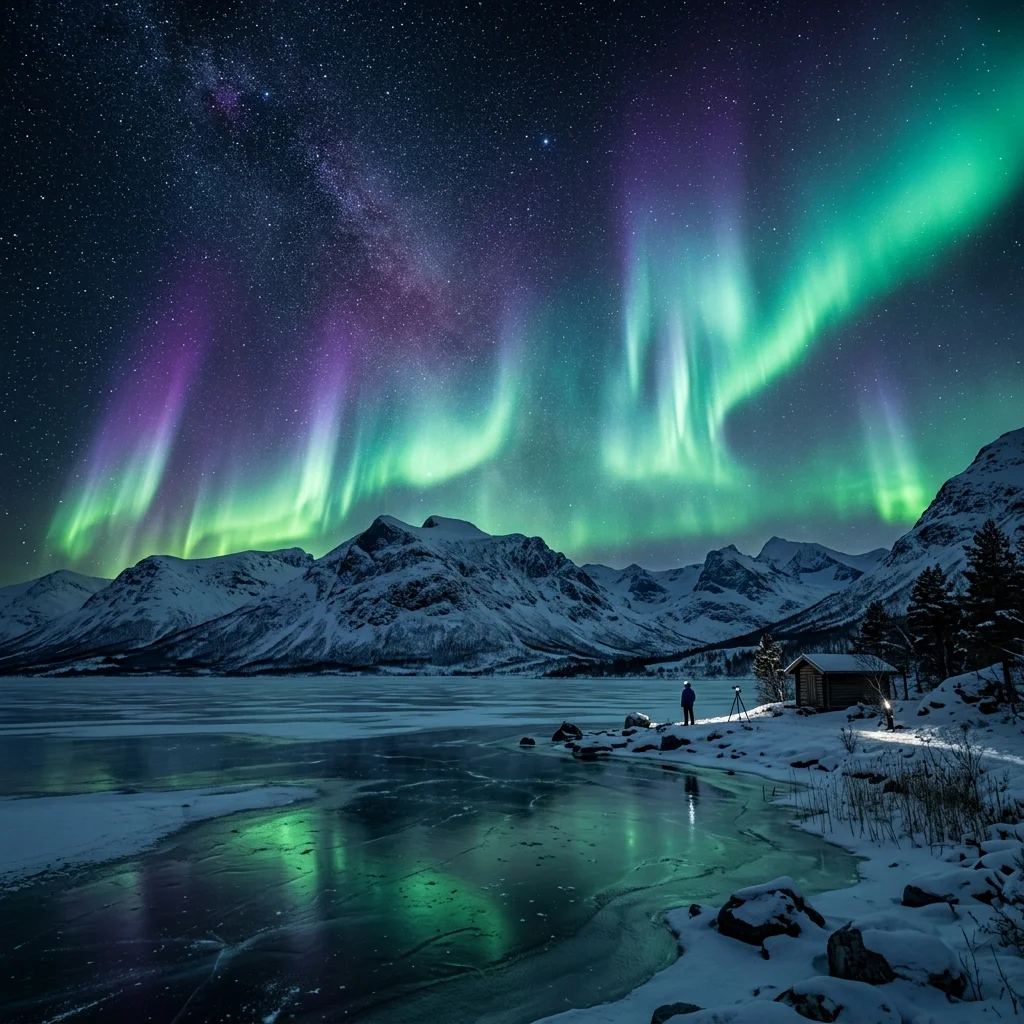 A breathtaking, cinematic BBC Earth style photograph of the Aurora Borealis dancing over a dark arctic landscape
The Attacker: The Solar Wind
The Sun is not just a bright, glowing ball. It is a terrifying nuclear bomb that never stops exploding. Because of this violence, it constantly shoots out a stream of highly charged, radioactive plasma called the Solar Wind.
This wind screams through the vacuum of space at over 1 million miles per hour. It is deadly. If this radioactive wind were to hit Earth directly, it would slowly strip away our fragile atmosphere (just like it did to Mars billions of years ago) and sterilize the surface of our planet. Life as we know it would be impossible. But thankfully, we have a shield.
The Shield: The Magnetosphere
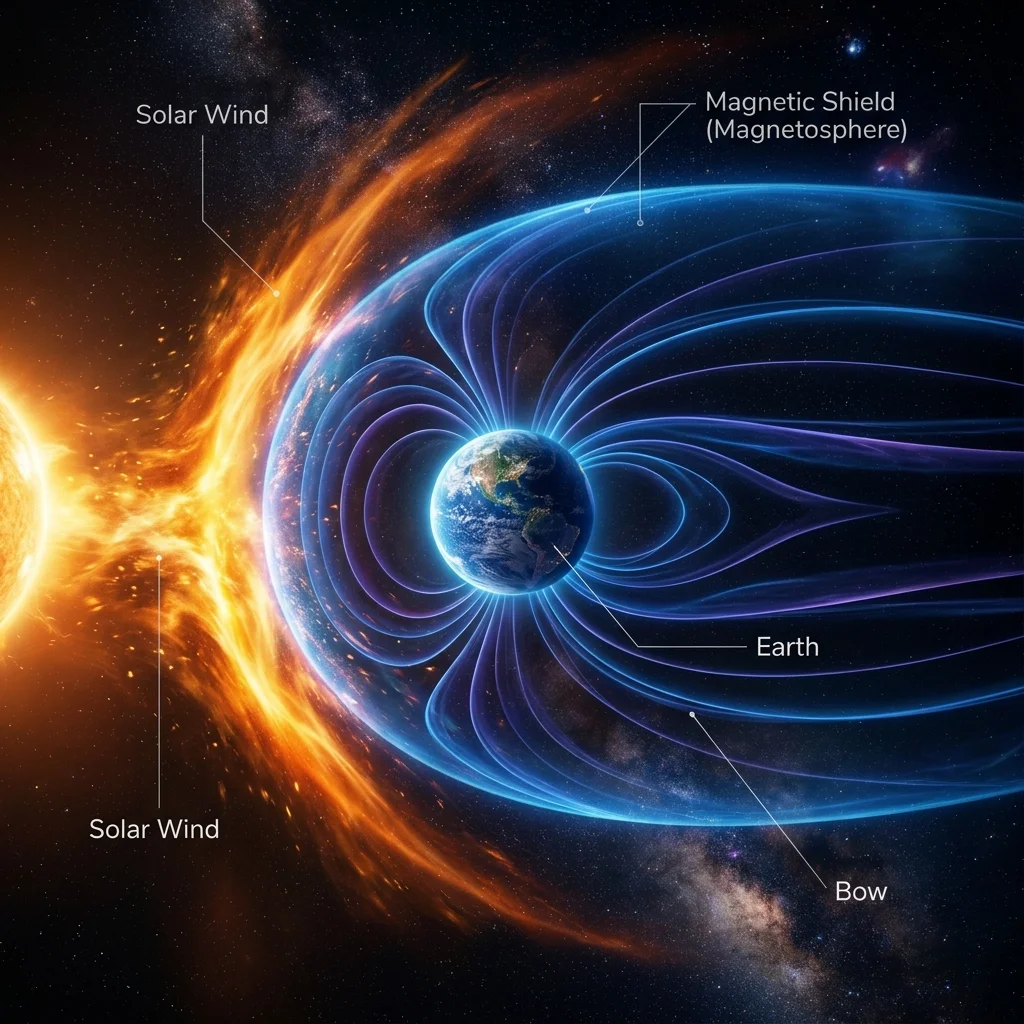
Deep inside the center of the Earth spins a massive core of molten iron. This spinning liquid metal acts like a dynamo, turning our entire planet into a giant bar magnet. Because of this, we are surrounded by an invisible, protective magnetic bubble called the Magnetosphere.
When the deadly Solar Wind hits this bubble, it gets deflected. The radioactive particles harmlessly flow around the planet and into deep space, like water rushing around a rock in a river. However, the shield has a weak spot.
At the North and South Poles, the magnetic field lines funnel down into the ground (like the hole in the center of a donut). Here, the Solar Wind can sneak in. The radioactive particles spiral down these magnetic funnels at tremendous speeds and violently crash into the air molecules in our upper atmosphere.
A cinematic visualization of Earth's glowing magnetic shield deflecting a massive wave of fiery solar wind
Quantum Mechanics in the Sky
What exactly creates those beautiful colors? It is pure Quantum Physics playing out on a planetary scale.
When a high-speed solar electron smashes into an Oxygen atom high in the sky, it violently transfers its energy. The Oxygen atom becomes "Excited," forcing its own electrons to jump up to a higher orbit. But nature hates being excited; it always wants to return to a calm, resting state. To calm down, the Oxygen atom has to dump that extra energy. It does this by spitting out a tiny packet of light called a Photon.
The color of the light depends entirely on the gas being hit:
- Green: This is Oxygen (between 60 and 150 miles up). It is the most common aurora color.
- Red: This is Oxygen at extremely high altitudes (over 150 miles). It is rare and only seen during massive solar storms.
- Purple/Blue: This is Nitrogen. Nitrogen is much harder to excite than Oxygen, so you only see these colors when the solar wind is incredibly fast and powerful.
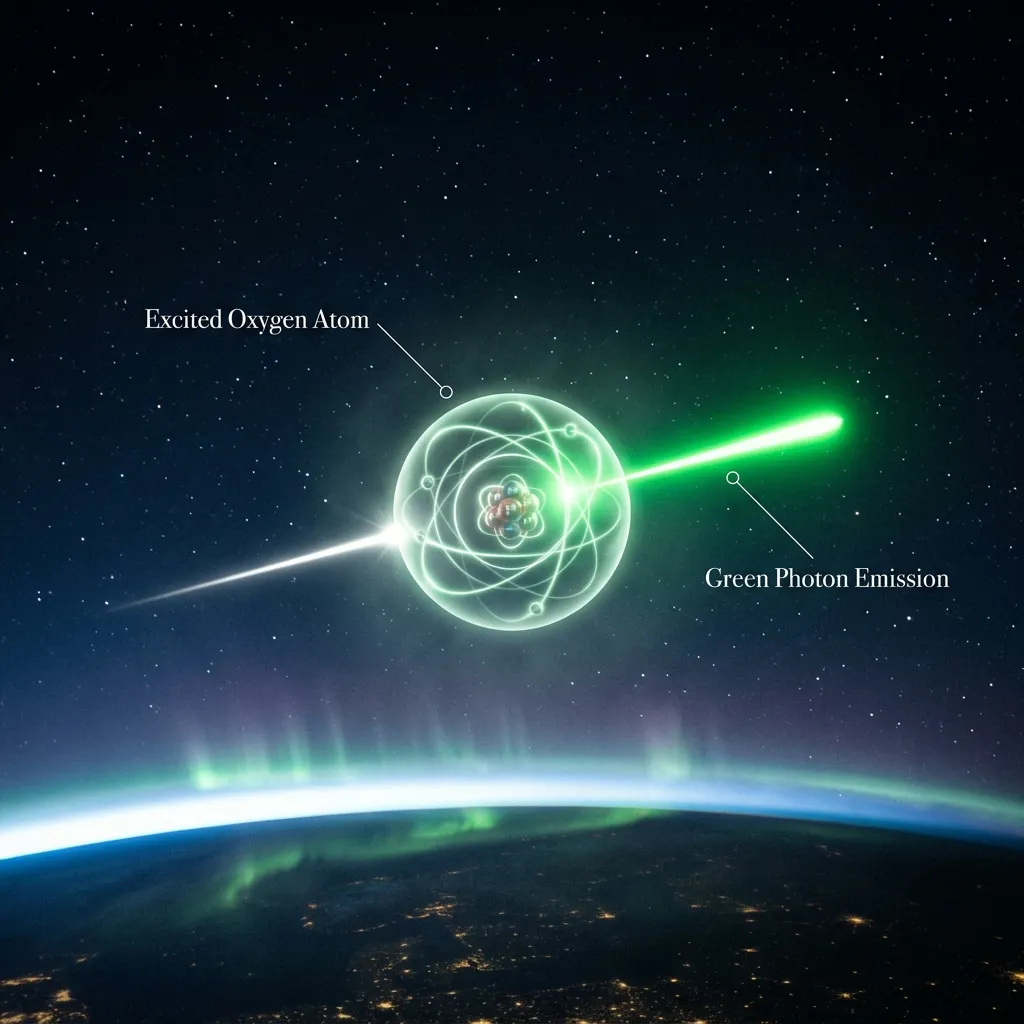 A cinematic macro visualization of a glowing oxygen atom emitting a pure green photon of light
The Carrington Event: A Warning
While auroras are beautiful, they are also a warning sign. They tell us that a solar storm is currently hitting Earth.
Usually, these storms are small and harmless. But in 1859, a "Coronal Mass Ejection"—a massive tsunami of solar plasma—hit Earth head-on. This was the famous Carrington Event. The aurora was so impossibly bright that people in the Caribbean and Hawaii could see it. Birds started singing at 2:00 AM because the sky was so bright they thought it was morning.
The electrical surge in the atmosphere was so powerful that telegraph wires burst into flames, and operators were physically shocked through their equipment, even when it was unplugged. If a Carrington-level storm hit Earth today, it wouldn't just be pretty—it would be an apocalypse for machines. It could fry satellites, destroy the global GPS system, and blow up the giant transformers that power our electrical grid, leaving entire continents without electricity for months.