
How Do Bees Make Honey?
The Big Idea
Step inside the busy hive to witness the incredible chemical transformation of watery nectar into liquid gold. Discover how specialized enzymes and the rhythmic wing-fanning of thousands of worker bees create the only food produced by insects that humans eat.
Key Vocabulary & Concepts
Hands-On Observation Checklist
Teacher & Parent Discussion Starters
- Why is understanding how do bees make honey? important in everyday real life?
- What variable or factor had the biggest impact when testing the simulation?
- How does this concept connect to another science topic you have learned about?
How Do Bees Make Honey?
Step inside the busy hive to witness the incredible chemical transformation of watery nectar into liquid gold. Discover how specialized enzymes and the rhythmic wing-fanning of thousands of worker bees create the only food produced by insects that humans eat.
How Do Bees Make Honey?
Gathering the Nectar
Honey is the only food source produced by insects that humans regularly eat. To create it, a honeybee colony operates as a highly organized factory. It begins when foraging bees locate blooming flowers and drink up the sugary liquid known as nectar.
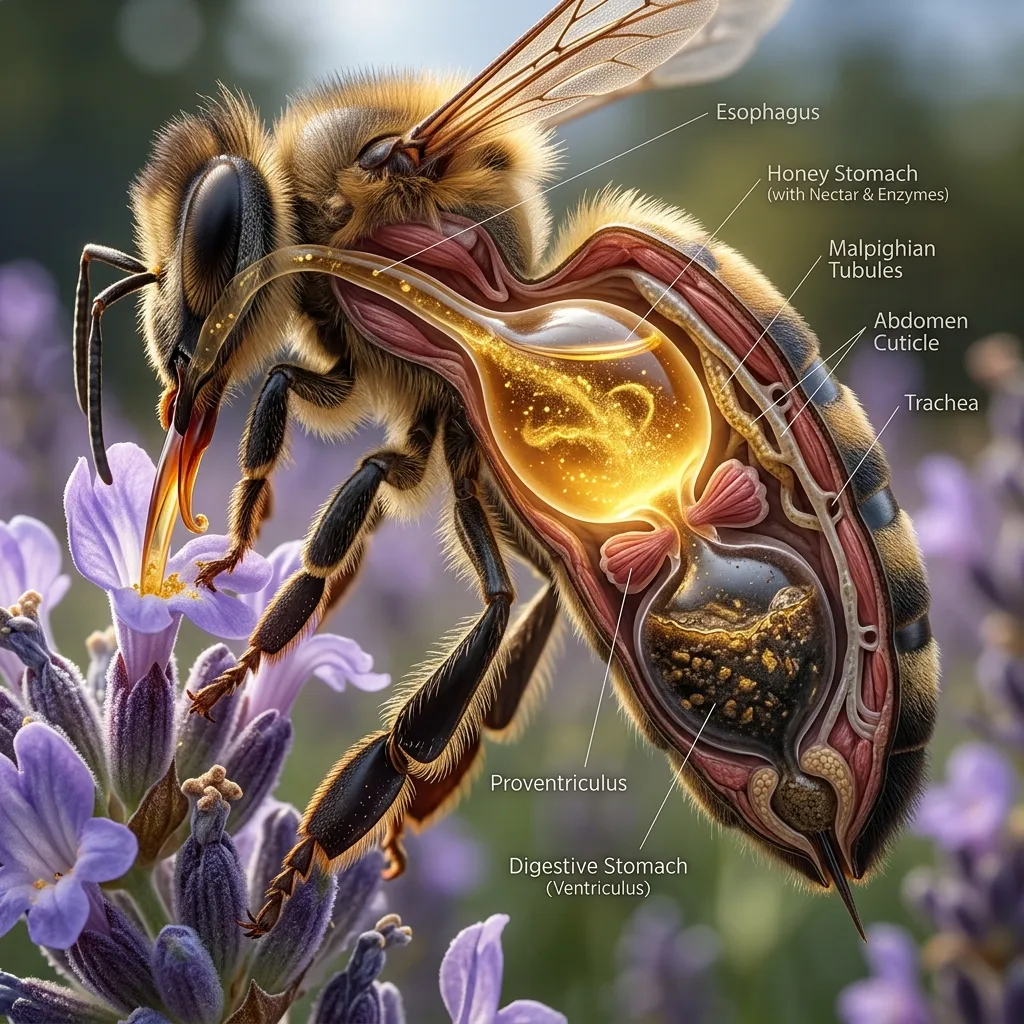
The bee does not digest this liquid. Instead, it stores the fluid inside a specialized internal organ called the honey stomach. A bee must visit up to a thousand flowers just to fill this stomach once. When it is full, the bee flies back to the noisy hive to begin processing.
The Chemistry and Evaporation
Back at the hive, the forager bee regurgitates the nectar and passes it to an indoor worker bee. The worker bee chews the fluid for about thirty minutes. During this time, specialized enzymes from the bee's saliva mix with the nectar. These enzymes break down complex sugars into simpler sugars, transforming the chemical structure.
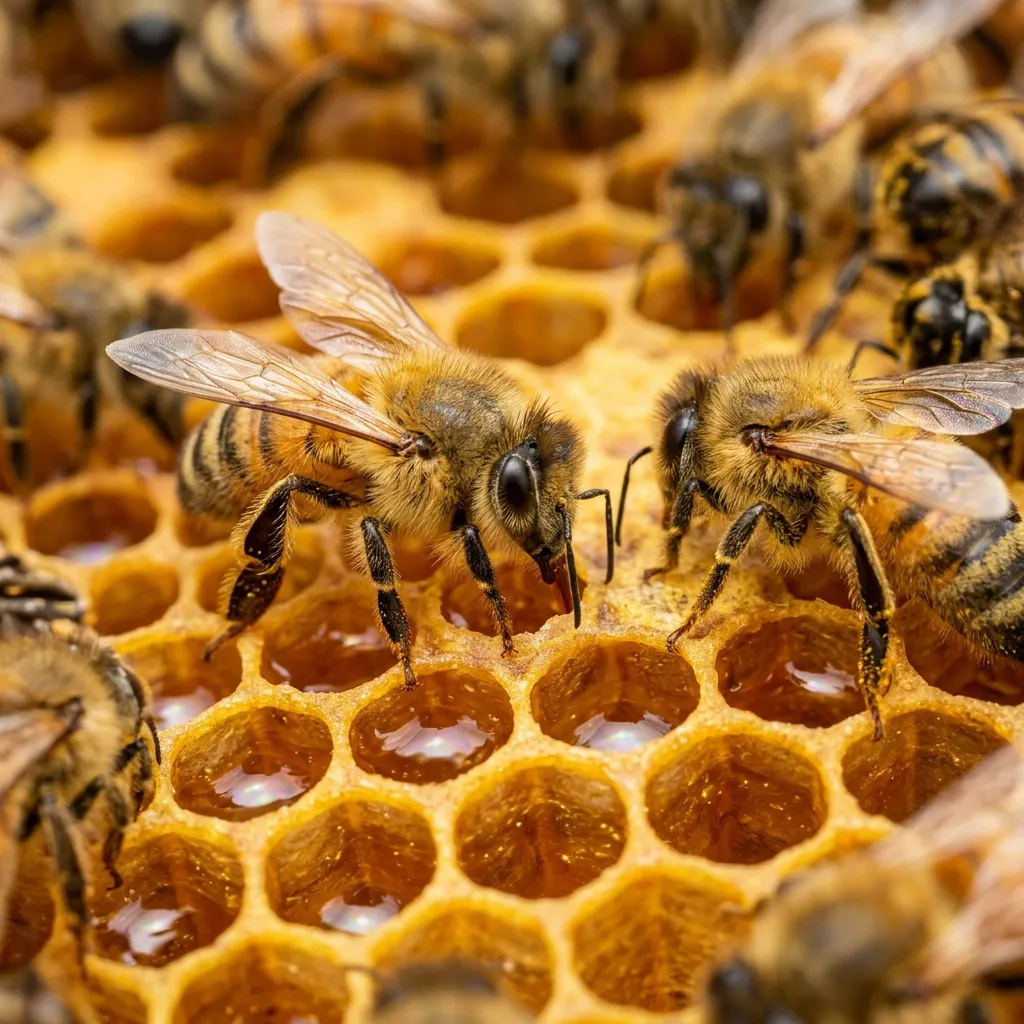
The mixture is then deposited into a hexagonal wax honeycomb cell. However, this fluid is still too watery and would quickly spoil. To fix this, hundreds of worker bees stand over the honeycomb and flap their wings rapidly. This intense fanning creates structural airflow that evaporates the excess water, thickening the fluid into sticky honey. Finally, they seal the cell with a wax cap to store it safely for the winter.