How Do Spiders Spin Webs?
The Big Idea
Enter the microscopic world of spider biology to discover the secrets of the world's strongest natural silk. Learn how these tiny engineers use specialized organs to spin complex, sticky webs that are stronger than steel.
Key Vocabulary & Concepts
Hands-On Observation Checklist
Teacher & Parent Discussion Starters
- Why is understanding how do spiders spin webs? important in everyday real life?
- What variable or factor had the biggest impact when testing the simulation?
- How does this concept connect to another science topic you have learned about?
How Do Spiders Spin Webs?
Nature’s Super String
Imagine being able to shoot strong, flexible cables out of your hands like a real-life superhero. Working spiders do something even more amazing—they produce a special liquid inside their bodies that turns into solid, steel-like silk the exact moment it hits the air outside!
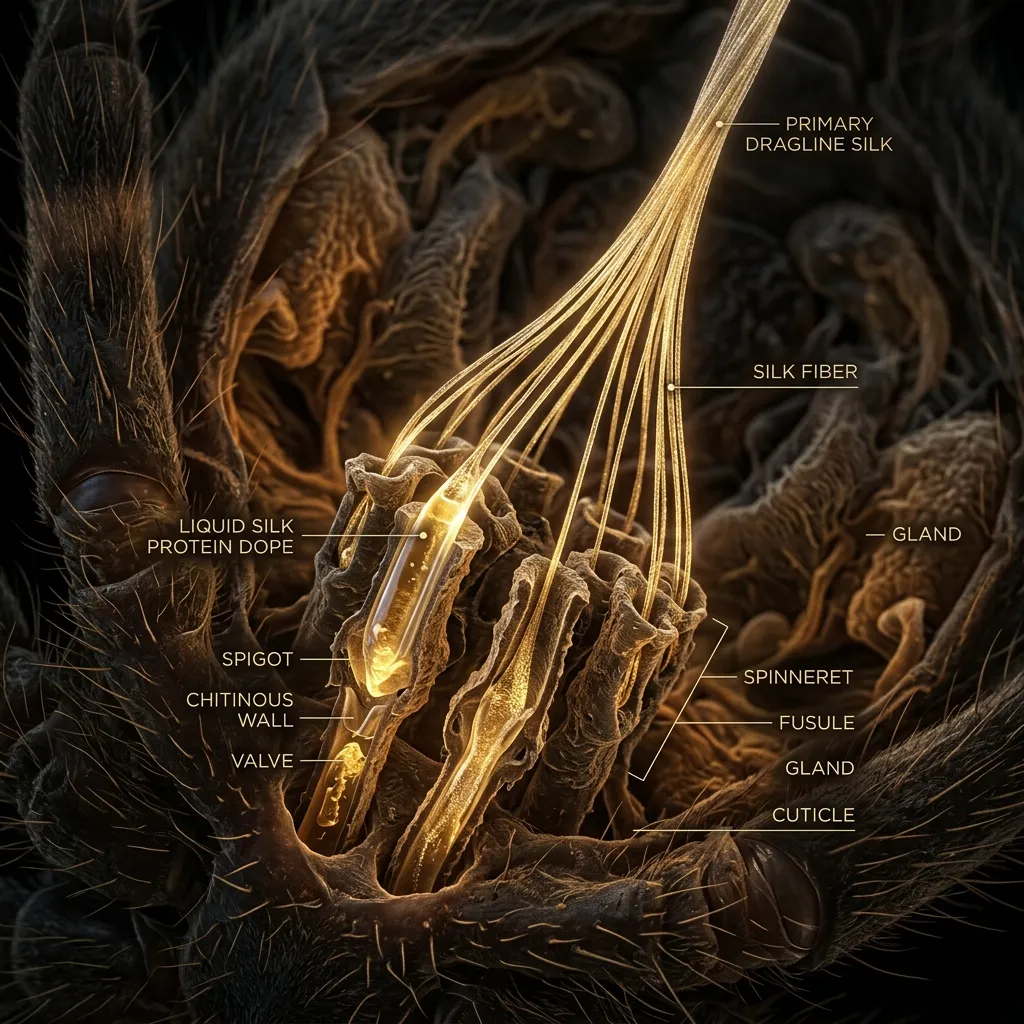
Deep inside a spider's abdomen, they have specialized silk glands packed with a thick protein soup. When a spider decides it’s time to build a web, drop a dragline, or wrap up a captured bug, it squeezes these glands. The liquid silk gets pushed out through tiny nozzles on the outside of their body called spinnerets.
Pulling Liquid Into Solid
Here is the craziest part: the silk doesn't just dry in the cold air like wet paint. As the spider pulls the liquid protein through its spinnerets, the molecules stretch and instantly lock together, crystallizing into a solid thread.
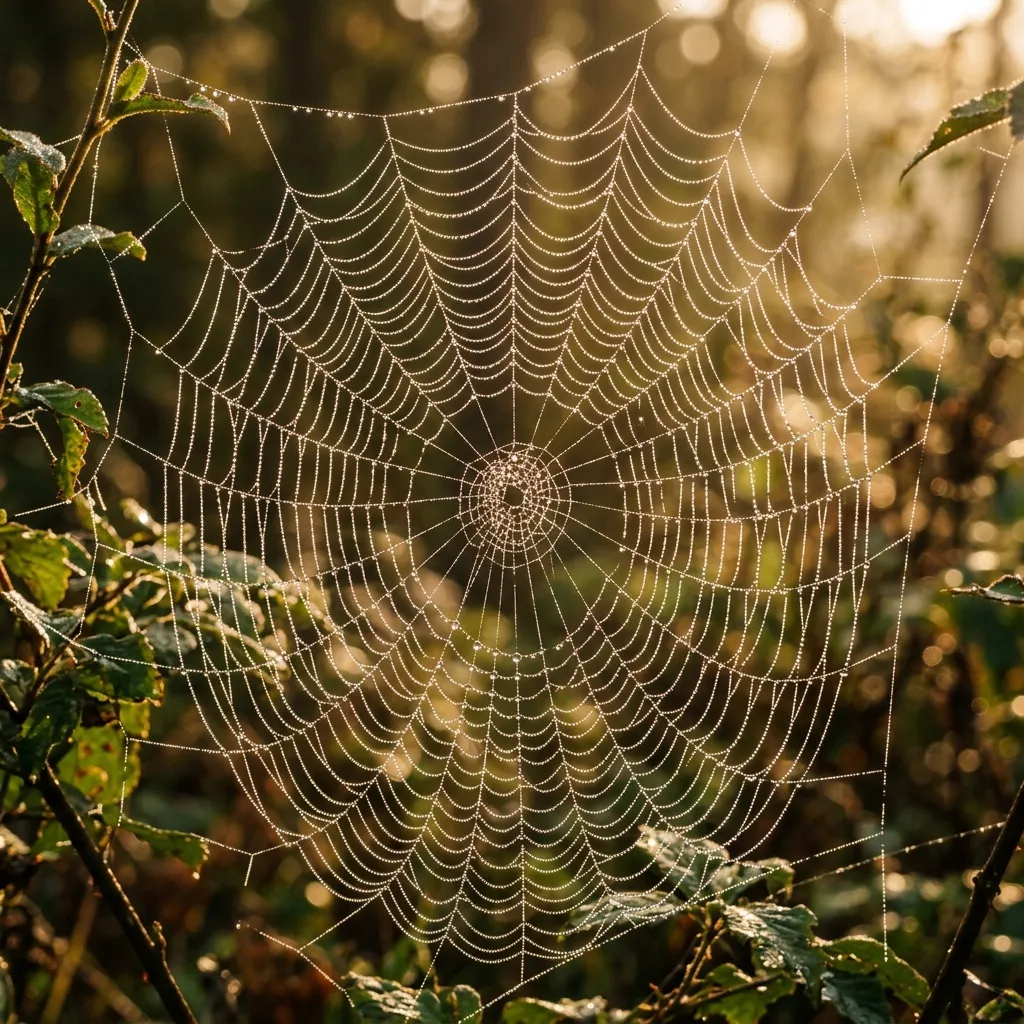
Spider silk is an absolute marvel of natural engineering. It is incredibly lightweight but mathematically stronger than a web made of equivalent shiny steel wire! Even better, most spiders can produce up to seven distinct types of silk. Some spinnerets shoot out sticky silk specifically designed to trap prey, while other spinnerets generate thick, non-sticky structural lines so the spider can securely walk across its own web without getting caught in its own sticky trap!