
How Do Venus Flytraps Work?
The Big Idea
Enter the strange world of carnivorous plants to discover how the Venus Flytrap hunts. Learn about the sensitive trigger hairs and rapid water-pressure changes that allow this plant to snap shut in the blink of an eye.
Key Vocabulary & Concepts
Hands-On Observation Checklist
Teacher & Parent Discussion Starters
- Why is understanding how do venus flytraps work? important in everyday real life?
- What variable or factor had the biggest impact when testing the simulation?
- How does this concept connect to another science topic you have learned about?
How Do Venus Flytraps Work?
The Plant That Bites Back
In the plant kingdom, rules are simple: Plants stay still. Animals eat plants. But in one tiny corner of the world, the rules are reversed. There is a plant that hunts. A plant with jaws. A plant that eats animals.
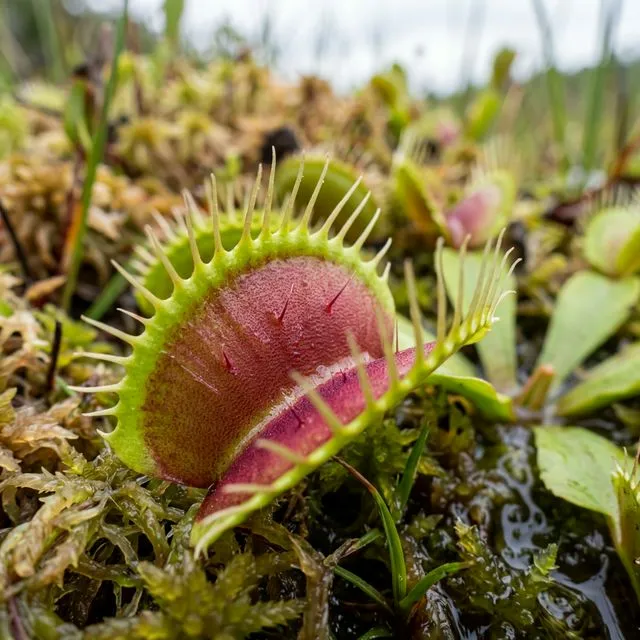
It is the Venus Flytrap. It is arguably the most famous plant in the world, but it is also one of the rarest. It grows natively in only one place on Earth: a 60-mile stretch of boggy wetlands in North and South Carolina.
Why Eat Meat?
Plants usually get their food from the sun (Photosynthesis) and their vitamins (Nitrogen and Phosphorus) from the soil dirt. But the Venus Flytrap lives in "The Green Swamp." The soil there is terrible. It is acidic, waterlogged, and empty of nutrients. If a normal plant tried to live there, it would starve.
So, the Flytrap evolved a workaround. If it couldn't get vitamins from the dirt, it would steal them from the locals. It doesn't eat bugs for "food" (calories); it still gets that from the sun. It eats bugs for Fertilizer. It is taking a vitamin supplement.
The Deadly Countdown
The most amazing thing about the Flytrap isn't that it eats; it's how it hunts. It can count.
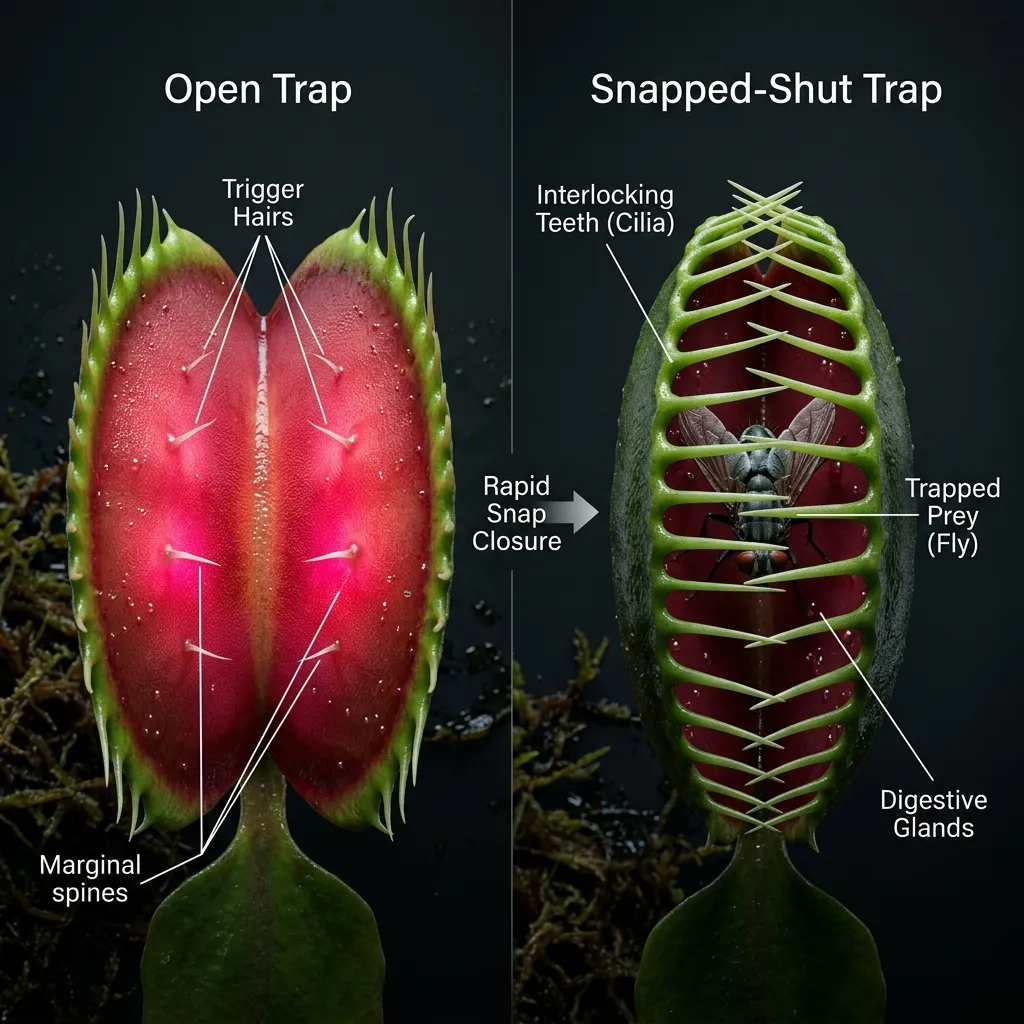
Inside the open "mouth" of the trap, there are three tiny hairs on each side. These are the triggers. If a spider crawls in and bumps one hair, nothing happens. The plant waits. Why? Because it might be a raindrop. Or a falling leaf. Closing the trap costs a huge amount of energy. The plant can't afford to snap shut on a "false alarm."
But if the spider moves and bumps a hair a second time (within about 20 seconds), the trap springs. SNAP. It takes less than a tenth of a second (faster than you can blink). The jaws slam shut, and the teeth interlock like a prison cell.
Scientists have even found that the plant keeps counting.
- 3 touches: The trap tightens.
- 5 touches: Digestion begins. The more the bug struggles, the more it touches the hairs, telling the plant: "Yes! I am definitely a living thing! Eat me!"
How Does It Snap?
Plants don't have muscles. So how does it move so fast? It uses Hydro-elasticity. Think of the trap like a tennis ball cut in half. If you flip it inside out, it wants to snap back.
The plant actively pumps water into the cells on the outside of the leaf. This creates massive pressure (Turgor Pressure). The leaf is like a loaded spring, held open by tension. When the trigger is hit, the plant releases that tension instantly. The leaf "buckles" (like a slap bracelet), and the shape flips from Convex (outward) to Concave (inward).
The Stomach of Green
Once the trap is sealed, the horror show involves chemistry. The leaf transforms into a stomach. It seals itself airtight and floods the chamber with digestive enzymes (the same acid you have in your stomach).
Over the next 10 days, the soft parts of the spider are dissolved into a soup. The plant drinks the soup, absorbing the precious Nitrogen. When it catches a fly, it is basically drinking a "protein shake" to help it grow.
After a week or two, the trap re-opens. All that is left is the dry, empty husk of the spider. The wind blows it away, and the trap resets... waiting for the next victim to make the mistake of counting to two.