
How Does Baking Soda Work?
The Big Idea
Unlock the kitchen chemistry behind fluffy cakes and fizzy volcanoes. Discover how baking soda reacts with acid to create millions of tiny carbon dioxide bubbles, transforming flat dough into light, airy treats.
Key Vocabulary & Concepts
Hands-On Observation Checklist
Teacher & Parent Discussion Starters
- Why is understanding how does baking soda work? important in everyday real life?
- What variable or factor had the biggest impact when testing the simulation?
- How does this concept connect to another science topic you have learned about?
How Does Baking Soda Work?
The Flat Cake Problem
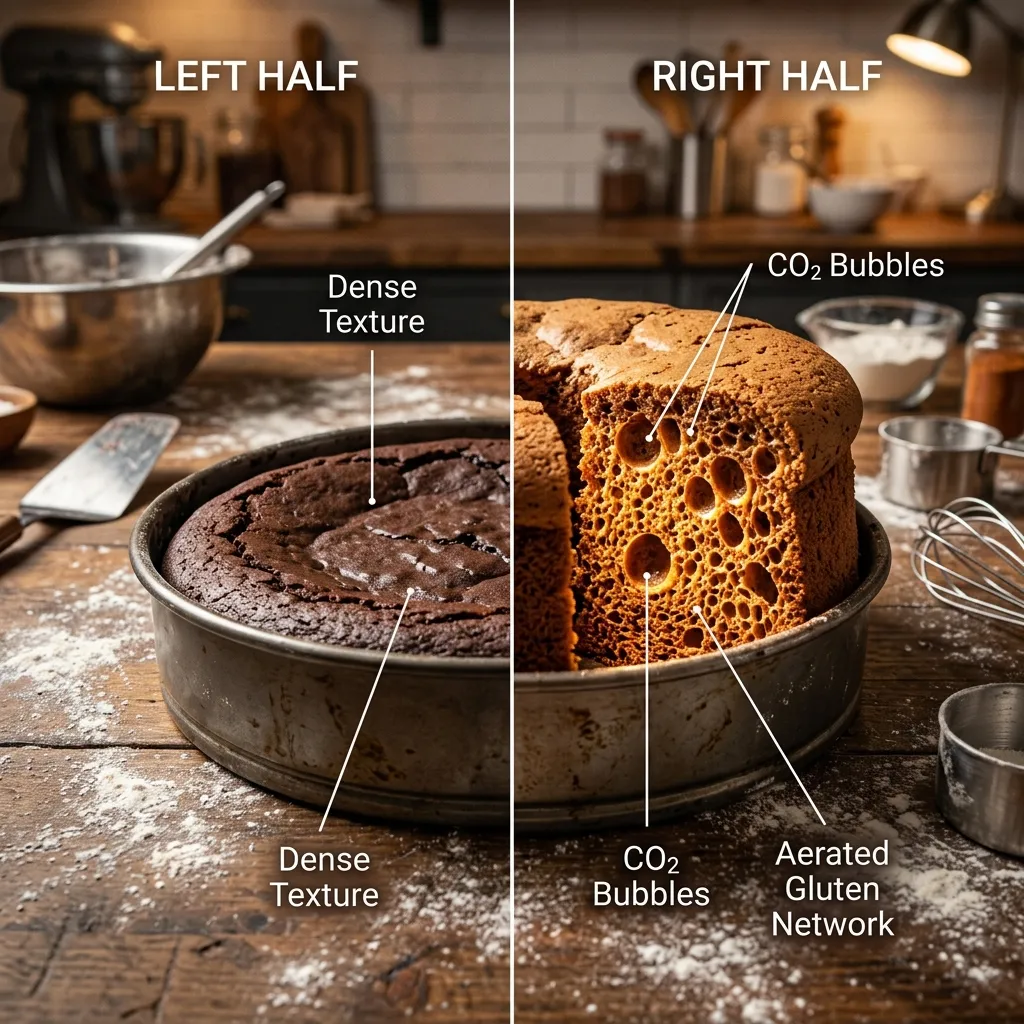
Imagine baking a cake without baking soda. You mix flour, eggs, and sugar. You put it in the oven. What comes out? A hard, dense, flat brick. It would be edible, but it wouldn't be a cake. It would be a giant cracker.
To make a cake "light and fluffy," you need air pockets. You need to fill the batter with bubbles so that it rises like a foam. But how do you get bubbles inside a solid cake batter? You use chemistry.
The Volcano in the Bowl
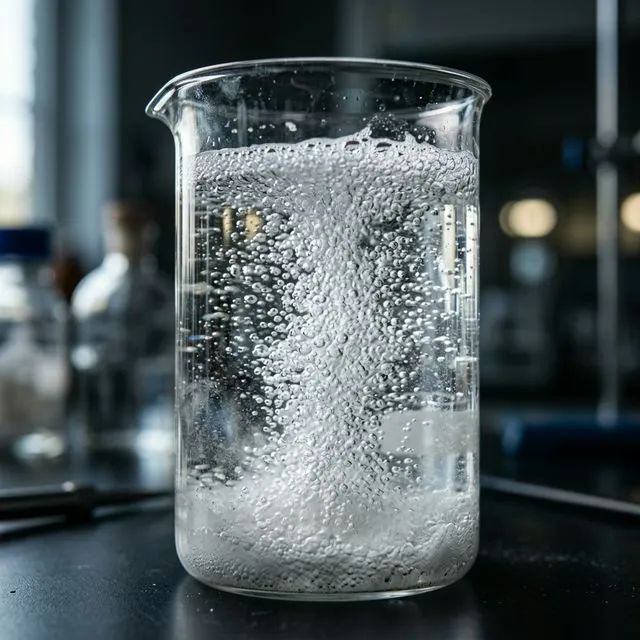
You have probably done the science fair experiment: Pour Vinegar (Acid) into Baking Soda (Base). WHOOSH. It explodes in foam. When you bake a cake, you are doing that exact same volcano experiment, just in slow motion.
Baking Soda is a chemical called Sodium Bicarbonate. It is a base. It is asleep. It needs a wake-up call. That wake-up call is an Acid. This is why recipes with Baking Soda always include something sour: Buttermilk, Yogurt, Lemon Juice, or Vinegar.
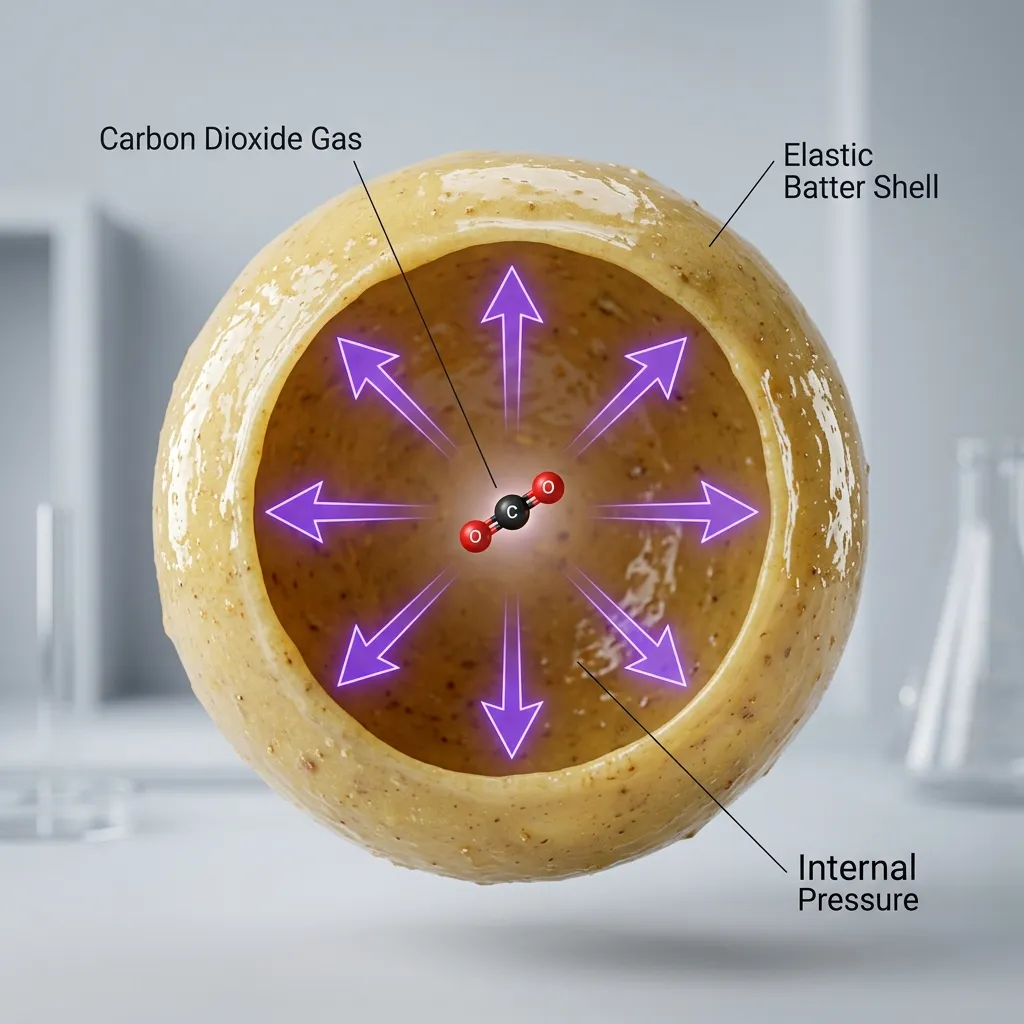 The CO2 bubble reaction showing gas expansion inside cake batter
When the acid and base meet, they neutralize each other and release trapped CO2 gas which expands the batter.
The CO2 bubble reaction showing gas expansion inside cake batter
When the acid and base meet, they neutralize each other and release trapped CO2 gas which expands the batter.
Trapping the Gas
When the soda meets the buttermilk in your mixing bowl, they react. They release Carbon Dioxide (CO2) gas. The batter suddenly fills with millions of microscopic gas bubbles. Because the batter is thick/gooey (viscous), the bubbles can't float away. They get trapped.
Then, you put it in the hot oven.
- Expansion: The heat makes the gas bubbles get bigger (thermal expansion).
- Setting: The heat cooks the egg and flour proteins. The cake "sets" into a solid sponge structure. The bubbles are frozen in place. When you slice the cake, those tiny holes are the footprints of the gas bubbles that lifted the cake up.
Soda vs. Powder
This confuses everyone in the grocery store. What is the difference between Baking Soda and Baking Powder?
- Baking Soda: Pure Sodium Bicarbonate. It is arguably "Lazy." It puts all the work on you. You have to add the acid (buttermilk/lemon) to the recipe. If you forget the acid, the soda won't work, and the cake will taste soapy.
- Baking Powder: The "All-in-One" kit. It contains Baking Soda plus a dry powdered acid (like Cream of Tartar). They sit peacefully in the can because they are dry. But the moment you add liquid (water/milk), the acid dissolves and attacks the soda. Bubbles start instantly.
[Diagram: Soda vs. Powder] Description: A simple checklist comparison.
- Baking Soda: Needs YOU to add Acid (Lemon/Yogurt).
- Baking Powder: Just add Water (Contains its own Acid). Caption: Use Baking Powder when your recipe doesn't have any natural acids like lemon or buttermilk.
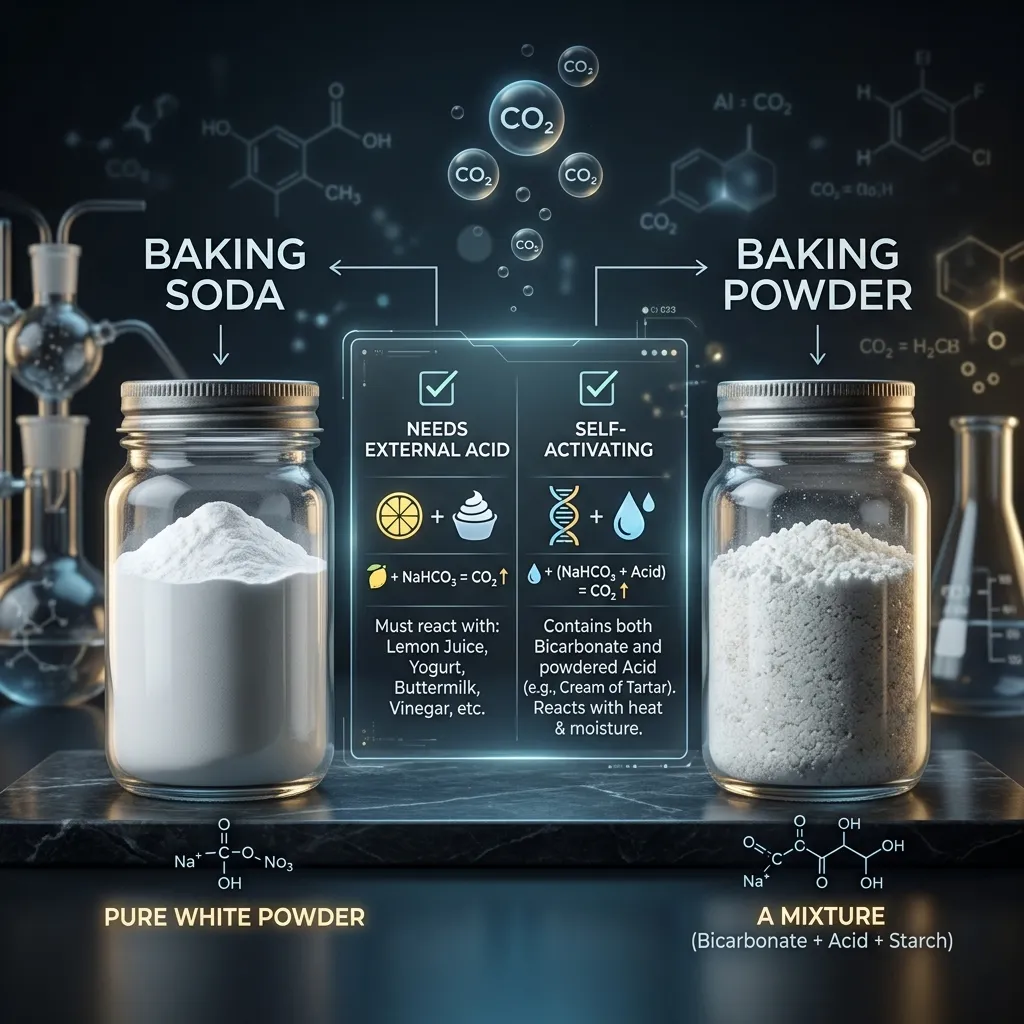 A checklist comparison between Baking Soda and Baking Powder showing activation requirements
So baking isn't just cooking. It is engineering with foam. You are building a delicious, edible sponge using gas.