How Does The Heart Pump Blood?
The Big Idea
Step inside the unstoppable biological engine that beats 100,000 times a day without ever resting. Discover how the heart’s four chambers and electrical signals work together to pump life-saving oxygen to every corner of your body.
Key Vocabulary & Concepts
Hands-On Observation Checklist
Teacher & Parent Discussion Starters
- Why is understanding how does the heart pump blood? important in everyday real life?
- What variable or factor had the biggest impact when testing the simulation?
- How does this concept connect to another science topic you have learned about?
How Does The Heart Pump Blood?
Step inside the unstoppable biological engine that beats 100,000 times a day without ever resting. Discover how the heart’s four chambers and electrical signals work together to pump life-saving oxygen to every corner of your body.
How Does The Heart Pump Blood?
The Unstoppable Engine
Make a fist. Squeeze it as tight as you can. Now relax it. Do that once every single second.
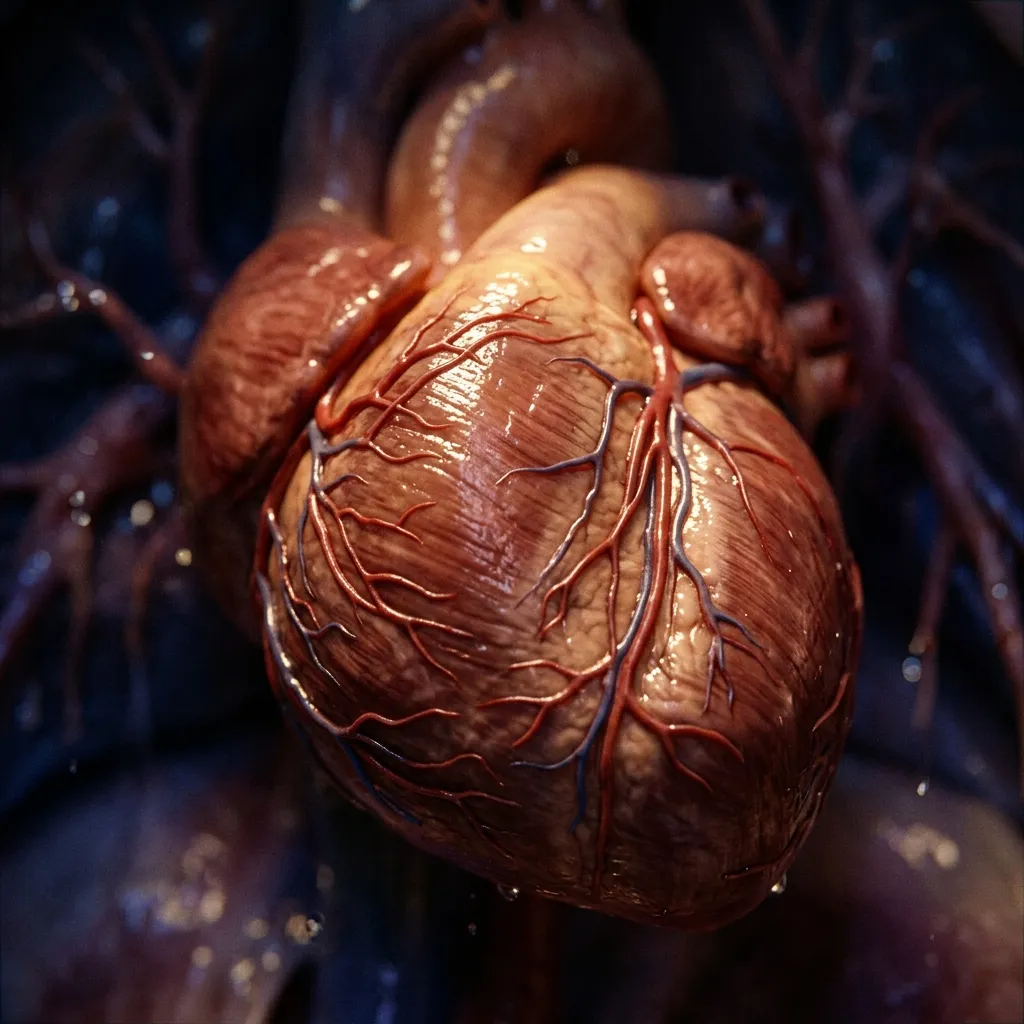
How long can you keep it up? One minute? Five minutes? Very quickly, your hand will grow exhausted, the muscles will burn, and it will cramp up. Yet, inside your chest sits a muscle roughly the exact same size as your fist, and it performs that squeezing motion 100,000 times a day.
It beats 35 million times a year. It never rests. It never sleeps. It never cramps. If it stops for more than a few minutes, you die. It is, without question, the most reliable and extraordinary engine ever built by nature.
 A cinematic macro photograph of a living human heart pulsing with life
Two Pumps in One
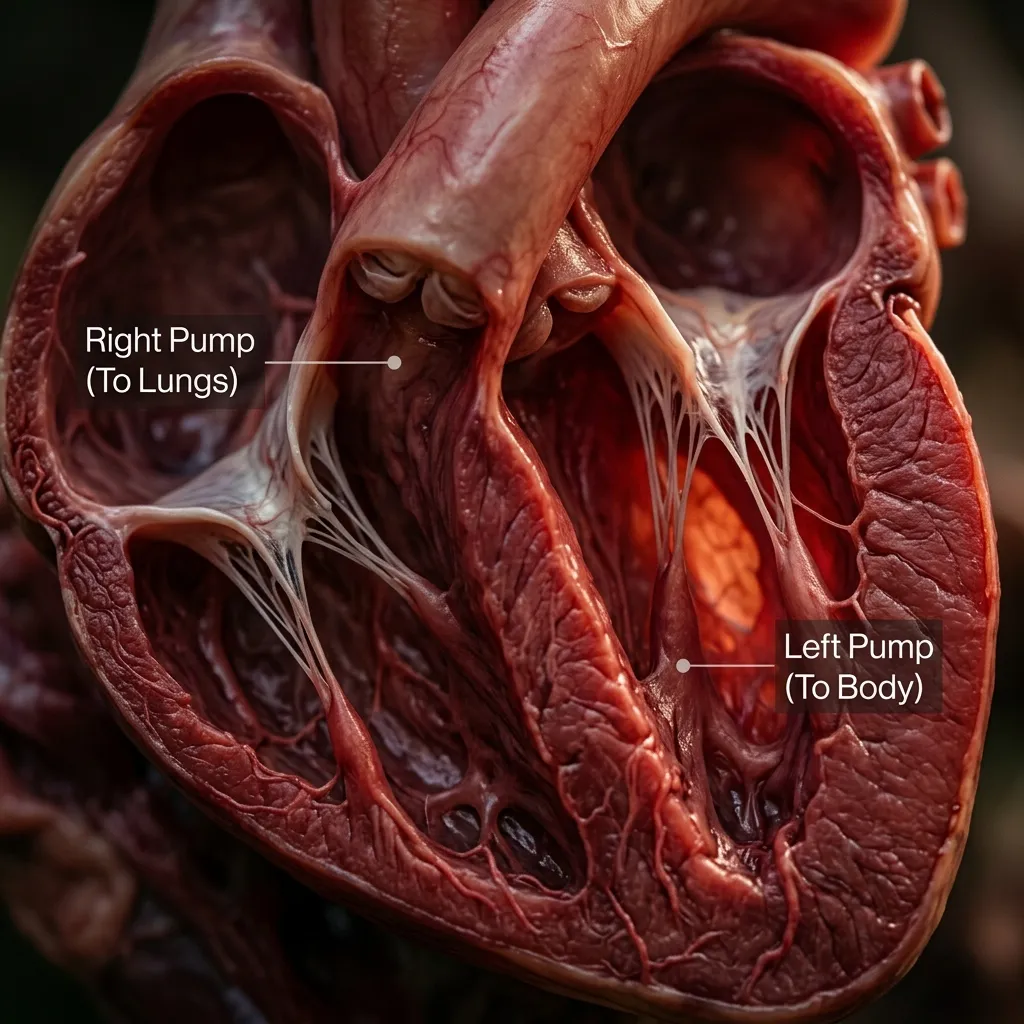
When we draw hearts on paper, we draw a single, unified shape (<3). But biologically, the heart is actually two separate, distinct machines glued together. It operates as a highly efficient Double Loop system.
-
The Right Side (The Refueler): Blood returns from its journey around your body exhausted and dark crimson. It has delivered all its oxygen and is full of waste. The Right Pump takes this tired blood and pushes it next door to the Lungs. Whoosh. In the lungs, the blood drops off carbon dioxide and grabs fresh oxygen, instantly turning a bright, vibrant cherry red.
-
The Left Side (The Deliverer): This freshly oxygenated blood returns to the Left Pump. The Left Pump is massive and thick with muscle because it has a much harder job. SQUEEZE. With immense pressure, it shoots the bright red blood out into the Aorta (the body's main highway) to feed your brain, your organs, and every single cell down to the tips of your toes.
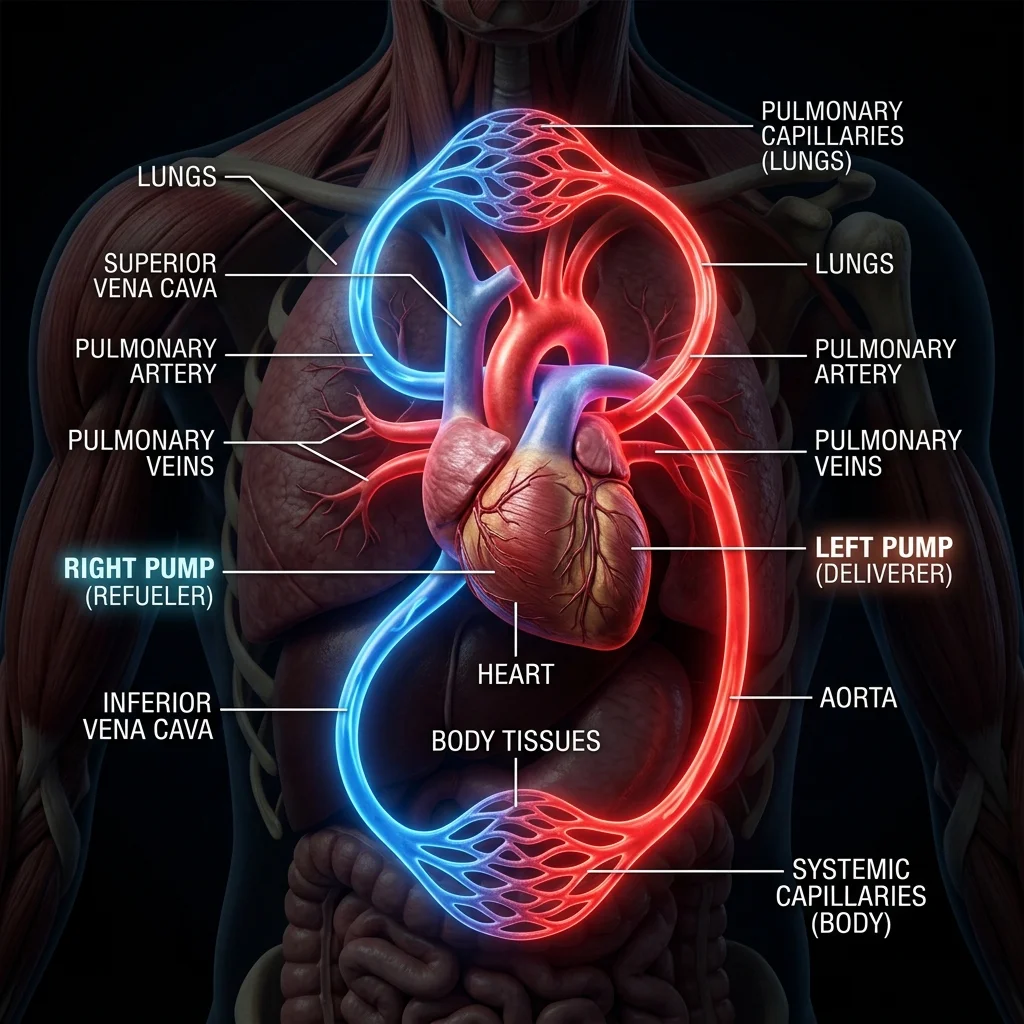 A documentary-style visualization of the human circulatory system showing the Figure-8 double loop
The Sound of Slamming Doors
If you press your ear to someone's chest, you hear the classic rhythm of life: Lub-Dub. Lub-Dub.
What is actually making that noise? It isn't the sound of the muscle slapping against the chest wall, and it isn't the sound of blood sloshing around. It is the sound of Doors.
Inside the heart, there are specialized one-way valves that act exactly like heavy trapdoors. When the heart's powerful muscles squeeze, the blood is under so much pressure that it naturally tries to rush backward into the chamber it just came from. To prevent this, the valves violently snap shut.
- Lub: The top valves slamming shut.
- Dub: The bottom valves slamming shut.
Every heartbeat you have ever heard is simply the mechanical sound of biological doors slamming shut to keep the traffic of life moving strictly forward.
The Electric Spark
If the heart is an engine, what tells it when to fire? Is it your brain?
Surprisingly, no. If you were to witness a heart transplant, you would see something miraculous: a heart completely disconnected from a human body, sitting on a surgical table, still beating completely on its own.
The heart has its own brain. It possesses a specialized cluster of cells called the Pacemaker (the SA Node) that generates its own electricity. It acts as an independent biological battery, sending a tiny, coordinated shockwave of electricity down the walls of the heart 60 times a minute. Zap, squeeze. Zap, squeeze. It runs on nothing but the food you eat and the water you drink, keeping the rhythm of your life going for 80 years or more without ever needing a recharge.