
Quicksand: The Hollywood Lie
The Big Idea
Separate Hollywood myth from reality in this deep dive into quicksand. Discover the non-Newtonian physics that make this mixture of sand and water so strange, and learn the simple, life-saving secret to escaping its grip.
Key Vocabulary & Concepts
Hands-On Observation Checklist
Teacher & Parent Discussion Starters
- Why is understanding quicksand: the hollywood lie important in everyday real life?
- What variable or factor had the biggest impact when testing the simulation?
- How does this concept connect to another science topic you have learned about?
Quicksand: The Hollywood Lie
The Movie Monste
If you watched movies in the 1960s, you learned one thing: Quicksand is everywhere, and it will kill you. It was the ultimate villain. Heroes were constantly stepping into innocent-looking mud, sinking instantly, and disappearing with a final glub-glub sound. Is it real? Yes. is it deadly? No. Real quicksand is actually a physics prank played by water.
What is It?
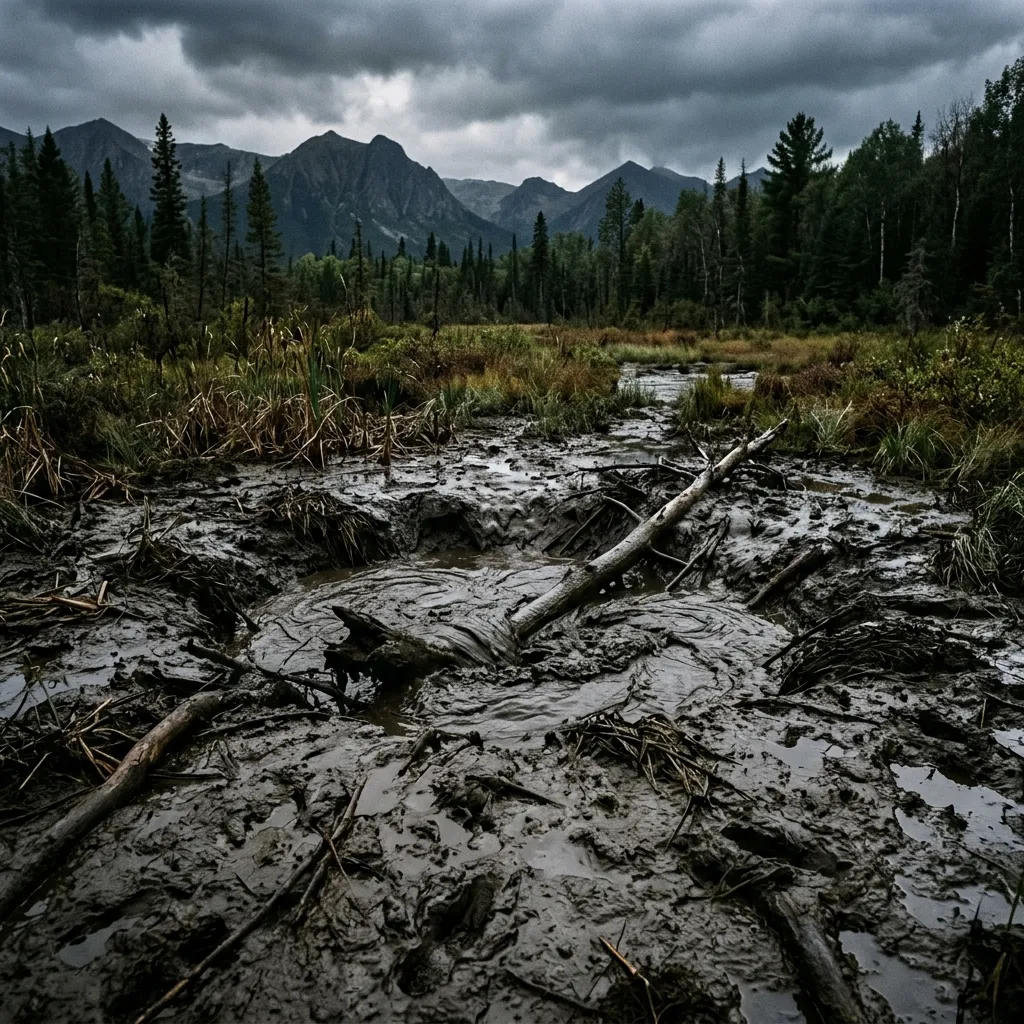
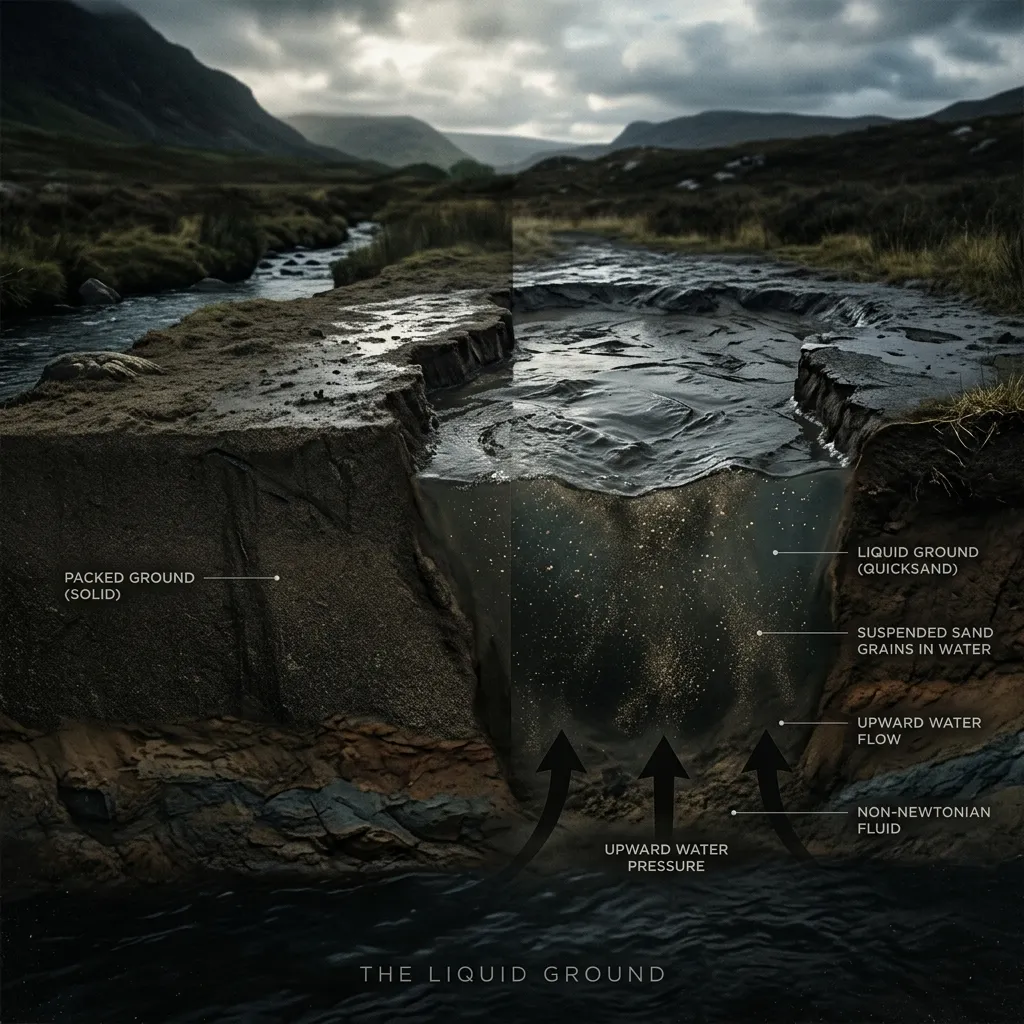
Quicksand is not a special type of killer sand. It is just normal sand (or clay) mixed with too much water. Usually, grains of sand stack on top of each other like a pile of oranges. Friction holds them up. You can walk on it. But if water flows up from underground springs, it pushes the grains apart. They float. The friction disappears. The sand turns into a Non-Newtonian Fluid. It looks solid, but when you step on it, it acts like a liquid. You sink.
Can You Drown?
No. This is the big lie. You cannot drown in quicksand. Why? Buoyancy. The human body is about as dense as water (1.0 g/cm³). Quicksand is twice as dense as water (2.0 g/cm³). Because you are lighter than the mud, you will float. You will sink up to your waist, and then you will stop. It is physically impossible to sink over your head unless you are wearing a suit made of lead. (Or if you fall in face first and panic).
The Cement Trap
So why do people get stuck? Because of Suction. Once you sink to your waist, the sand settles around your legs. The water squeezes out, and the sand packs tight again. It turns into wet concrete. To pull your leg out, you have to fight the vacuum suction created by the mud. Scientists calculated that to pull your leg straight up, you need a force of 100,000 Newtons. That is enough force to lift a medium-sized car. If you let your friend pull your arms, they will rip your arms off before your legs come out. This is why people mistakenly die. They get stuck, can't get out, and then die of exposure (sun, thirst) or the rising ocean tide. The sand doesn't kill you; the tide does.
How to Escape
If you fall in, don't panic.
- Don't Struggle: Thrashing makes the sand liquefy more, making you sink faster.
- Lean Back: Lay on your back. Spread your arms. Since you are buoyant, you will float on top like a raft.
- Wiggle Legs: Slowly wiggle your legs to let water flow down around them, loosening the suction.
- Backstroke: Slowly paddle backwards to solid ground. You will be dirty, but alive.
Dry Quicksand
There is a scarier version. Dry Quicksand. This happens in deserts or grain silos. If air blows through loose sand, it creates a fluffy, aerated mixture. It is mostly air. If you step in this, you will sink instantly to the bottom, and you can suffocate because sand is heavy and will crush your lungs.
The Science Experiment
For years, scientists debated if Dry Quicksand was real or a myth told by desert travelers. In 2004, physicists at the University of Twente (Netherlands) decided to test it. They built a tank of sand and blew air through the bottom to separate the grains just enough (reducing the friction). It looked like normal sand. They dropped a heavy weighted ball onto it. It didn't splash. It didn't float. It vanished. The ball sank straight to the bottom in 0.2 seconds. They proved that if you aerate the sand just right (about 40% air), it provides zero support. If a truck drove over a patch of natural dry quicksand, it would be swallowed whole. Fortunately, nature rarely makes it this perfect.
Thankfully, distinct natural dry quicksand is incredibly rare. (Though falling into a silo of corn is a real danger for farmers).
Fast Facts
- Lawrence of Arabia: The movie scene where a boy is swallowed by quicksand was terrifying, but physically impossible. The director used a hidden elevator platform to lower the actor into the sand.
- Liquefaction: During earthquakes, entire cities can experience quicksand. The shaking ground vibrates the groundwater, turning solid soil into liquid mud. Buildings don't crack; they just tip over and sink like boats. This happened in Niigata, Japan (1964) and San Francisco (1989).
- The World Record: There are no recorded mass fatalities from quicksand. It is mostly an annoyance for hikers. The most famous "deaths" are usually from people getting stuck in tidal mudflats and drowning when the sea comes back in.
Diagram Prompts
- Physics Check: Side-by-side. Movie Version: Man sinking totally under (Hand sticking up). Reality: Man floating at waist level. A buoyant force arrow pushing him up. Label: "Physics Says Float."
- The Molecule: Zoom in on sand grains. Solid Sand: Grains touching (Friction). Quicksand: Water pushing grains apart (Floating). Label: "Loss of Friction."
- Escape Technique: 3 Steps. 1. Stuck: Vertical (Bad). 2. Lean Back: Horizontal (Good). 3. Float: Body on top of mud. Label: "Don't Fight, Float."