
What Causes Earthquakes?
The Big Idea
Feel the power of the Earth's shifting surface. Discover how massive tectonic plates get stuck and then suddenly snap, releasing enormous amounts of energy that create the ground-shaking tremors we know as earthquakes.
Key Vocabulary & Concepts
Hands-On Observation Checklist
Teacher & Parent Discussion Starters
- Why is understanding what causes earthquakes? important in everyday real life?
- What variable or factor had the biggest impact when testing the simulation?
- How does this concept connect to another science topic you have learned about?
What Causes Earthquakes?
The Broken Eggshell
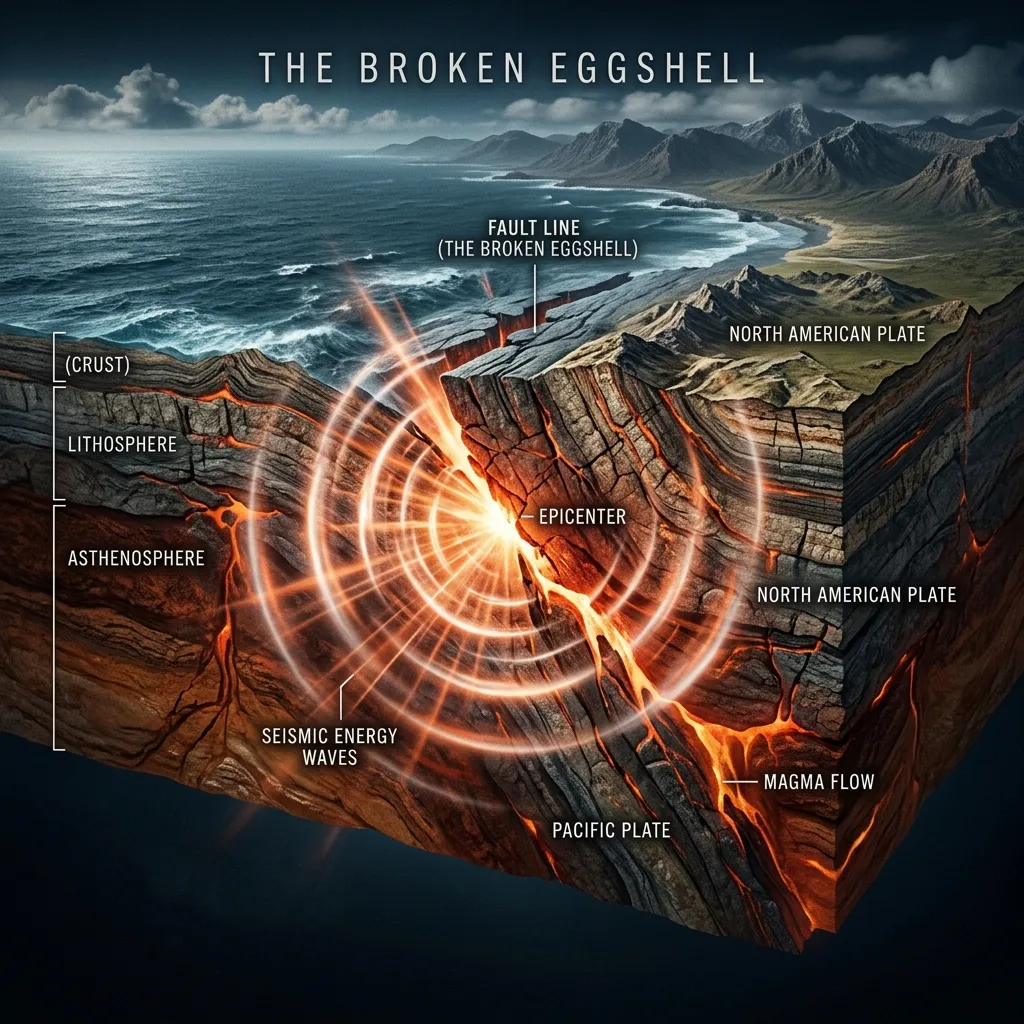
We treat the ground as "Solid." We build houses, skyscrapers, and cities on it, trusting that it will stay still. But the ground is not one solid piece. The Earth's surface is like a cracked eggshell. It is broken into about 20 massive pieces called Tectonic Plates.
These plates are not locked in place. They are floating on the hot, gooey mantle below. And they are moving. They move about as fast as your fingernails grow (a few inches a year). That doesn't sound fast. But when a shelf of rock the size of a continent moves a few inches, it carries unstoppable force.
The Sticky Friction
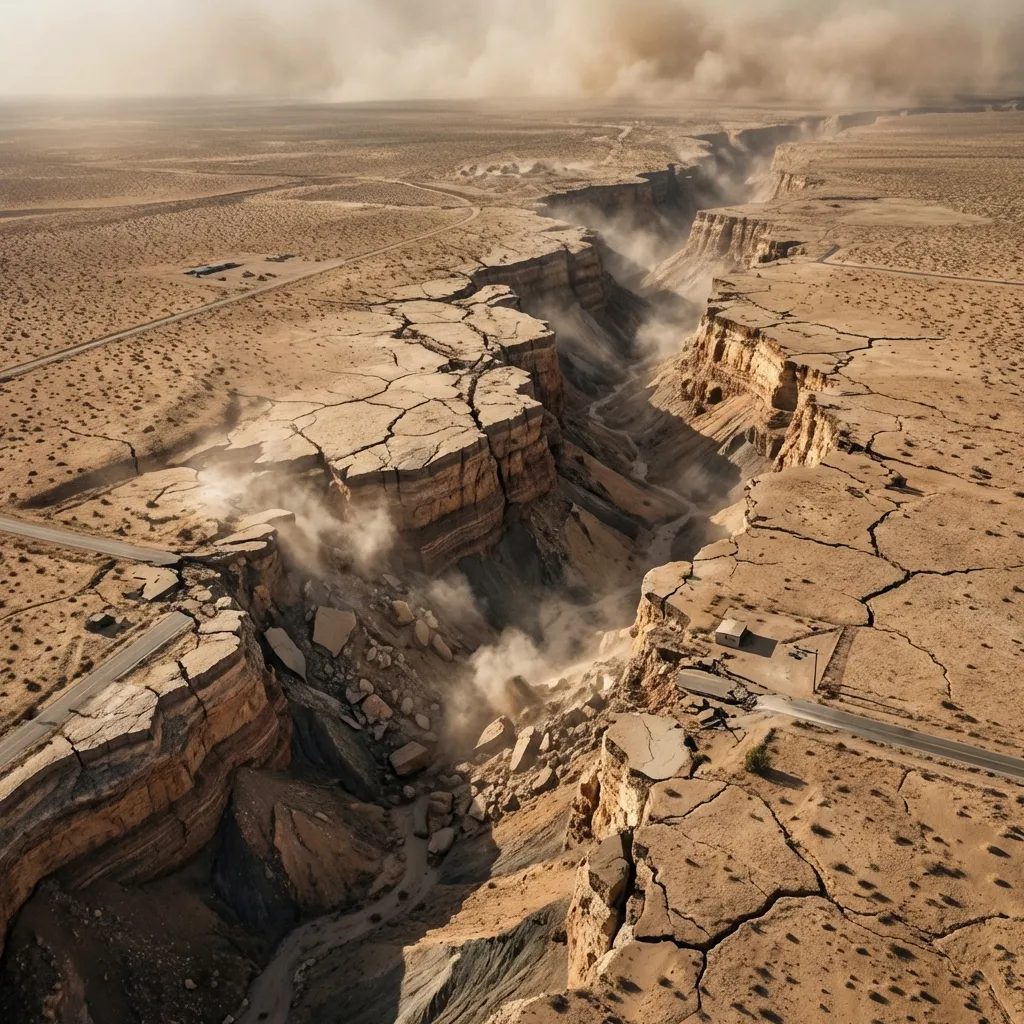
Usually, the plates slide past each other smoothly. But sometimes, they get stuck. The edges of the plates are rough and jagged rock. They lock together like Velcro. But the rest of the plate keeps pushing. The pressure builds. And builds. And builds. For 10, 50, or 100 years, the rocks strain against each other, bending like a loaded bow.
Then, in one split second, the rock breaks. SNAP. The stuck edges slip. All the energy stored up over 100 years is released in 10 seconds.
This release sends shockwaves rippling through the Earth. That is an Earthquake.
The Race of Waves
When the snap happens, the Earth rings like a bell. It sends out two types of waves:
- P-Waves (Primary Waves): These are the speedsters. They travel fast (3-5 miles per second). They are "Push/Pull" waves. They squeeze through the rock like a sound wave. When they hit the surface, they create a sudden, sharp jolt. They are often too subtle for humans to feel, but dogs and birds feel them immediately and freak out.
- S-Waves (Secondary Waves): These are the destroyers. They come a few seconds or minutes later. They are slower, but they move the ground Up and Down or Side to Side. This rolling motion is what topples buildings and cracks roads.
The Exponential Monster
We measure quakes on the Richter Scale (or Moment Magnitude). The scary thing about this scale is that it is Logarithmic. Each number is not just "one more." It is 32 times stronger.
- A Magnitude 5 is a strong rattle.
- A Magnitude 6 is not twice as bad. It is 32x worse.
- A Magnitude 7 is 1,000x worse than a 5.
- A Magnitude 9 (like the Japan 2011 quake) releases more energy than atomic bombs.
The Big One
Geologists can map exactly where the cracks (Fault Lines) are. For example, the San Andreas Fault runs right through California. We know the plates there are moving. We know they are stuck. We can measure the stress building up. But we cannot predict when they will snap. It could be tomorrow. It could be in 200 years.
We live on a restless planet. The very force that builds mountains and shapes continents also shakes our cities. An earthquake is a reminder that the Earth is not dead rock; it is a moving, changing engine, and we are just passengers riding on the shell.