What Causes Hiccups?
The Big Idea
Explore the biological 'glitch' behind the annoying hiccup. From diaphragm spasms to an ancient evolutionary connection to our water-breathing ancestors, discover why our bodies sometimes perform this useless but fascinating reflex.
Key Vocabulary & Concepts

Hands-On Observation Checklist
Teacher & Parent Discussion Starters
- Why is understanding what causes hiccups? important in everyday real life?
- What variable or factor had the biggest impact when testing the simulation?
- How does this concept connect to another science topic you have learned about?
What Causes Hiccups?
Explore the biological 'glitch' behind the annoying hiccup. From diaphragm spasms to an ancient evolutionary connection to our water-breathing ancestors, discover why our bodies sometimes perform this useless but fascinating reflex.
What Causes Hiccups?
The Annoying Spasm
We have all been there—you are sitting quietly enjoying your lunch when suddenly your chest jolts and you let out an incredibly loud, intensely annoying "HICCUP!" You try holding your breath, drinking water upside-down, and desperately waiting out the spasms. But what is physically causing your body to randomly glitch out?
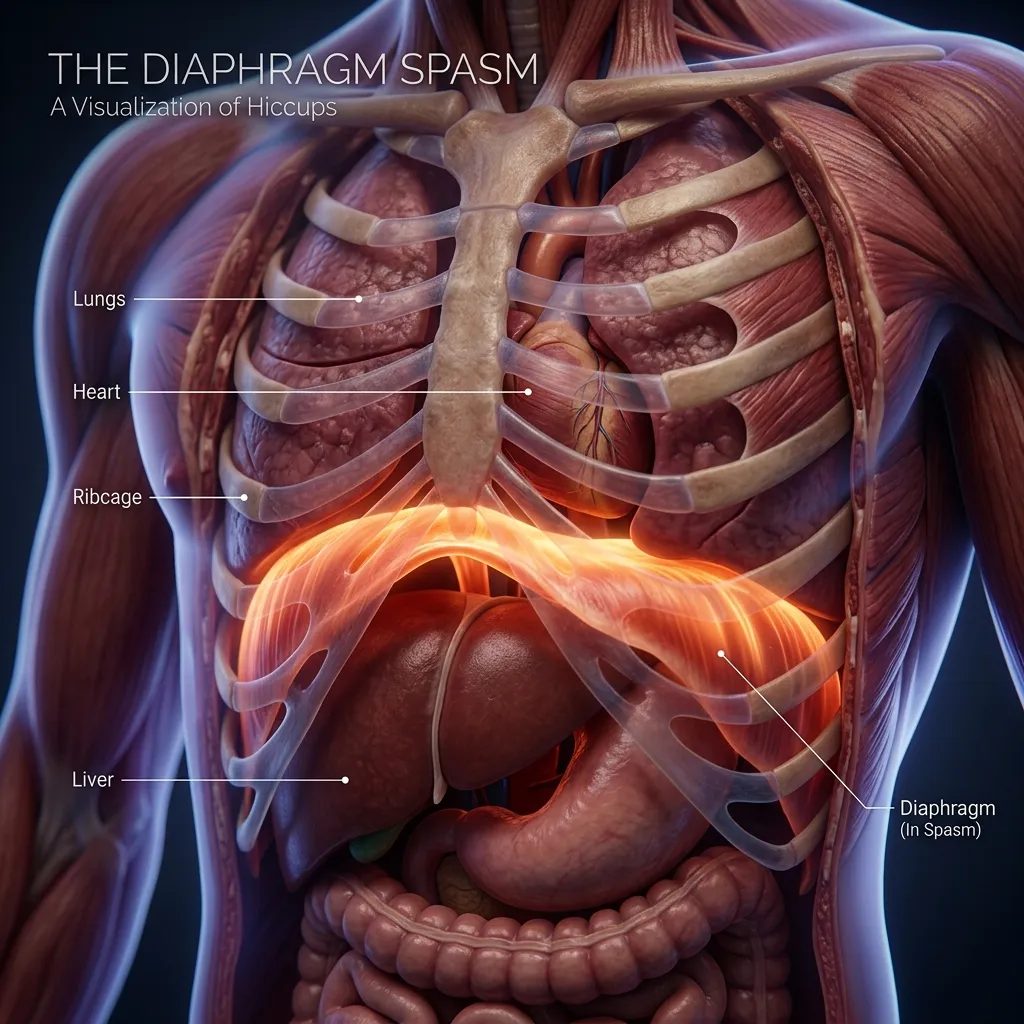
The true culprit is hidden directly at the bottom of your ribcage. It is a large, incredibly powerful, flat muscle called the diaphragm. It is completely responsible for powering your ability to physically breathe.
The Sudden Slam
Usually, your diaphragm simply behaves itself. When you breathe in, it pulls downward to magically vacuum air straight into your lungs. When you breathe out, it smoothly relaxes back upward to push the old air right back out. It is a quiet, seamless mechanical pump.
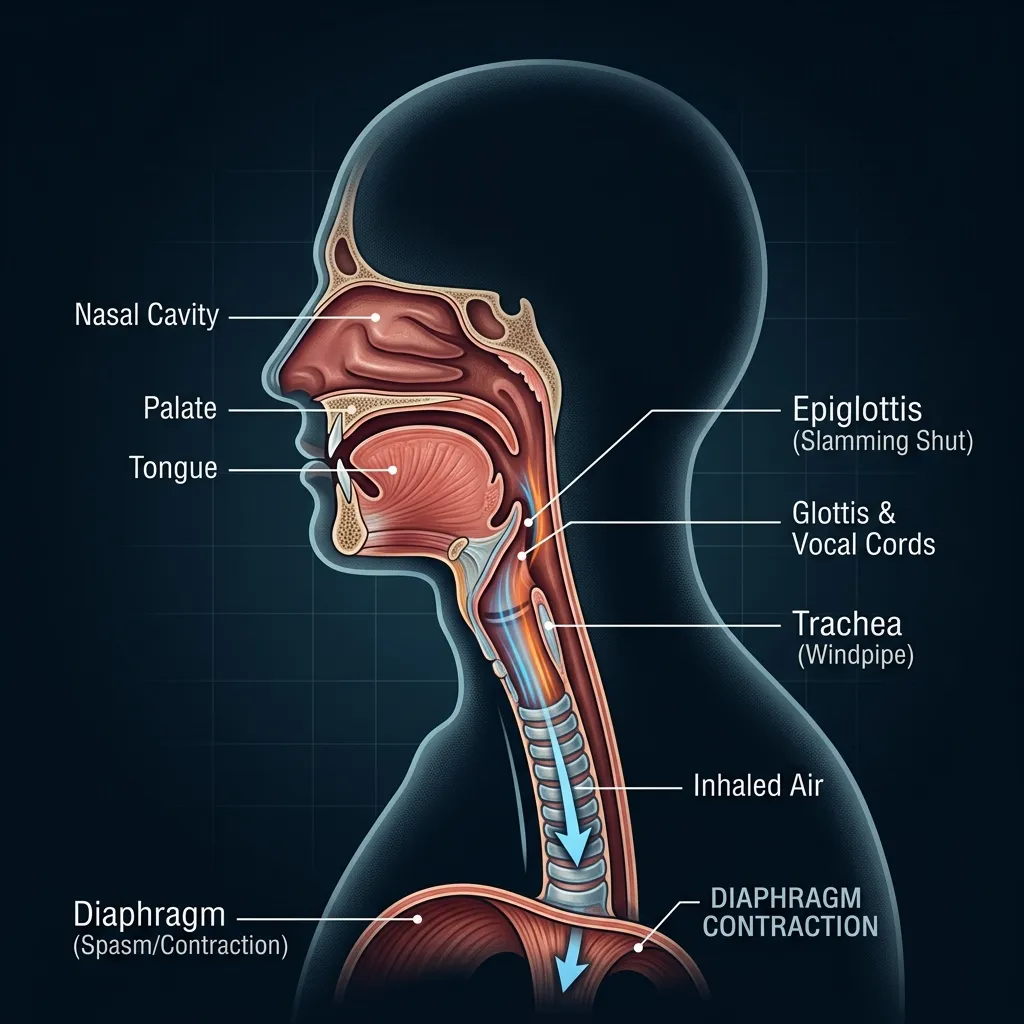
But occasionally, you can severely irritate that massive muscle by eating excessively fast, drinking ice-cold soda, or swallowing too much air. When the diaphragm gets overly stressed, it suddenly misfires and spasms downward in a violent jerk. This makes you violently suck in a massive breath of air much faster than normal.
A split-second later, your body instinctively panics at the incredibly fast rush of incoming air. To safely stop it, your vocal cords (the glottis) suddenly slam shut. The undeniably fast, rushing air violently smashes into those closed vocal cords, physically generating the famous "hic" sound!
The Biological Mystery
Why do we do it? For a long time, medical scientists genuinely didn't know. Hiccups serve zero modern biological purpose for a healthy adult human. They are completely useless!
However, leading evolutionary biologists now theorize that the annoying reflex is an ancient leftover from millions of years ago, inherited from our distant, water-breathing amphibian ancestors. Tadpoles use a nearly identical, rapid "hiccup" muscle reflex to actively pump water across their delicate gills without flooding their tiny lungs. You are essentially doing a dry-land version of breathing like an ancient fish!