What Causes Lightning?
The Big Idea
Discover the violent atmospheric physics that turn storm clouds into giant floating batteries. Learn how ice and sleet crashing together generate massive sparks of natural static electricity that can heat the air to 50,000 degrees.
Key Vocabulary & Concepts
Hands-On Observation Checklist
Teacher & Parent Discussion Starters
- Why is understanding what causes lightning? important in everyday real life?
- What variable or factor had the biggest impact when testing the simulation?
- How does this concept connect to another science topic you have learned about?
What Causes Lightning?
A Giant Floating Battery
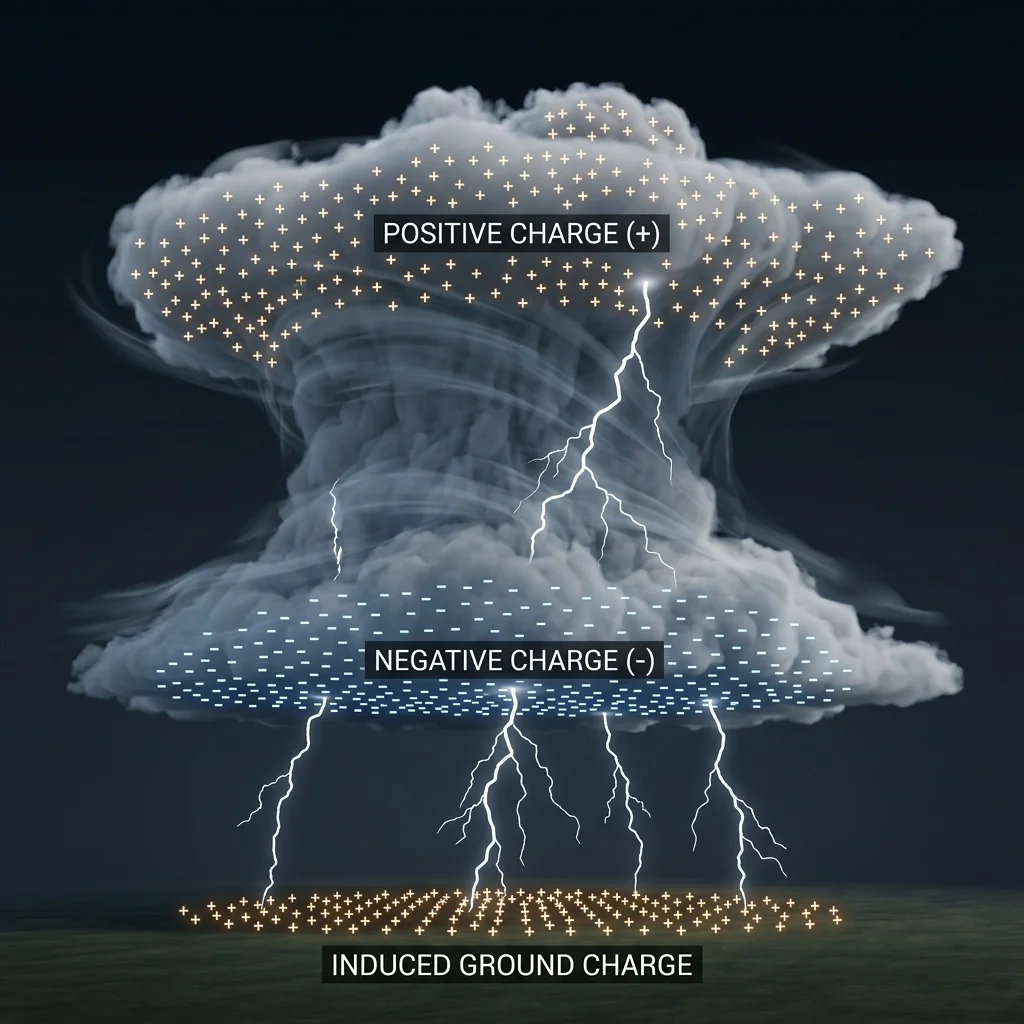
Lightning is a massive discharge of natural static electricity. It begins deep inside large cumulonimbus storm clouds. Inside these violent clouds, powerful updraft winds push light, freezing ice crystals upward. At the same time, chunks of heavy sleet and dense water droplets fall downward.
When these opposing materials violently crash into each other, friction causes them to trade electrons. The rising ice crystals gain a positive electrical charge, while the falling water droplets become negatively charged. Over several minutes, the top of the storm cloud becomes extremely positive, and the bottom becomes heavily negative, essentially turning the entire cloud into an enormous atmospheric battery.
The Connection
The massive negative charge at the cloud base begins repelling all the negative electrons on the ground below it. This forces the ground, tall trees, and buildings to become strongly positively charged. Nature seeks balance, so the cloud eventually attempts to close the circuit.
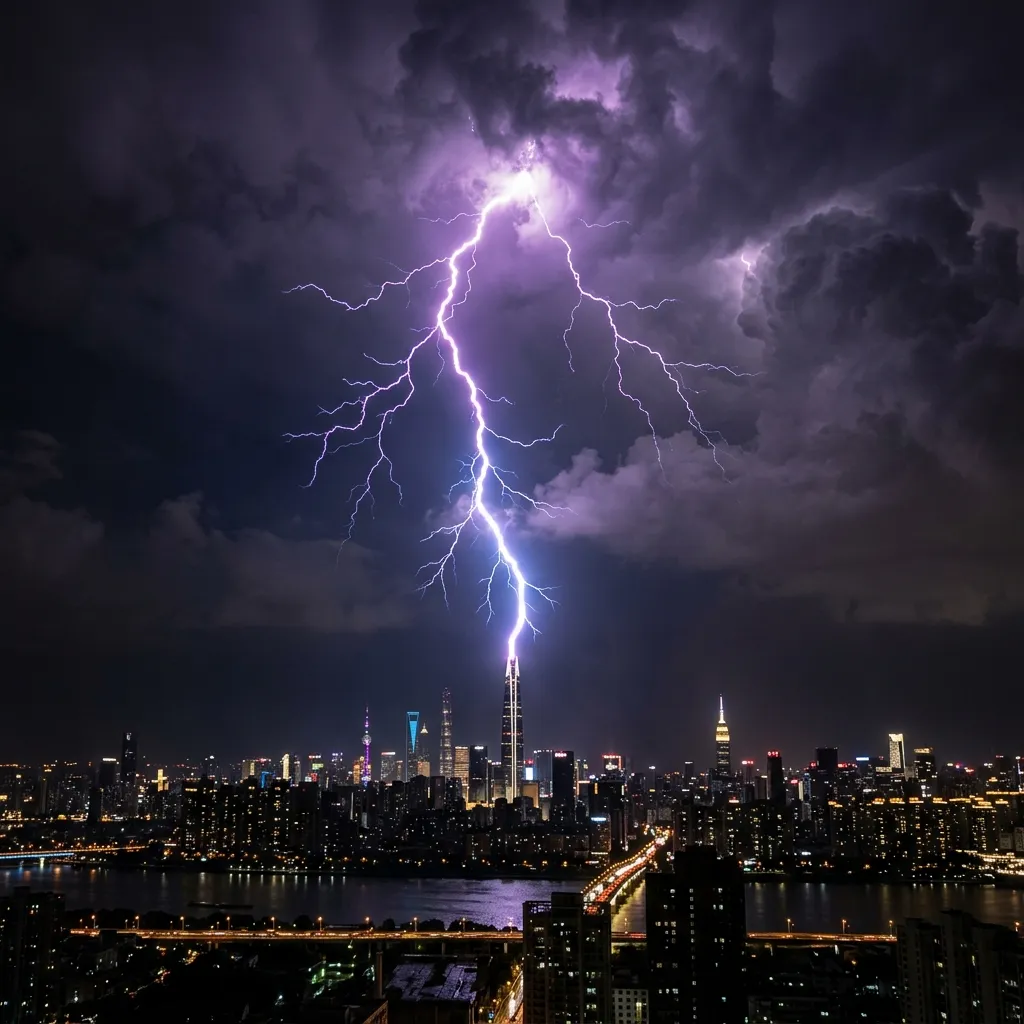
It sends an invisible, jagged channel of negative electrons downward called a stepped leader. Simultaneously, a positive channel reaches up from the ground. When these two pathways finally touch, an explosive surge of electricity travels back up the channel. This massive surge is the bright return stroke that we visually recognize as a lightning bolt.