What Causes Ocean Waves?
The Big Idea
Unlock the secrets of the sea to discover what creates the perfect surfing wave. Learn how wind, gravity, and underwater geography work together to move energy across thousands of miles of open ocean.
Key Vocabulary & Concepts
Hands-On Observation Checklist
Teacher & Parent Discussion Starters
- Why is understanding what causes ocean waves? important in everyday real life?
- What variable or factor had the biggest impact when testing the simulation?
- How does this concept connect to another science topic you have learned about?
What Causes Ocean Waves?
The Invisible Engine
If you stand on a sandy beach and stare out at the crashing surf, it looks like the ocean is throwing tons of heavy water directly at you. However, the most mind-blowing scientific secret of the ocean is that standard surface waves are not actually moving water—they are moving energy.
While giant tidal waves (tsunamis) are created by violent underwater earthquakes, everyday beach waves are almost entirely powered by the invisible wind.
When powerful winds blow across a vast, flat stretch of the open ocean, the moving air grips and rubs against the heavy surface water. This intense physical friction slowly creates tiny, innocent ripples. As the wind continues to blow against these ripples over thousands of miles, it steadily transfers its kinetic energy into the water, building the ripples into rolling mountains.
Moving In Circles
If waves are not moving water, then what is happening?
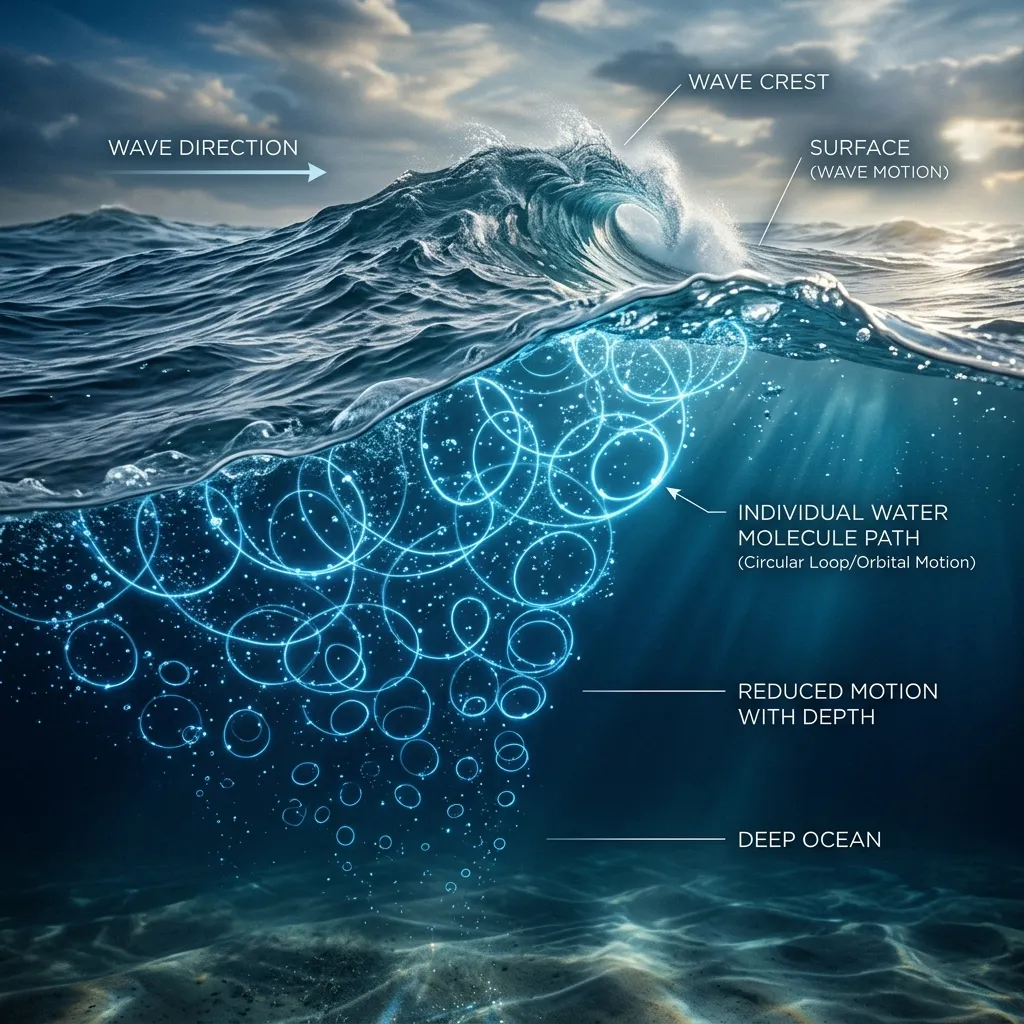
Imagine holding one end of a long jump rope and flicking it. A wave shape shoots down the entire length of the rope to the other side, but the physical rope itself hasn't actually moved out of your hand. Ocean waves work similarly! The raw wind energy travels horizontally through the water, but the actual liquid water molecules themselves are only rolling in a continuous vertical circular motion.
A single drop of water rides up the crest of the incoming wave, slides down the back into the trough, and gently rotates right back to its starting point!
The Final Crash
So, why does the wave finally break when it approaches the beach?
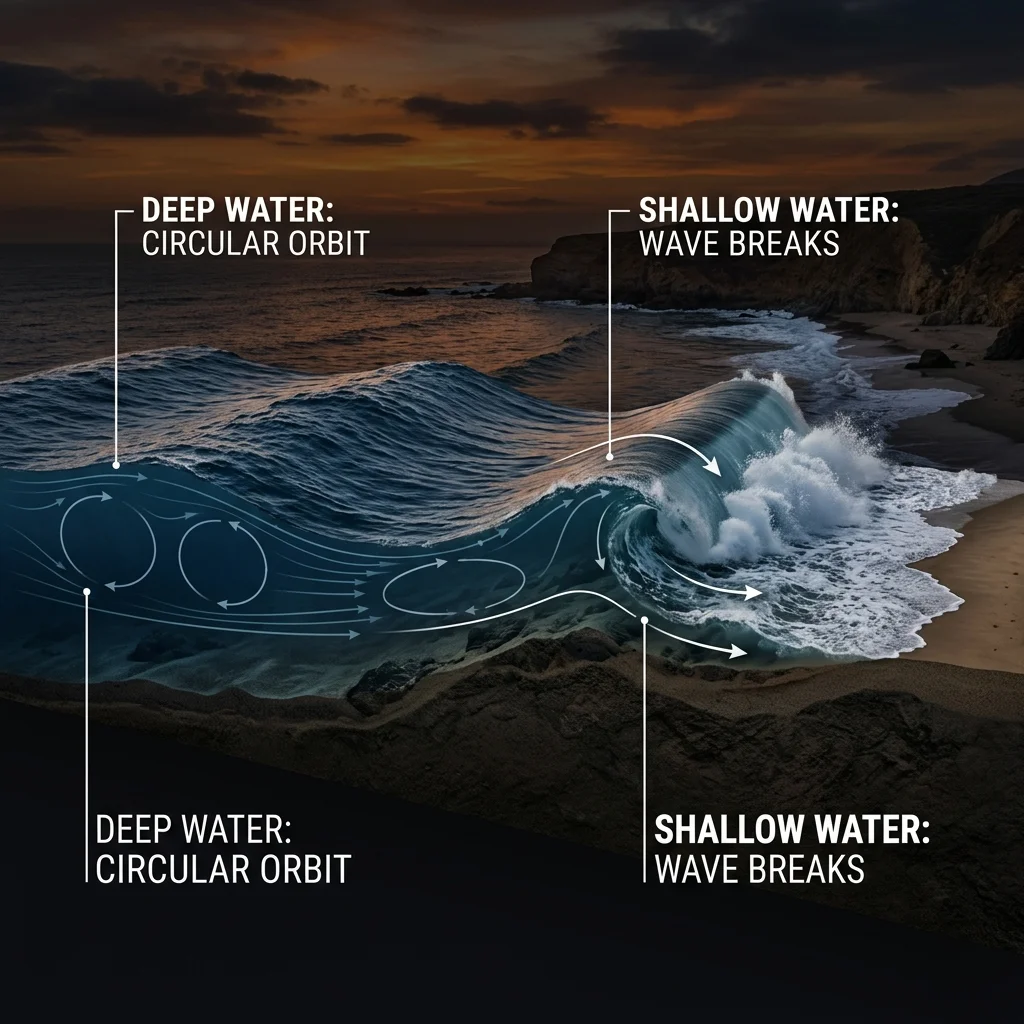
Out in the deep ocean, the circular energy of the wave rolls smoothly. But as the wave approaches the shallow shoreline, the bottom of the underwater energy circle scrapes against the rising ocean floor.
The physical friction abruptly slows down the bottom half of the wave, but the massive top half keeps rolling forward at full speed! Suddenly, the wave trips over its own feet, grows taller, leans too far forward, and spectacularly crashes down into white foam on the shore.