
What Is A Comet?
The Big Idea
Meet the 'dirty snowballs' of the solar system. Discover what comets are made of, where they come from, and why they develop spectacular glowing tails as they race toward the Sun.
Key Vocabulary & Concepts
Hands-On Observation Checklist
Teacher & Parent Discussion Starters
- Why is understanding what is a comet? important in everyday real life?
- What variable or factor had the biggest impact when testing the simulation?
- How does this concept connect to another science topic you have learned about?
What Is A Comet?
The Ancient Dirty Snowball
While an asteroid is largely a dry, dense chunk of solid metal and heavy rock, an enormous, spectacular Comet is practically a vastly different, entirely ancient, completely frozen chemical leftover. It strictly dates directly back to the chaotic birth of our early solar system.
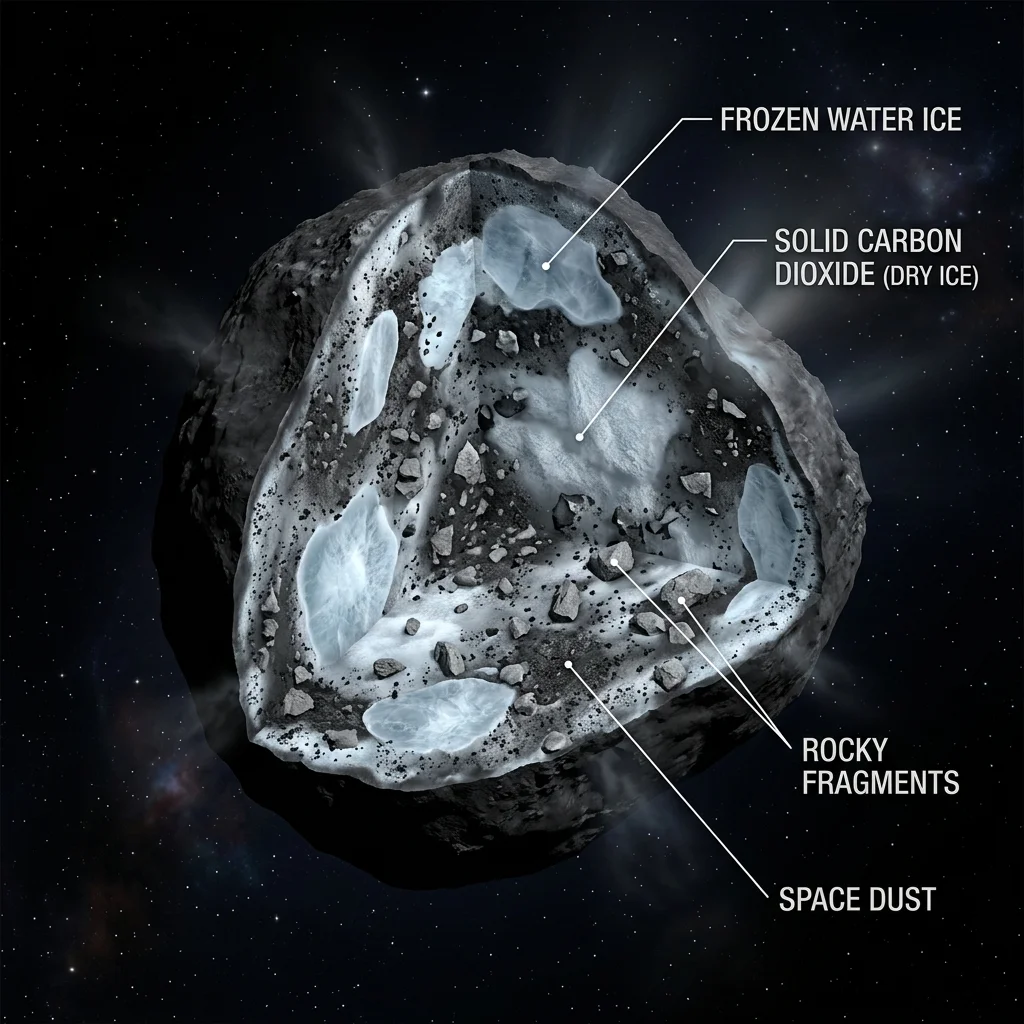
Professional astronomers frequently affectionately nickname these complex comets "dirty snowballs." They are practically city-sized blocks of deeply frozen solid water, frozen toxic carbon dioxide gas, dark space dust, and tough rocky shrapnel. They spend almost entirely all their time quietly floating harmlessly in the freezing darkness located exclusively at the absolute edge of outer space.
Melting Bravely In The Solar Wind
When the absolutely massive, immensely powerful invisible gravity belonging to the sun slowly securely pulls an icy comet remarkably closely, the unthinkably extreme intense heat quickly causes the entire thick surface ice to violently transition directly from a hard solid into a hot streaming highly volatile rapidly expanding gas (a chemical physical process naturally called sublimation).
This aggressively intense eruption of brightly glowing massively hot space gas and fine black space dust spectacularly rapidly forms a heavily thick atmosphere (scientifically called a "coma").
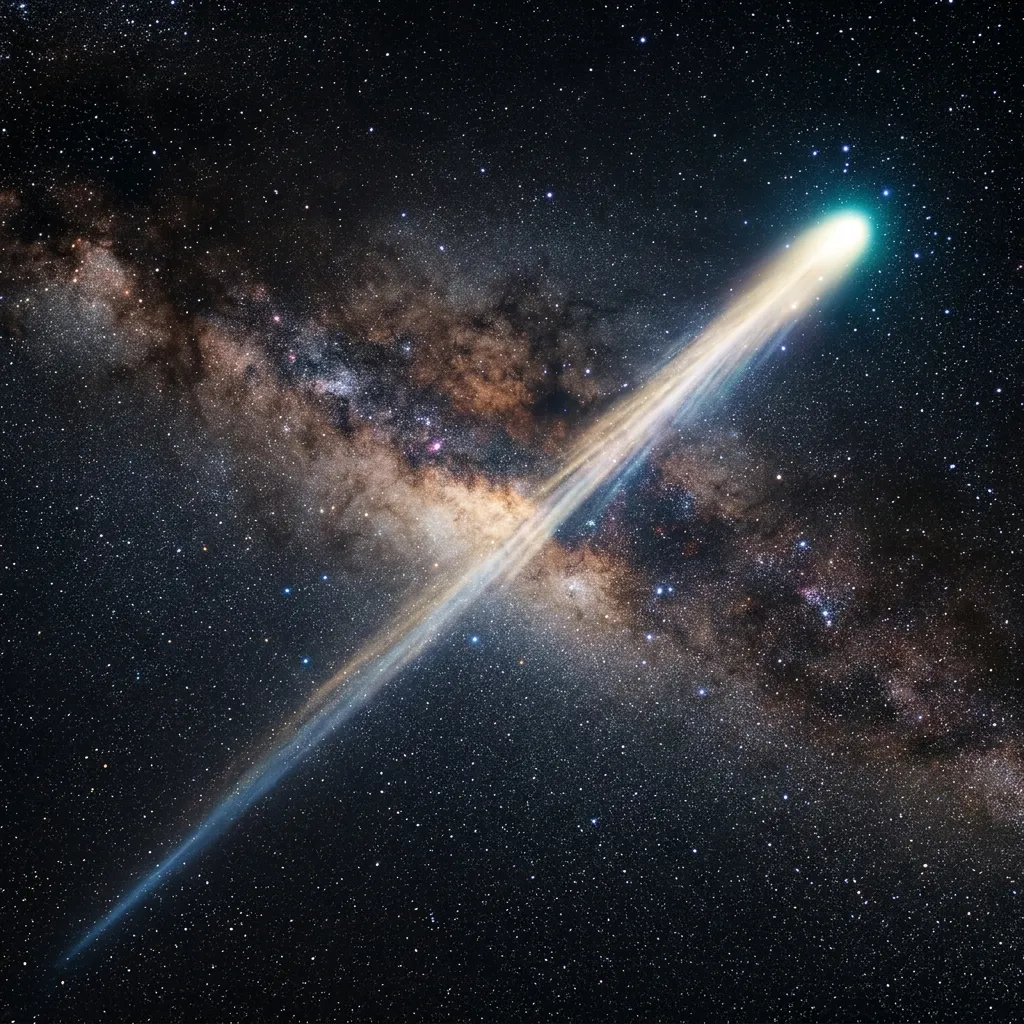
As the highly energetic strong intense Solar Wind forcibly blows completely across the comet, it beautifully dramatically stretches this thick glowing coma out into a stunning, millions-of-miles-long glowing tail. And because the solar wind always physically blows strictly outward entirely away from the massive sun, the bright tail of a moving comet absolutely always points exclusively safely away from the sun, regardless of exactly which actual direction the rocky solid comet is physically currently traveling!