What Is Color?
The Big Idea
Unlock the secrets of the visible spectrum. Discover how different wavelengths of light and the biology of your eyes work together to create the vibrant world of color that you see every day.
Key Vocabulary & Concepts
Hands-On Observation Checklist
Teacher & Parent Discussion Starters
- Why is understanding what is color? important in everyday real life?
- What variable or factor had the biggest impact when testing the simulation?
- How does this concept connect to another science topic you have learned about?
What Is Color: The Great Hallucination
The Great Hallucination
Color does not exist. Look at a red apple. The redness isn't in the apple. The apple is actually a mirror. It absorbs every color of light except red. It spits the red light back out. That rejected light hits your eye, and your brain hallucinates a sensation called "Red." If you turn off the lights, the apple has no color at all. Color isn't a property of objects; it is a label your brain gives to different speeds of light.
Newton's Rainbow
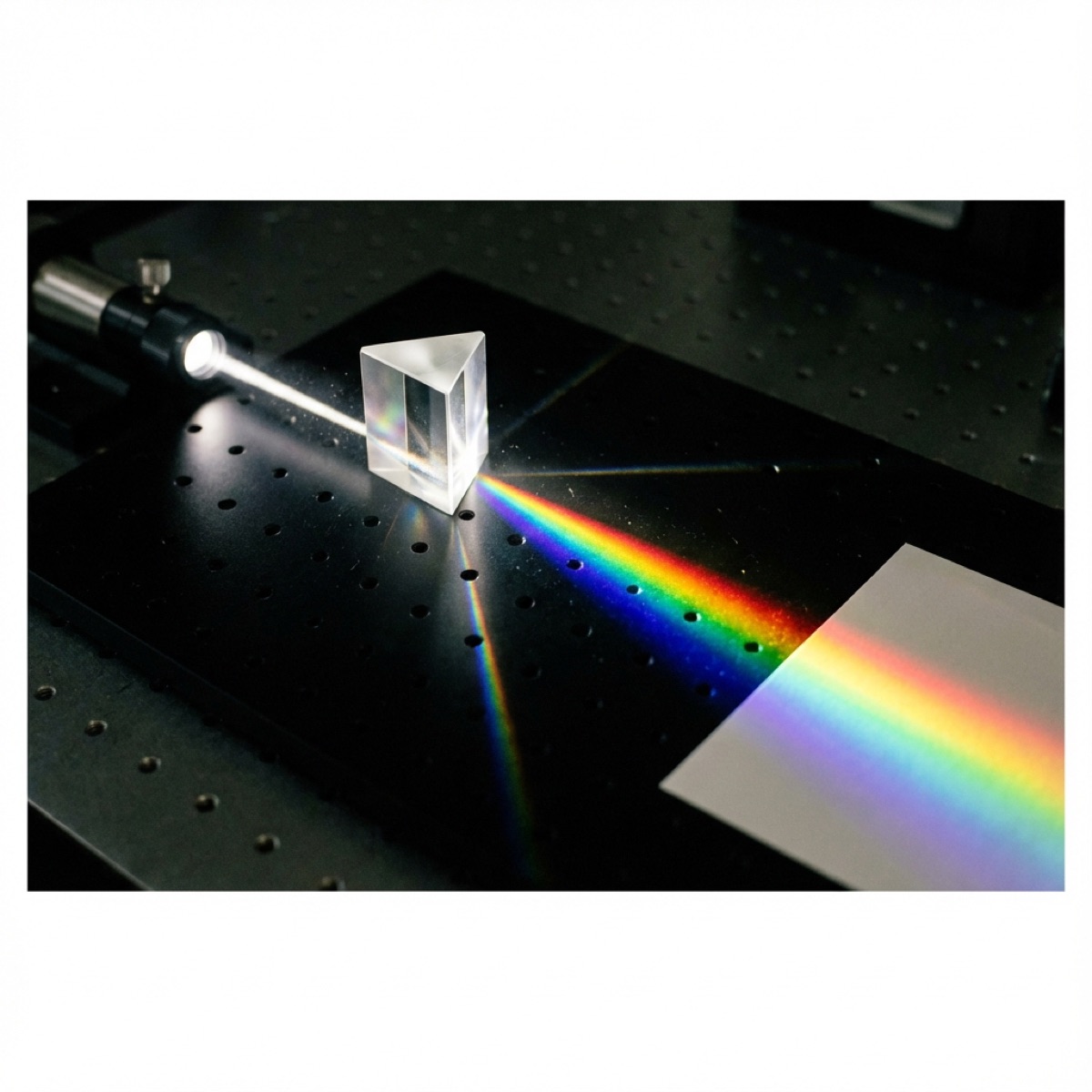
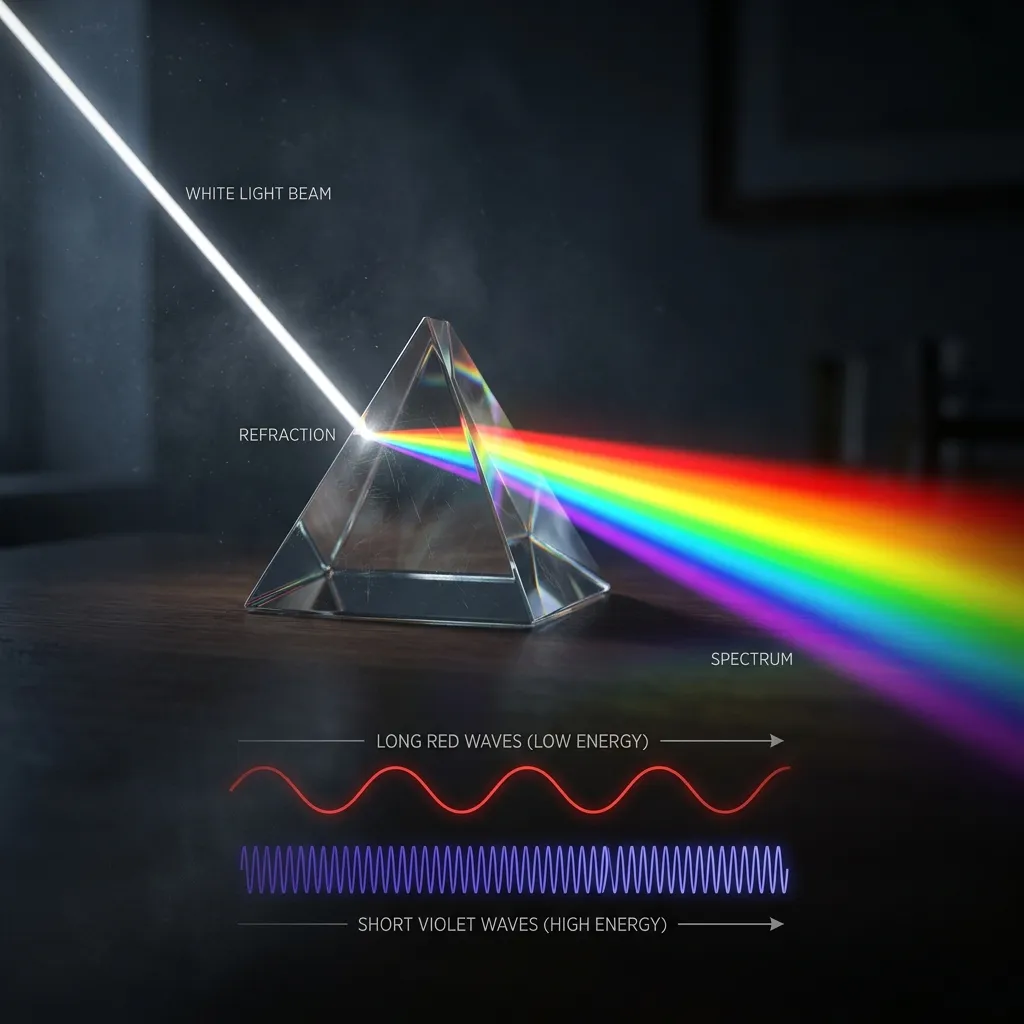
In 1666, Isaac Newton bored holes in his window shutters. He let a single beam of white sunlight hit a glass prism. Magic happened: The white light split into a perfect rainbow (Spectrum). He proved that White Light isn't pure; it is a chaotic soup of all the colors mixed together. The prism just untangled them by speed.
- Red: Long, lazy waves.
- Violet: Short, frantic waves.
The Printer Problem: RGB vs CMYK
There are two ways to make color.
- Additive (Light): Your phone screen starts Black. It adds Red, Green, and Blue light (RGB) to make White.
- Subtractive (Paint): A printer starts White (paper). It adds Cyan, Magenta, Yellow, and Black ink (CMYK) to absorb light until it gets Black. This is why a bright neon picture on your screen looks muddy when you print it. The math is flipped!
The Pink Myth
Is Pink real? No. Look at a rainbow. Red... Orange... Yellow... Green... Blue... Violet. Where is Pink? It isn't there. Pink is not a light wave. There is no such thing as a "pink photon." Pink is a glitch in your brain. When you see Red light (Low end) and Violet light (High end) at the same time, your brain panics. It invents an imaginary color to bridge the gap. Pink is logically impossible, but we see it anyway.
The Blue Lie (Structural Color)
Pigments (paint/dye) are chemicals that absorb light. But Blue is rare in nature. Almost no animal has blue pigment. The Morpho Butterfly looks bright metallic blue. But if you grind up its wings, the dust is brown. Why? Its wings are covered in microscopic "Christmas Trees" (Nanostructures) made of clear chitin. These structures are perfectly spaced to reflect only blue light waves and cancel out everything else. It is a physics trick. It is called Structural Color. The bird isn't blue; the bird is a mirror built to reflect blue.
Fast Facts
- Vantablack: The darkest material on Earth is made of carbon nanotubes. It absorbs 99.96% of light. If you painted a crumpled ball with it, it would look like a smooth, flat black hole. It erases 3D depth.
- Impossible Colors: Stare at a bright green square for 30 seconds, then look at a white wall. You will see a "Reddish-Magenta" square. This is an "Afterimage" caused by your eye sensors getting tired.
- Mantis Shrimp: Humans have 3 color cones (Red, Green, Blue). The Mantis Shrimp has 16. It sees a psychedelic universe of UV and Polarized light that we can't even describe.
Diagram Prompts
- The Prism: Isaac Newton's room. A beam of white sunlight hitting a glass triangle. A rainbow fan coming out the other side. Label: "Unmixing the Light."
- RGB vs CMYK: Two Venn Diagrams. Left (RGB): Red+Green+Blue center = White. Right (CMYK): Cyan+Magenta+Yellow center = Black. Label: "Light vs. Paint."
- The Pink Gap: A spectrum bent into a circle (Color Wheel). Show the gap between Red and Violet. Label the bridge connecting them as "Pink (Brain Invention)".