
What Is Fire?
The Big Idea
Discover the violent chemistry and the glowing plasma hiding inside a campfire. Learn about the 'Fire Triangle' and how heat, fuel, and oxygen combine to create the dancing flames that changed human history.
Key Vocabulary & Concepts
Hands-On Observation Checklist
Teacher & Parent Discussion Starters
- Why is understanding what is fire? important in everyday real life?
- What variable or factor had the biggest impact when testing the simulation?
- How does this concept connect to another science topic you have learned about?
What Is Fire?
The Glowing Ghost
Humans have been gathering around campfires for over 400,000 years. We use it to cook our food, heat our homes, and forge our steel. Yet, if you sit in the dark and truly stare at a simple candle flame, it invites a deeply weird question: What exactly is it?
It isn't a solid—you can pass your hand right through it. It certainly isn't a liquid. And it isn't really a normal gas, either. It moves. It dances. It eats. It breathes. It looks incredibly alive.
Fire is not a "thing." Fire is an Event. It is a rapid, violent chemical reaction happening in real-time right in front of your eyes.
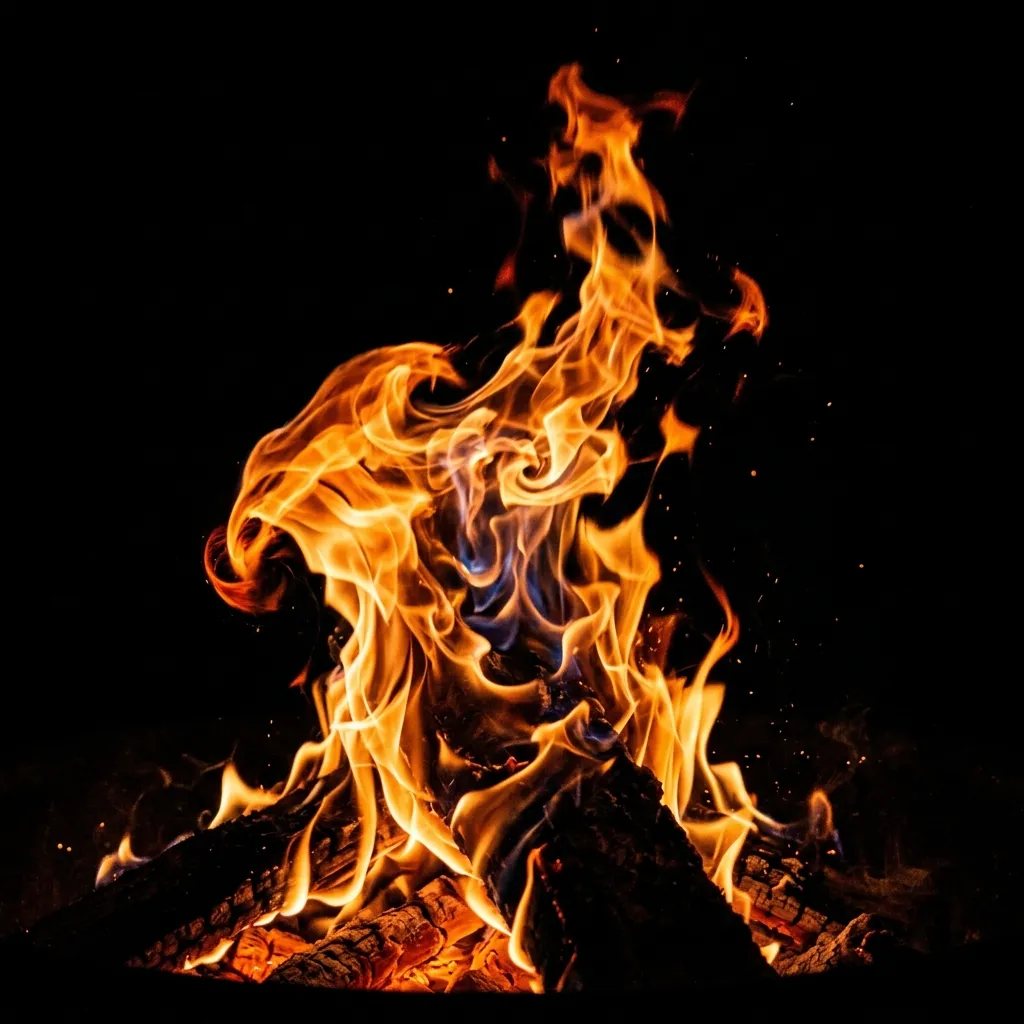
A breathtaking cinematic photograph of an intense campfire flame dancing in the dark
The Chemical Party
To create this glowing event, you must build the Fire Triangle. Fire is a demanding beast; it absolutely requires three things to exist. If you remove even one, the fire instantly dies.
- Fuel: Something to burn (like wood, paper, or wax).
- Heat: A spark or friction to kickstart the reaction.
- Oxygen: The invisible gas in the air.
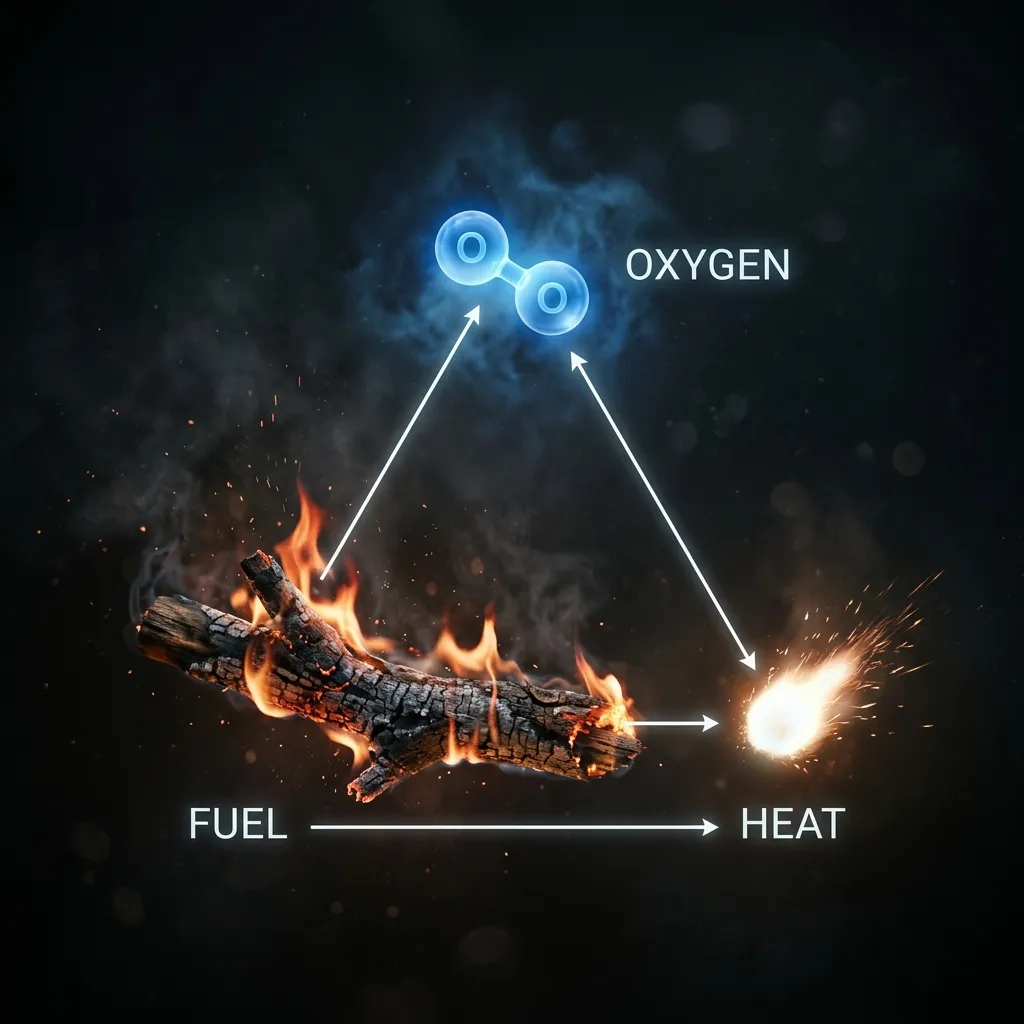 A cinematic documentary-style visualization of the Fire Triangle: Fuel, Oxygen, and Heat
When you light a candle, a fascinating chain reaction begins. The heat from the match melts the solid wax into a liquid. That liquid travels up the wick and gets so hot it turns into a gas. This hot fuel gas mixes with the Oxygen rushing in from the room.
Suddenly, the atoms violently snap together and rearrange themselves. Carbon and Hydrogen from the wax aggressively bond with the Oxygen. This violent snapping releases a massive burst of leftover energy. That energy hits your eyes as light, and hits your skin as heat. This is Rapid Oxidation.
The Fourth State of Matter
So, what is the actual visible, dancing shape of the flame? It is Plasma—the fourth state of matter.
When the gas gets hot enough, the atoms get so incredibly excited that they physically rip apart. Electrons fly off their cores. This resulting soup of super-hot, electrically charged particles emits a brilliant glow.
Not all parts of the flame are equal:
- The Blue Base: This is the hottest part of the flame. Here, the fuel is mixing perfectly with lots of oxygen, creating pure, flawless combustion.
- The Yellow Top: The bright yellow and orange light is actually "dirty" fire. It is glowing Soot. Tiny, microscopic particles of unburnt carbon are drifting upward in the heat. The yellow part of a candle is basically floating charcoal dust glowing red-hot, just like the coils in a toaster.
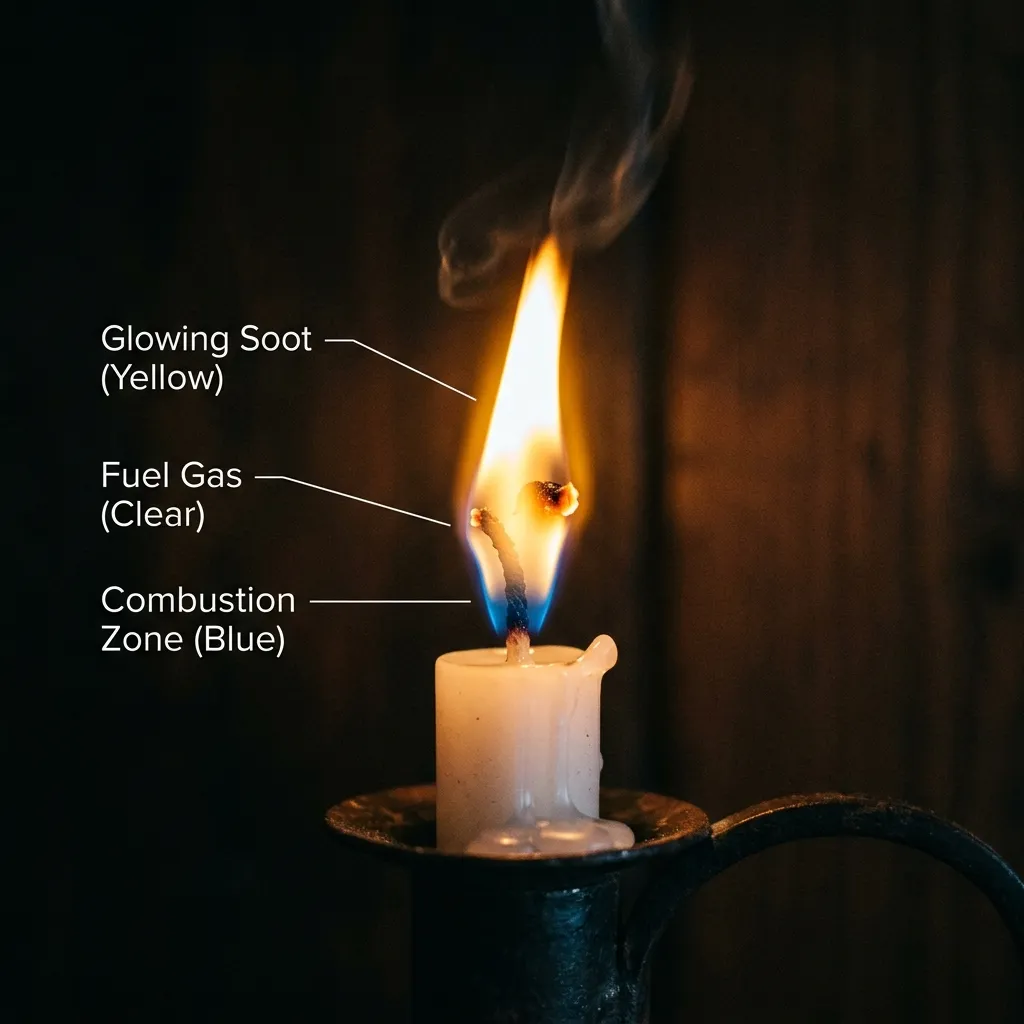 A cinematic extreme macro photograph detailing the anatomy of a candle flame
Making Water from Fire
Here is the wildest fact about the chemical party: Fire makes Water.
When wood or wax burns, the Hydrogen atoms in the fuel bond tightly with the Oxygen atoms in the air. One Oxygen plus two Hydrogens equals H2O. Your crackling campfire is constantly venting invisible, boiling steam into the night sky.
If you hold a cold glass spoon high over a candle flame (careful not to burn yourself!), you will actually see it fog up with condensation. That is "Fire Water." It is wonderfully poetic: The exact thing we use to extinguish a fire is also the exact thing that fire creates.