
What Is Static Electricity?
The Big Idea
Discover the invisible world of electron imbalances that create the surprising 'zap' of static electricity. Learn how friction can turn your own body into a walking battery and why your hair stands on end.
Key Vocabulary & Concepts

Hands-On Observation Checklist
Teacher & Parent Discussion Starters
- Why is understanding what is static electricity? important in everyday real life?
- What variable or factor had the biggest impact when testing the simulation?
- How does this concept connect to another science topic you have learned about?
What Is Static Electricity?
Discover the invisible world of electron imbalances that create the surprising 'zap' of static electricity. Learn how friction can turn your own body into a walking battery and why your hair stands on end.
What Is Static Electricity?
You are padding across a plush living room rug in your woolen socks on a dry winter afternoon. You reach out your hand to turn a metal doorknob and—SNAP!
A tiny, bright blue spark leaps across the gap to your fingertip. You pull your hand back with a start, feeling an instantaneous, stinging pinch.
For one fraction of a second, your body was not just human flesh and bone; you were a walking, high-voltage battery!
We call this everyday mystery static electricity. But what causes an ordinary carpet, a plastic slide, or a cozy winter sweater to turn you into a miniature lightning storm?
The Subatomic Tug-of-War
Every physical object in our universe—from the socks on your feet to the device in your hands—is constructed from atoms.
At the core of every atom sits a dense nucleus of positively charged protons and neutral neutrons, orbited by a cloud of lightweight, negatively charged electrons.
Under normal circumstances, atoms have an equal number of protons and electrons. Because opposite charges cancel each other out, most objects in your home are electrically neutral.
Electron Exchange: Friction stripping electrons to create a static charge buildup
However, electrons are not permanently glued to their atoms. Some materials hold on to their electrons loosely, while others are greedy thieves.
Physicists rank materials on a scale called the Triboelectric Series:
- Materials like human hair, wool, and animal fur easily surrender their electrons when rubbed.
- Materials like rubber, plastic, polyester, and amber aggressively snatch and hoard extra electrons.
When you drag your woolen socks across a nylon rug, the friction peels millions of electrons off the carpet fibers and dumps them onto your body. Because human skin and clothing are poor conductors, those stolen electrons cannot flow away. They stay trapped, sitting stationary on your skin.
That is why it is called static electricity—from the Greek word for "standing still."
The Anatomy of the Zap
Suddenly, your body holds a massive, unbalanced negative charge. Because like charges repel, all those surplus electrons are screaming to get as far away from each other as possible.
When your finger nears a metal doorknob—a brilliant electrical conductor connected to the structure of the house—the electric field of your fingertip violently repels the electrons in the metal, creating an intensely positive zone on the knob's brass surface.
When the electrical potential difference between your finger and the knob reaches roughly 30,000 volts per centimeter, the insulating capacity of the air tears apart.
The air molecules ionize into a narrow thread of glowing plasma. In less than a microsecond, millions of electrons leap through the open air to equalize the charge.
The spark heats the air to thousands of degrees, causing a microscopic acoustic shockwave—the sharp "snap" you hear!
Why doesn't a 20,000-volt static shock harm you? Because while the voltage (electrical pressure) is high, the amperage (current flow) is infinitesimally tiny, lasting only a few billionths of a second.
Why Does Static Make Hair Stand on End?
If you rub an inflated rubber balloon against your hair, you will see your hair magically defy gravity, floating upward toward the balloon. Even wilder, if you place your hands on a metal Van de Graaff generator at a science museum, every single strand of hair on your head will stick straight out like a dandelion!
The rule is simple: Like charges repel.
When rubber steals electrons from your hair, each individual strand is left with a positive charge. Because every single hair strand is now positively charged, they violently push away from their neighbors in every direction, floating outward to maximize their distance!
Fast Facts About Static Electricity
- Ancient Discovery: In 600 BC, Greek philosopher Thales of Miletus discovered that rubbing a piece of fossilized tree resin called amber with fur allowed it to attract dry leaves and feathers. The Greek word for amber is elektron—the root of our word "electricity"!
- Why Winter is Worse: Summer air is humid and packed with water vapor. Water molecules condense on surfaces, creating an invisible conductive film that lets static charges bleed off safely. In cold winter air, humidity drops near zero, turning your home into an electrical insulator where charges build up to immense levels.
- Photocopier Magic: Office laser printers and photocopiers rely on static electricity! They use static charges to attract black powdered toner onto a rotating drum before melting it onto paper.
- Airport Safety: Air rushing past airplanes and fuel trucks creates enormous static charges. Fuel trucks must always clip a heavy metal grounding wire to an airplane before refueling to prevent a spark from igniting jet fuel fumes!
Related Wonders
 Physics
The Switch That Changed the World
Step into the tiny switch that changed the world. Discover how the transistor—the most manufactured object in human history—uses semiconductors to control the flow of electricity, powering everything from your watch to supercomputers.
 Physics
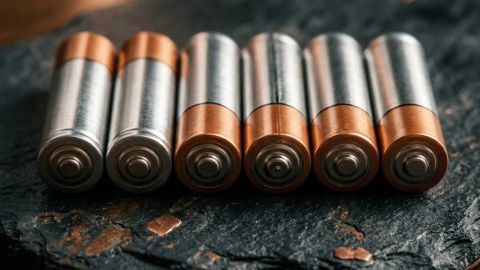
How Do Batteries Store Energy?
Peek inside the metallic shell of a battery to discover the silent chemical war that powers our modern world. Learn how trapped ions and escaping electrons create the invisible force that fuels everything from your smartphone to electric cars.
 Physics
How Do Magnets Work?
Explore the invisible, quantum-level magic happening inside a piece of metal. Discover how spinning electrons create a powerful force field that allows magnets to reach out and pull objects through thin air without ever touching them.