
Why Are Flamingos Pink?
The Big Idea
Discover the colorful truth about why these famous birds change their feathers. Learn how a diet of brine shrimp and algae transforms a gray chick into a vibrant, neon-pink adult.
Key Vocabulary & Concepts
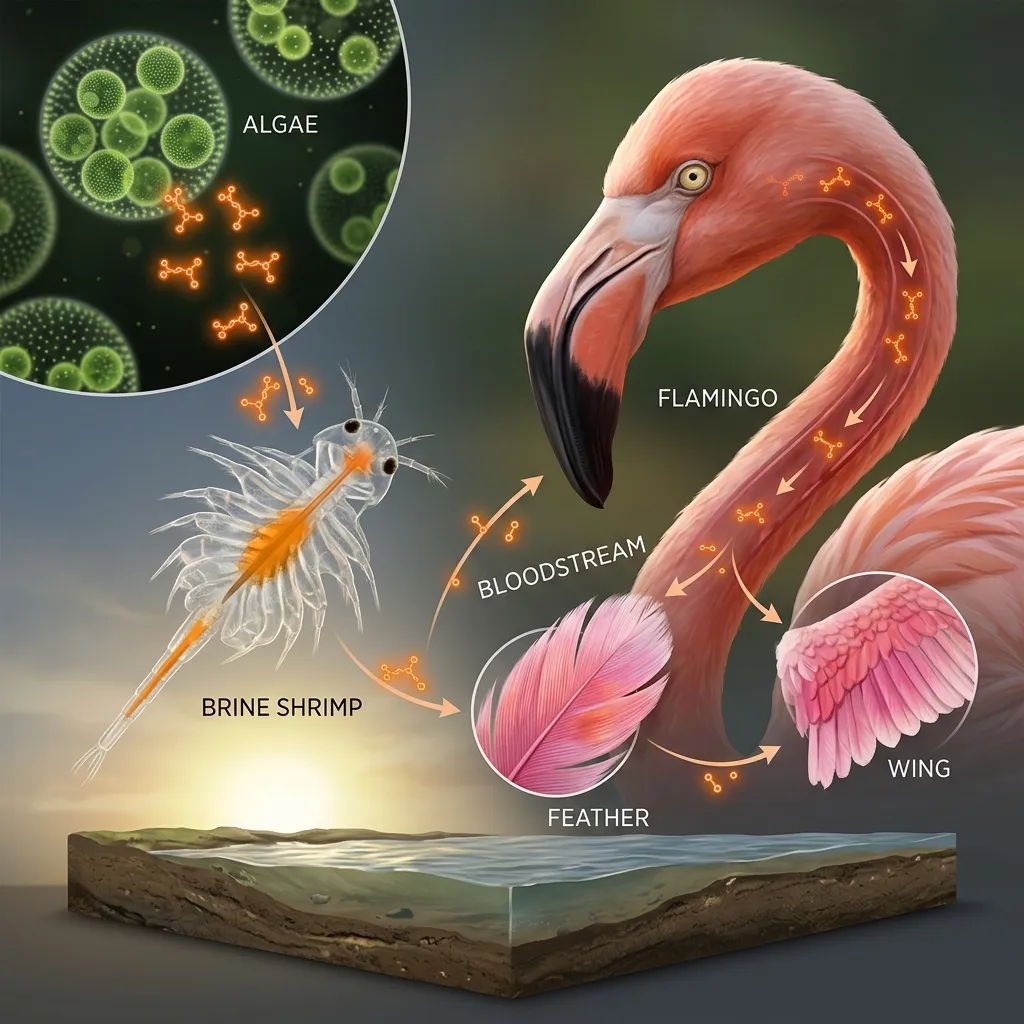
Hands-On Observation Checklist
Teacher & Parent Discussion Starters
- Why is understanding why are flamingos pink? important in everyday real life?
- What variable or factor had the biggest impact when testing the simulation?
- How does this concept connect to another science topic you have learned about?
Why Are Flamingos Pink?
There is an old saying that "you are what you eat." If a human consumed nothing but sweet potatoes and raw carrots for six months straight, their skin would actually begin to develop a subtle yellowish-orange tint—a harmless condition known as carotenemia.
For humans, this is a quirky medical curiosity. But for the flamingo, turning the color of your dinner is an absolute biological requirement.
When you picture a wild flamingo wading through a tropical lagoon, you imagine vibrant plumes of hot pink, coral, and glowing scarlet. Yet when a flamingo chick cracks out of its chalky egg, it is not pink at all. It is covered in a downy coat of dull, fluffy gray or snow-white feathers.
If a flamingo chick grew up in a sterile room eating ordinary seeds and grains, it would remain stark white for its entire adult life. So how does this elegant wading bird transform into an iconic symbol of neon pink?
The Caustic Kitchen: Algae and Brine Shrimp
Adult flamingos thrive in some of the most hostile, inhospitable aquatic environments on our planet. They congregate by the millions in hypersaline lagoons and volcanic soda lakes—such as Tanzania’s Lake Natron—where water temperatures can reach 140°F (60°C) and the caustic alkaline chemistry would blister human skin off the bone.
Very few creatures can survive in these harsh, corrosive waters, but two organisms flourish in astronomical numbers: microscopic blue-green algae and millions of tiny brine shrimp (Artemia salina).
To feed, the flamingo wades into the shallows and bends its long neck, turning its specialized hooked beak completely upside down in the water.
Using its thick, piston-like muscular tongue, the bird pumps muddy water through hair-like comb filters lining the edges of its bill called lamellae. The lamellae trap the nutritious algae and shrimp while squirting the caustic salt water back into the lake.
The Chemistry of Carotenoids
Both the algae and the brine shrimp are loaded with natural organic pigments called carotenoids—specifically beta-carotene (the same pigment that makes carrots orange) and astaxanthin (which gives cooked salmon and lobster their reddish hue).
When a flamingo digests its feast of algae and brine shrimp, its liver breaks down these carotenoid pigments. Because carotenoids are fat-soluble, they dissolve into fats and lipids in the bloodstream.
As the flamingo molts and grows new feathers over a period of one to three years, these colorful carotenoids are transported to the feather follicles and deposited directly into the growing fibers of keratin (the same structural protein that makes up human hair and fingernails).
Gradually, the gray feathers fall out, and a dazzling coat of pink and crimson emerges!
Pink as a Badge of Health
In the flamingo world, being pink is not just a fashion statement; it is a vital mating resume.
A deeply pigmented, crimson-colored flamingo communicates to the rest of the flock that it is healthy, strong, and exceptionally skilled at foraging in the richest feeding grounds. A pale or whitish flamingo, by contrast, is often sick, malnourished, or nursing young.
Remarkably, during breeding season, both mother and father flamingos produce a nutrient-dense, fat-rich secretion from their upper digestive tract called crop milk to feed their hungry gray chicks.
Because this crop milk is loaded with carotenoids and red blood cells, parent flamingos literally drain the pink color out of their own bodies to nourish their babies! By the end of the chick-rearing season, devoted flamingo parents often fade to a ghost-like, exhausted white until their young are independent and they can resume feasting on algae.
Fast Facts About Flamingos
- Zoo Secrets: Early 19th-century zoos were baffled when their vibrant wild flamingos gradually faded to dull white. Today, zookeepers supplement their diet with specialized pellets fortified with natural carotenoids and spirulina to keep them radiant.
- Backwards Knees? That joint in the middle of a flamingo's long leg that bends backward is not its knee—it is actually its ankle and heel! Their true knee is tucked up high beneath their feathers close to the hip.
- One-Legged Wonder: Flamingos often sleep standing on just one leg. Biologists have found this passive balance system locks their joints in place with zero muscle effort, while cutting body heat loss in half by tucking one bare foot into their warm feathers!
Related Wonders
 Nature
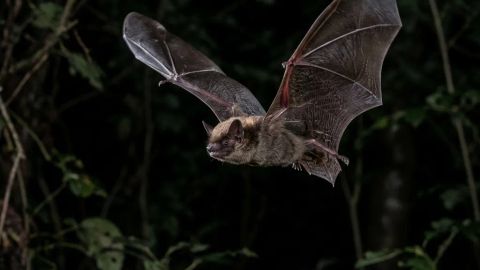
How Do Bats See In The Dark?
Journey into the night to discover the incredible biological sonar of bats. Learn how these masters of the dark use high-frequency sound waves to 'see' their surroundings, navigate pitch-black forests, and hunt tiny mosquitoes at 40 miles per hour.
 Nature
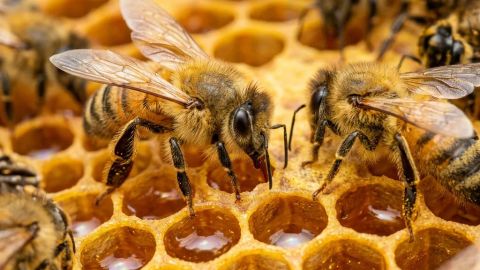
How Do Bees Make Honey?
Step inside the busy hive to witness the incredible chemical transformation of watery nectar into liquid gold. Discover how specialized enzymes and the rhythmic wing-fanning of thousands of worker bees create the only food produced by insects that humans eat.
 Nature
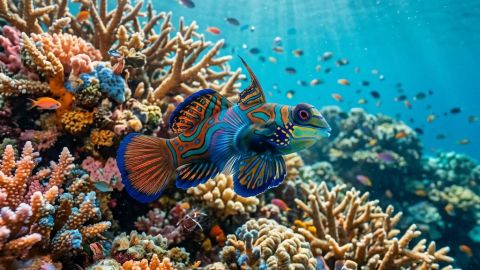
How Do Fish Breathe Underwater?
Dive beneath the surface to explore the engineering genius of gills. Discover the elegant biological system that allows fish to pull invisible, life-saving oxygen directly out of the water, enabling them to thrive in an environment where we could never survive.