
Why Do Birds Sing?
The Big Idea
Uncover the fierce, highly competitive world hidden behind the peaceful songs of woodland birds. Learn how singing helps birds defend their territory, attract mates, and communicate complex messages across the forest.
Key Vocabulary & Concepts
Hands-On Observation Checklist
Teacher & Parent Discussion Starters
- Why is understanding why do birds sing? important in everyday real life?
- What variable or factor had the biggest impact when testing the simulation?
- How does this concept connect to another science topic you have learned about?
Why Do Birds Sing?
The Deceptive Spring Symphony
If you happily step outside incredibly early on a beautifully crisp, perfectly still spring morning, the tall trees are usually completely bursting with immensely loud, wonderfully melodic, highly relaxing bird songs. To completely ignorant human ears, this massive "Dawn Chorus" sounds deeply peaceful, totally joyful, and wonderfully romantic.
However, the brutal reality of nature is entirely different. Complex bird song is actually a highly fierce, incredibly competitive, and entirely aggressive biological language heavily focused solely on absolute survival and highly contested real estate!
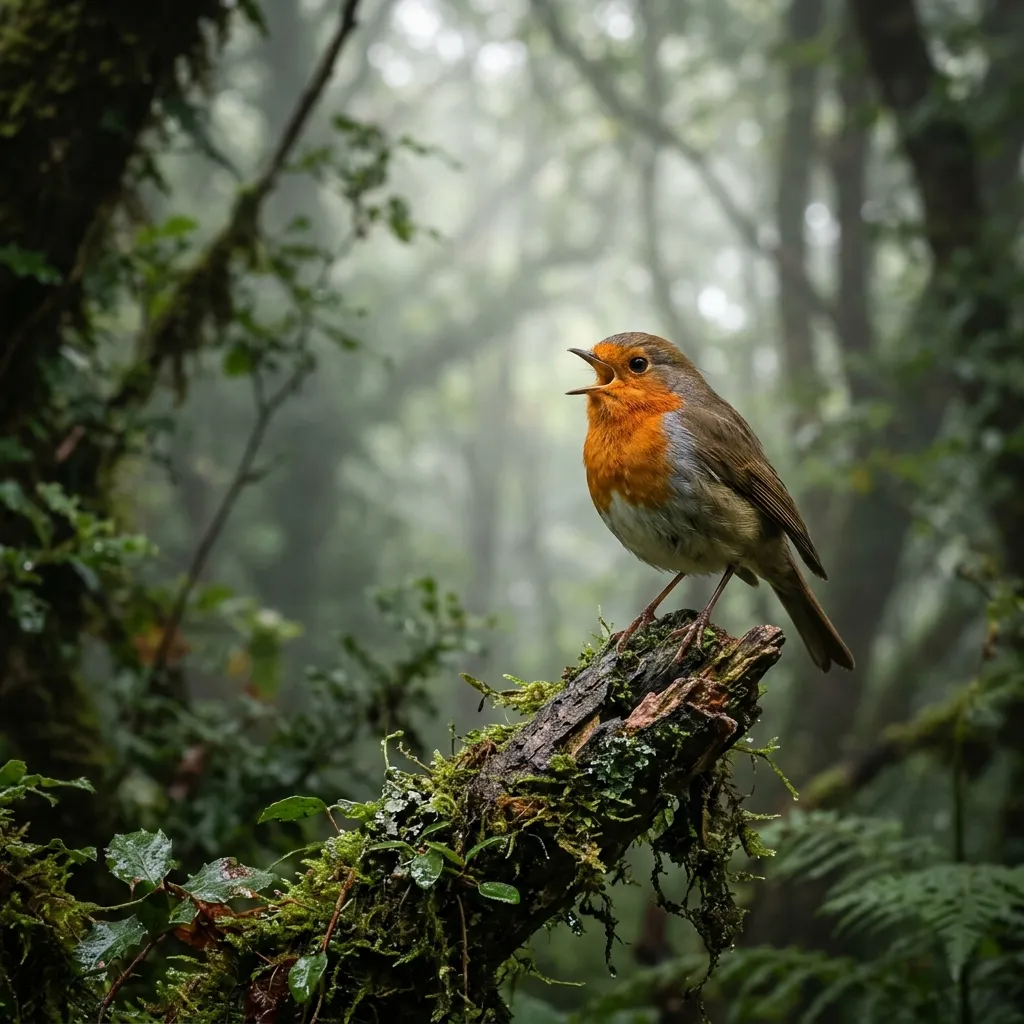
A breathtaking cinematic photograph of a colorful songbird singing passionately on a mossy branch in a misty morning forest
Love and Disputed Real Estate
Complex, heavily melodic bird songs are much, much more musically intense and incredibly difficult to physically perform than standard, short "calls" (like quick warning squawks or angry chirps). These massive, exhausting songs are almost entirely violently performed specifically by highly aggressive male birds, exclusively for two intensely stressful reasons:
- "This is completely my tree!" An incredibly loud, incredibly strong, non-stop song violently acts as an invisible, totally impenetrable acoustic fence. It aggressively warns all distant rival males that this specific, highly valuable territory (which ideally contains the best food, water, and prime nesting spots) is completely claimed and heavily defended. If a rival ignores the deafening song and enters the territory anyway, a brutal, physical aerial fight will instantly occur. Why risk getting hurt in a fight if you can simply scream loudly enough to scare your rivals away?
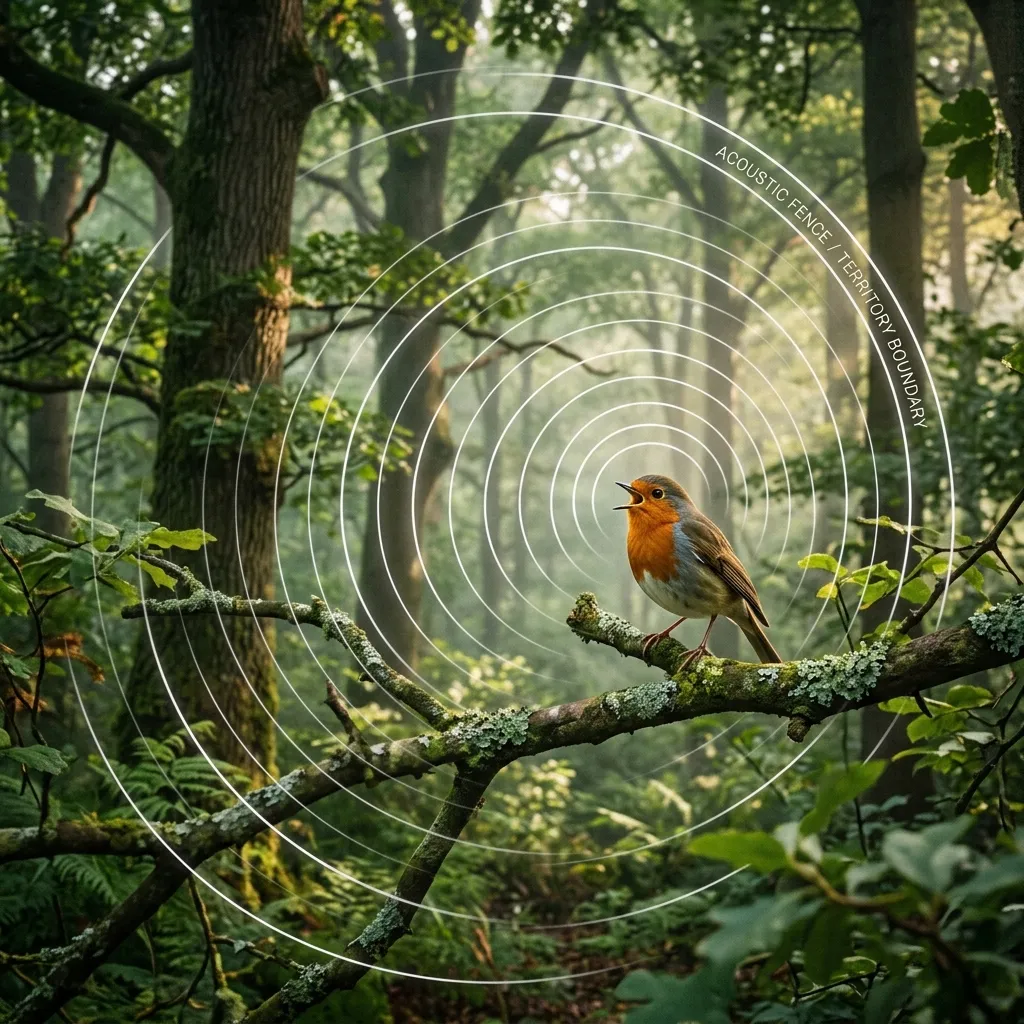 A cinematic documentary-style illustration of a forest showing soundwaves radiating from a bird to create an Acoustic Fence
- "Look entirely at me!" A vastly complex, incredibly difficult song acts to instantly attract highly selective, highly demanding females. Singing at top volume for hours on end is absolutely physically exhausting. A young male who can confidently sing incredibly loudly for massive periods of time perfectly proves to the females that he is amazingly healthy, fiercely strong, completely disease-free, and an incredibly desirable genetic mate.
The Dual Voice Box
To flawlessly achieve this incredibly massive, deafening acoustic volume, tiny birds successfully utilize a highly specialized, entirely unique biological voice box firmly located incredibly deep inside their tiny chests called a syrinx.
While humans use a larynx located high up in the throat, the bird's syrinx sits extremely low, exactly where their windpipe splits into their two lungs. This miraculous, highly evolved organ is so flawlessly designed that incredibly talented species (like the wood thrush) can somehow physically control both sides of the syrinx independently. This allows them to physically sing two completely different, totally independent musical notes entirely out of their chest at the absolute exact same time! They are literally singing a highly complex duet entirely by themselves to defend their turf.