Why Do Cats Purr?
The Big Idea
Unlock the secrets of the mysterious feline purr. Discover how cats use this low-frequency vibration not just to show happiness, but to heal their own bones and communicate with their human companions.
Key Vocabulary & Concepts
Hands-On Observation Checklist
Teacher & Parent Discussion Starters
- Why is understanding why do cats purr? important in everyday real life?
- What variable or factor had the biggest impact when testing the simulation?
- How does this concept connect to another science topic you have learned about?
Why Do Cats Purr?
More Than Just A Smile
If a cat is safely curled up in your lap, deeply asleep, and vibrating like a small, furry motor, we intuitively understand that the cat is profoundly happy. For centuries, humans have equated a cat's purr with a human smile—a straightforward, biological expression of pure joy and contentment.
While it is absolutely true that cats purr when they are comfortable, modern veterinary science has uncovered a much deeper, more complex reality behind this famous sound.
Veterinarians have observed that cats will also purr aggressively when they are severely terrified, critically injured, visiting the vet, or even while they are giving birth. If a purr is simply a "smile," then why would a cat smile while it is in intense pain?
The Built-In Healing Mechanism
The answer lies not in emotion, but in cold, hard cellular biology.
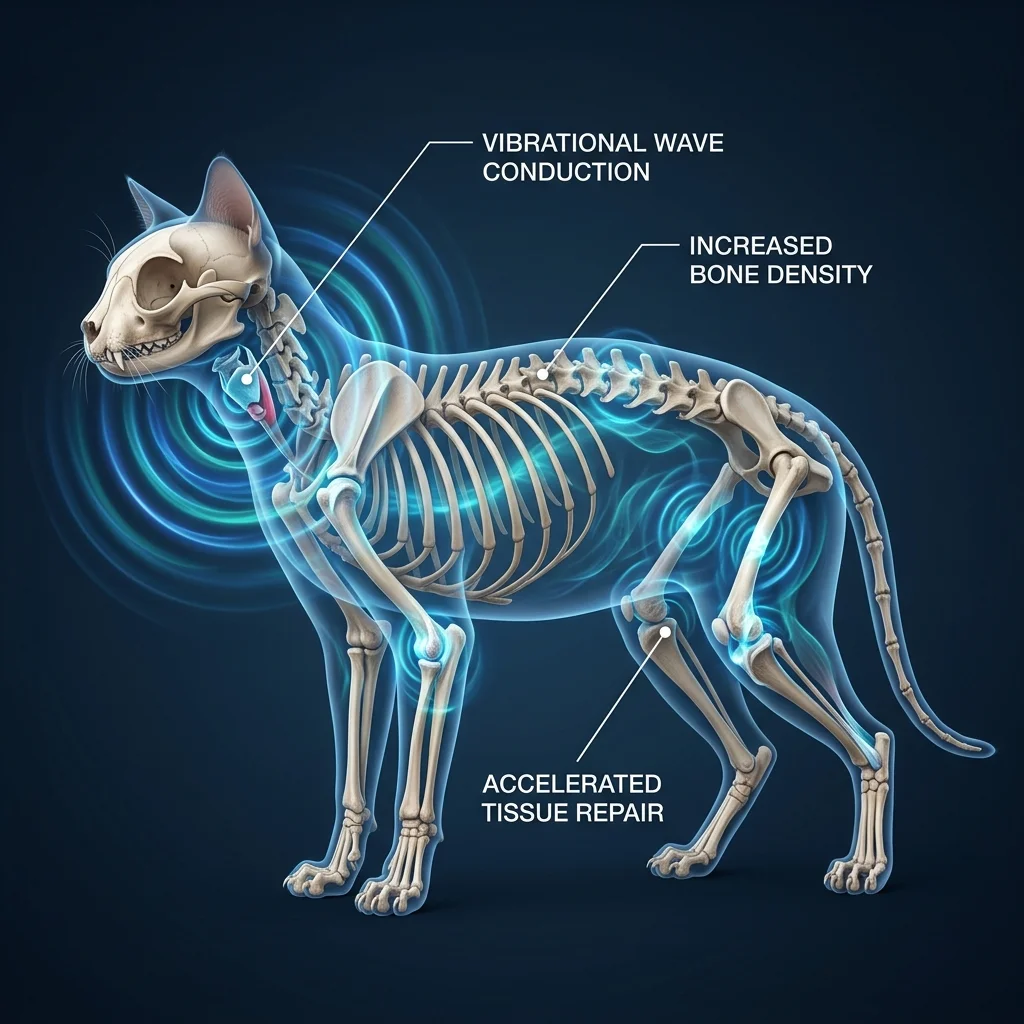
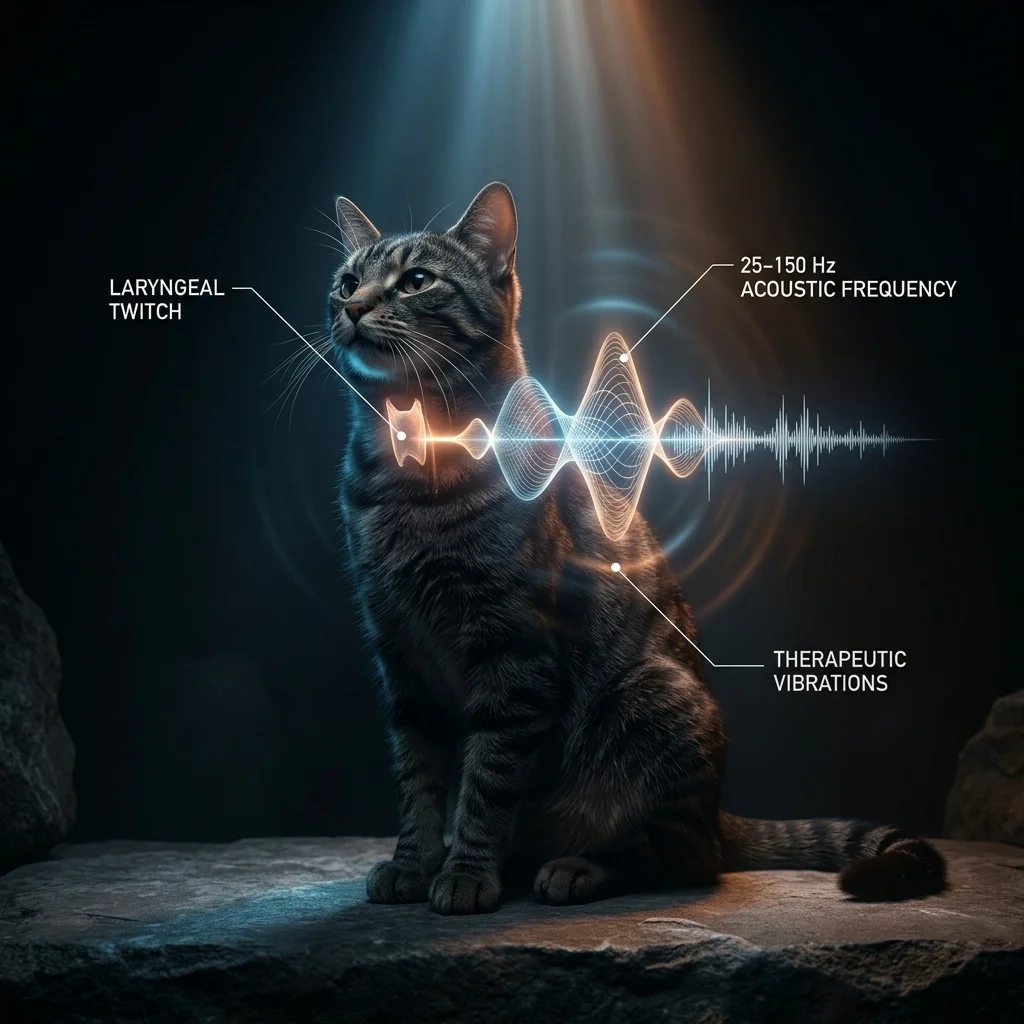
A cat generates its purr using a specialized, rapid-fire twitching of the laryngeal (voice box) muscles, completely driven by a neural oscillator located deep inside the brain. This rapid twitching forces air across the vocal cords during both inhalation and exhalation, creating a continuous, rhythmic rumble.
When scientists specifically measured the acoustic frequency of this rumble across dozens of feline species (including house cats, cheetahs, and pumas), they found something astonishing. The vibration almost always falls exactly between 25 and 150 Hertz.
Vibrating Back to Health
In human sports medicine and physical therapy, this exact specific range of low-frequency vibration (25-150 Hz) is scientifically proven to improve core bone density, drastically accelerate the repair of torn tendons, ease breathing, and aggressively reduce swelling and pain. NASA has even studied low-frequency vibration as a way to prevent astronauts from losing bone density in zero gravity!
Therefore, a cat's purr isn't just a communication tool; it is an internal physical therapy mechanism. When a cat is heavily stressed, sick, or brutally injured, it purrs to physically vibrate its own broken body back to optimal health.
When you hear a sick cat purring, it isn't smiling—it is actively healing. It possesses a built-in, biological superpower that ensures its bones knit together faster than almost any other mammal on Earth.