
Why Do Fireflies Glow?
The Big Idea
Witness the magical bioluminescence of fireflies. Discover the incredible chemical reaction happening inside their abdomens and learn how these tiny beetles use glowing light codes to find mates in the dark.
Key Vocabulary & Concepts
Hands-On Observation Checklist
Teacher & Parent Discussion Starters
- Why is understanding why do fireflies glow? important in everyday real life?
- What variable or factor had the biggest impact when testing the simulation?
- How does this concept connect to another science topic you have learned about?
Why Do Fireflies Glow?
The Magic in the Meadow
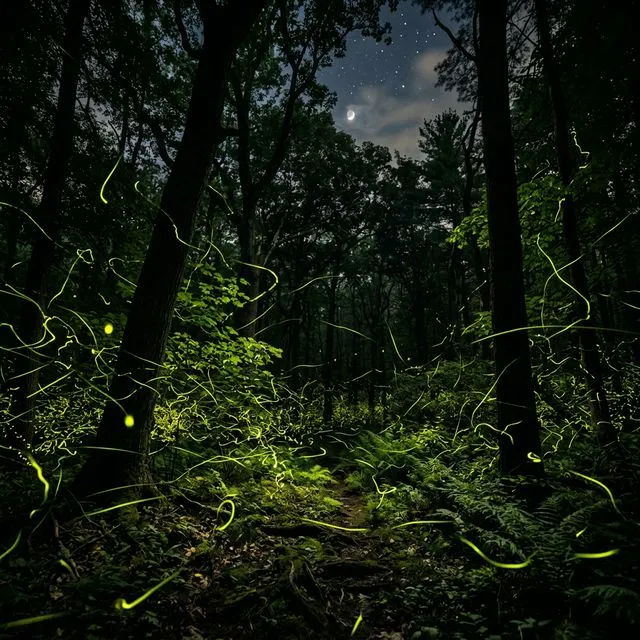
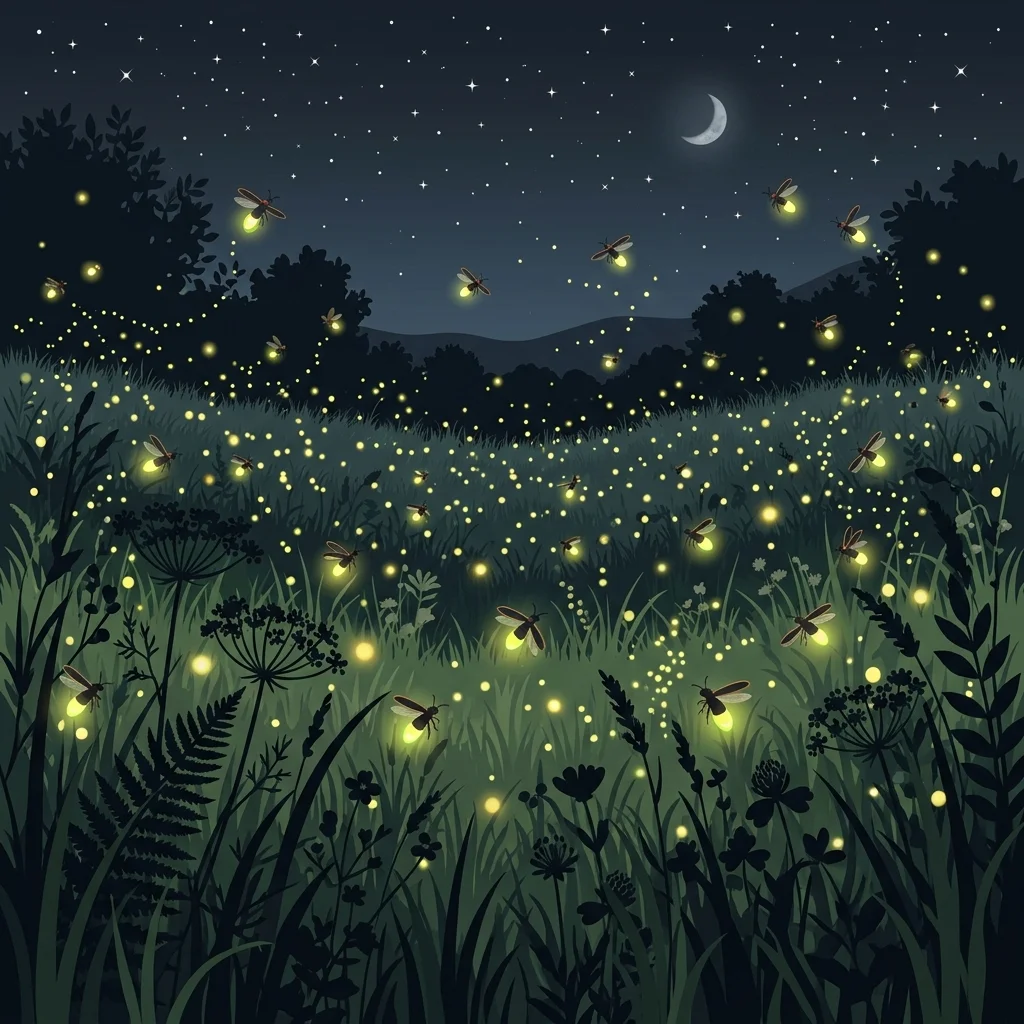
Imagine standing in a tall, grassy meadow on a humid July evening. The sun has dipped below the horizon, painting the sky in deep purples and charcoals. The air is thick and still. Suddenly, a tiny greenish-yellow spark ignites in the air, hovers for a second, and vanishes. Then another. And another. Within minutes, the dark forest edge is alive with a silent, twinkling light show.
It feels like magic—like someone cracked open a jar of stars and spilled them across the grass. But these aren’t stars. They are beetles.
We call them Fireflies or Lightning Bugs, but they are neither flies nor bugs. They are soft-bodied beetles from the family Lampyridae. And they possess a superpower that human engineers have envied for centuries: they can create light inside their own bodies without plugging into a socket or striking a match.
This isn’t just a cool party trick. For a firefly, this glow is a matter of life, death, and romance. It is a language of light spoken in the dark, a Morse code of desire that has been blinking in our forests for millions of years.
The Chemistry of Cold Light
How do they do it? How does a living creature turn its abdomen into a lantern?
The secret lies in a chemical reaction called Bioluminescence. It happens in a specialized organ in the firefly's lower abdomen. Think of it like a glow stick. When you crack a glow stick, you mix two chemicals together, and they glow. The firefly does the same thing, but with much more precision.
Inside the firefly’s "light organ," two key ingredients mix: a molecule called luciferin and an enzyme called luciferase. (These names come from the Latin word lucifer, meaning "light-bringer"). When luciferin meets oxygen, aided by the enzyme luciferase and a boost of energy from ATP (the cellular fuel), it triggers a reaction that releases energy in the form of light.
But here is the truly mind-blowing part: Efficiency.
Think about an old-fashioned incandescent lightbulb in your house. If you touch it after it’s been on, you’ll burn your hand. That’s because those bulbs are terrible at their job; they waste about 90% of their energy as Heat, and only turn 10% into Light.
If a firefly were that inefficient, it would cook itself to death the moment it lit up. It would be a crispy critter.
Instead, firefly light is "Cold Light." It is nearly 100% efficient. Almost every bit of energy in the reaction becomes light, with zero wasted heat. We utilize this same chemistry in glow sticks and forensic science (to find blood), but nature perfected it long before we did.
A Flirtation in Flash
So why do they glow? They aren't trying to light their way through the dark; they don't use their lights as headlights.
They are flirting.
The light you see is a mating call. In most species of fireflies, the males fly around flashing a specific pattern, while the females sit on blades of grass, watching the show.
Each species has its own secret code.
- Photinus pyralis (the common Big Dipper firefly) flies in a "J" shape, flashing on the upswing.
- Other species might flash a quick strobe: blink-blink-blink.
- Others do a long, slow pulse.
The male flies through the air shouting, "I'm a Photinus pyralis! I'm single! I'm healthy! Over here!"
Down in the grass, the female scans the sky. She is looking for a flash pattern that matches her own species. If she likes what she sees, she waits a precise amount of time (say, exactly two seconds) and then flashes back.
It’s a high-stakes dialogue. Flash... Wait... Flash back. If the timing is off by even a fraction of a second, the male ignores her. But if the rhythm is right, he flies down to meet her.
The Dark Side of the Glow
Not all flashing lights in the forest are friendly. In the world of fireflies, there are monsters, too.
Meet the Photuris female. She is a predator, a "femme fatale" of the insect world. She is large and hungry, and she has learned a devious trick. She watches the sky for males of other species—smaller, defenseless fireflies.
When she sees a smaller male flash his mating code, she doesn't ignore him. Instead, she mimics the reply of his own females. She fakes the code.
The unsuspecting male thinks, "Oh wow! A female of my species!" He lands, expecting romance. Instead, the Photuris female attacks him and eats him. By eating him, she not only gets a meal but also steals his defensive chemicals (called lucibufagins) to make herself poisonous to spiders and birds.
So the next time you see a field of fireflies, remember: you actally watching a complex drama. There is romance, there is unparalleled chemical engineering, and there is deception and danger, all playing out in silent flashes of cold, green light.