
Why Do Leaves Change Color?
The Big Idea
Witness the spectacular transformation of autumn forests. Discover how trees shut down their green chlorophyll factories to reveal the hidden yellows, oranges, and reds that were there all along.
Key Vocabulary & Concepts
Hands-On Observation Checklist
Teacher & Parent Discussion Starters
- Why is understanding why do leaves change color? important in everyday real life?
- What variable or factor had the biggest impact when testing the simulation?
- How does this concept connect to another science topic you have learned about?
Why Do Leaves Change Color?
The Green Mask
Every Autumn, the world sets itself on fire. Hillsides turn blazing red, burnt orange, and bright gold. People travel thousands of miles just to look at the "Fall Colors." It looks like the trees are putting on a new costume. But the truth is the opposite. The trees aren't putting on a costume. They are taking one off.
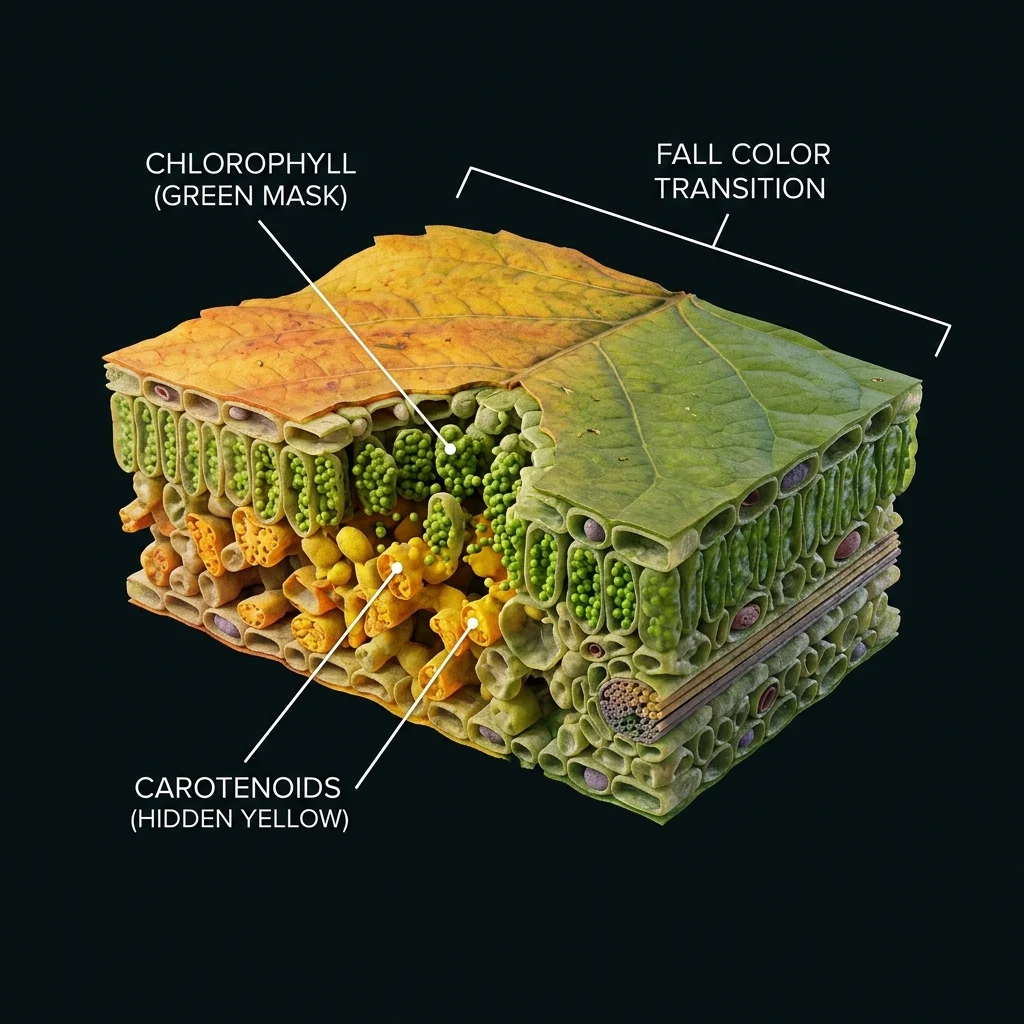
The yellow and orange colors were there all year round. You just couldn't see them. They were hiding behind a green mask.
The Hungry Green Machine
During the spring and summer, a tree has one job: Eat sunlight. To do this, it fills its leaves with a miracle chemical called Chlorophyll. Chlorophyll is green. It is also a solar panel. It catches sunlight and turns it into sugar (food) for the tree.
This "Green Machine" is expensive to run. It breaks down constantly in the sun and has to be rebuilt. But in summer, sunlight is free and plentiful, so the tree keeps pumping new green chlorophyll into the leaves. There is so much green pigment that it completely covers up everything else in the leaf.
The Shutdown
Then comes October. The days get shorter. The sun gets weaker. The nights get cold. The tree does some math. It realizes: "It is costing me more energy to keep these leaves green than the energy I am getting back from the weak sun."
So, the tree makes a tough decision. It shuts down the factory. It stops sending water and nutrients to the leaves. It creates a cork barrier (called an abscission layer) at the base of the leaf stem, effectively choking it off.
Without fresh food, the unstable green Chlorophyll breaks down and fades away. The mask dissolves. And suddenly, the Understudies get to take the stage.
The Hidden Colors
Once the green is gone, the other chemicals that were sitting there silently all summer interact with the light.
- Yellows & Oranges (Carotenoids): These are the same pigments that make carrots orange and corn yellow. They are tough and stable, so they stick around after the green dies.
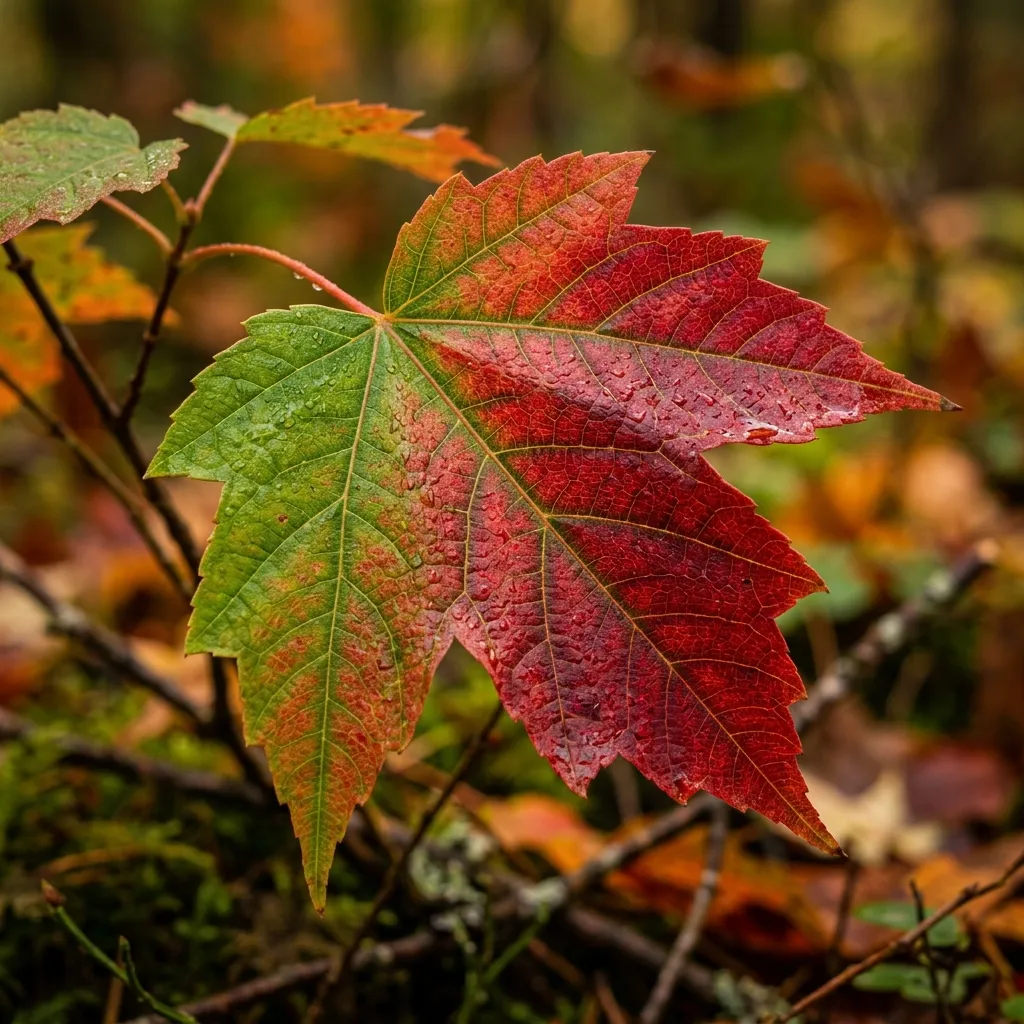
- Reds & Purples (Anthocyanins): These are the only "new" colors. Some trees (like Maples) make this red pigment in the fall. Scientists think it acts like "Sunscreen" for the dying leaf. It protects the leaf from sun damage for just a few more weeks so the tree can suck the last few drops of sugar out of it before it falls.
The Skeleton
Eventually, even these colors fade. The leaf dries out, turns brown, and falls to the forest floor. There, it becomes food for worms and fungi, turning into soil that will feed the tree next spring.
So when you look at a yellow leaf, you aren't seeing a dying color. You are seeing the true face of the leaf, revealed for the first time because the hard-working green machine has finally gone to sleep for the winter.