
Why Do Stars Twinkle?
The Big Idea
Look up at the night sky to solve an astronomical mystery. Discover how Earth’s turbulent atmosphere acts like a series of moving lenses, bending starlight and making it appear to dance and twinkle.
Key Vocabulary & Concepts
Hands-On Observation Checklist
Teacher & Parent Discussion Starters
- Why is understanding why do stars twinkle? important in everyday real life?
- What variable or factor had the biggest impact when testing the simulation?
- How does this concept connect to another science topic you have learned about?
Why Do Stars Twinkle?
The Great Illusion
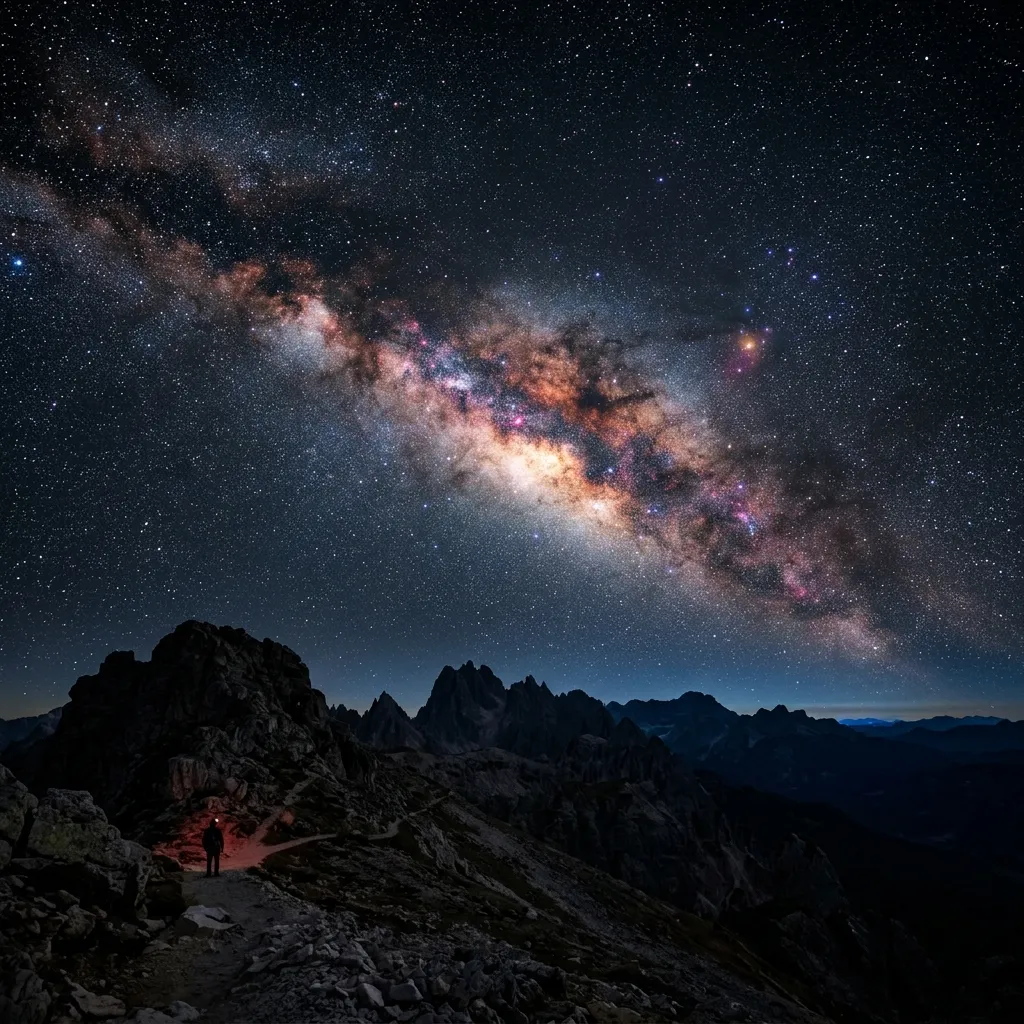
Look up at the night sky. It's a diamond dust masterpiece. The stars flicker, dance, and wink at you. But if you were an astronaut on the International Space Station, looking out the window, you would see a very different universe. You would see a cold, hard, frozen sky. The stars in space do not twinkle. They burn with a rock-steady, unmoving light.
So, the twinkling isn't happening out there. It is happening down here. The star isn't winking at you. The air is messing with you.
The Ocean of Air
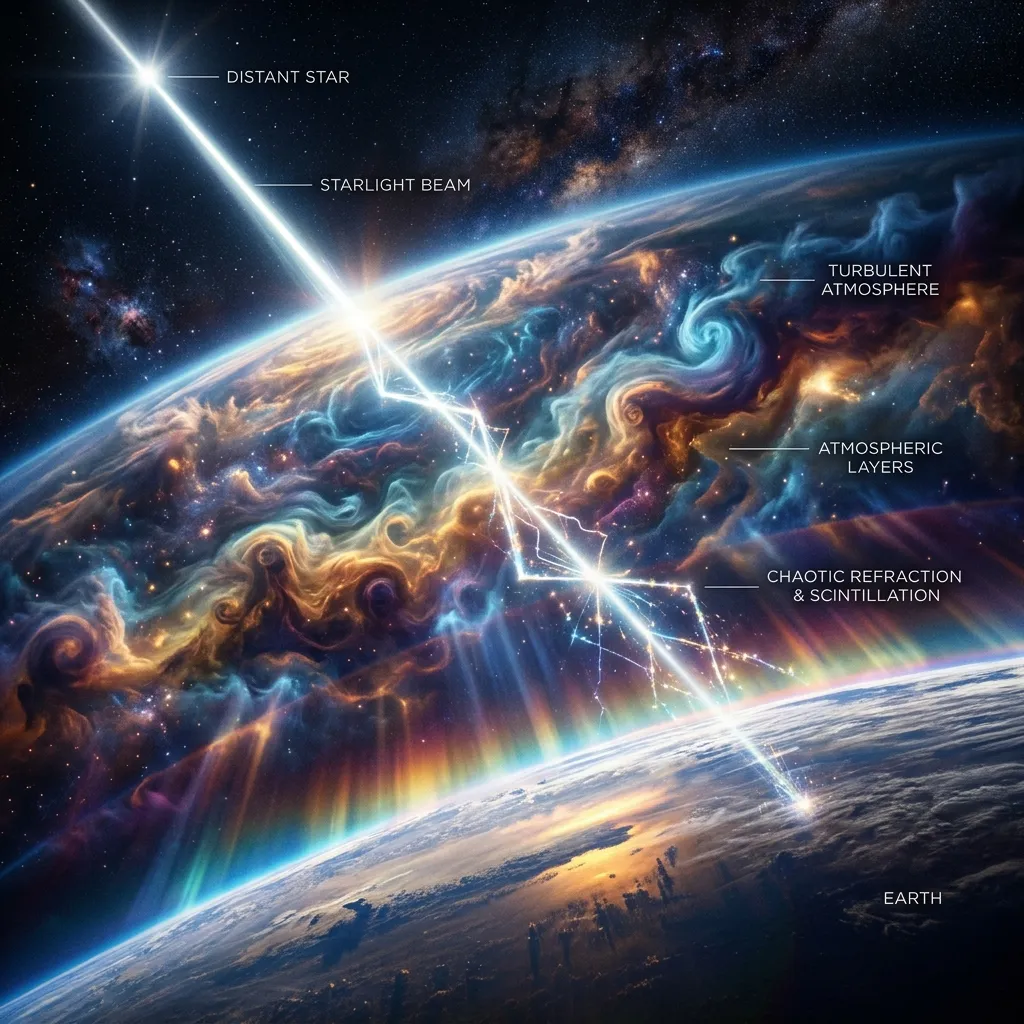
We tend to think of the air around us as "nothing." It's invisible, so we ignore it. But physically, we live at the bottom of a massive ocean of gas. The atmosphere is 60 miles deep, and it is chaotic.
It is a swirling soup of hot pockets, cold streams, and turbulent winds. Hot air is less dense than cold air. When light passes through different densities of air, it bends (refracts).
Think about a hot summer day. Have you ever looked at the asphalt road in the distance and seen it shimmering? That "heat haze" is the air bending the light. Now imagine looking through 60 miles of that shimmering heat haze.
Scintillation
When a beam of starlight hits the top of Earth's atmosphere, it travels through thousands of shifting air pockets. One moment, a pocket of cold air bends the beam left. A millisecond later, a pocket of hot air bends it right. Then it bends it away from your eye completely. Then it focuses it back so it looks super bright.
This rapid bending and bouncing is called Atmospheric Scintillation. The beam of light is literally zigzagging through the sky to get to your pupil. Your eye sees the star jumping around and changing brightness hundreds of times a second.
A perfect analogy: Look at a coin at the bottom of a swimming pool. If the water is still, the coin is steady. But if people are swimming and splashing, the coin looks like it is wobbling and dancing. The star is the coin. The atmosphere is the pool.
The Planet Test
Here is a secret trick astronomers use to tell the difference between a Star and a Planet without a telescope. Stars Twinkle. Planets Don't. (Usually).
Why? Stars are massive suns, but they are so far away (trillions of miles) that they look like a single, microscopic Point of light. A single point is easily knocked around by a wind pocket.
Planets (like Jupiter and Mars) are much smaller, but they are millions of times closer. In the sky, they aren't actually points; they are tiny Disks. They are wide beams of light. When the atmosphere bends one part of the disk left, it might bend the other part right. The different wiggles cancel each other out. The result is a steady, glowing light that doesn't flicker.
So tonight, go outside. Find a bright light. If it's winking at you, it's a distant sun. If it's staring back steadily, you are looking at a neighbor.