
Why Do Volcanoes Erupt?
The Big Idea
Journey deep beneath the Earth's crust to discover the explosive power of volcanoes. Learn how heat, pressure, and trapped gases combine to force molten rock to the surface in a spectacular and terrifying display of nature's power.
Key Vocabulary & Concepts
Hands-On Observation Checklist
Teacher & Parent Discussion Starters
- Why is understanding why do volcanoes erupt? important in everyday real life?
- What variable or factor had the biggest impact when testing the simulation?
- How does this concept connect to another science topic you have learned about?
Why Do Volcanoes Erupt?
The Shaken Soda Bottle
Imagine holding a bottle of soda. It looks calm. The liquid inside is still. Now, shake it violently. The liquid still looks the same... until you twist the cap. PSSSHHHT! Foam explodes everywhere.
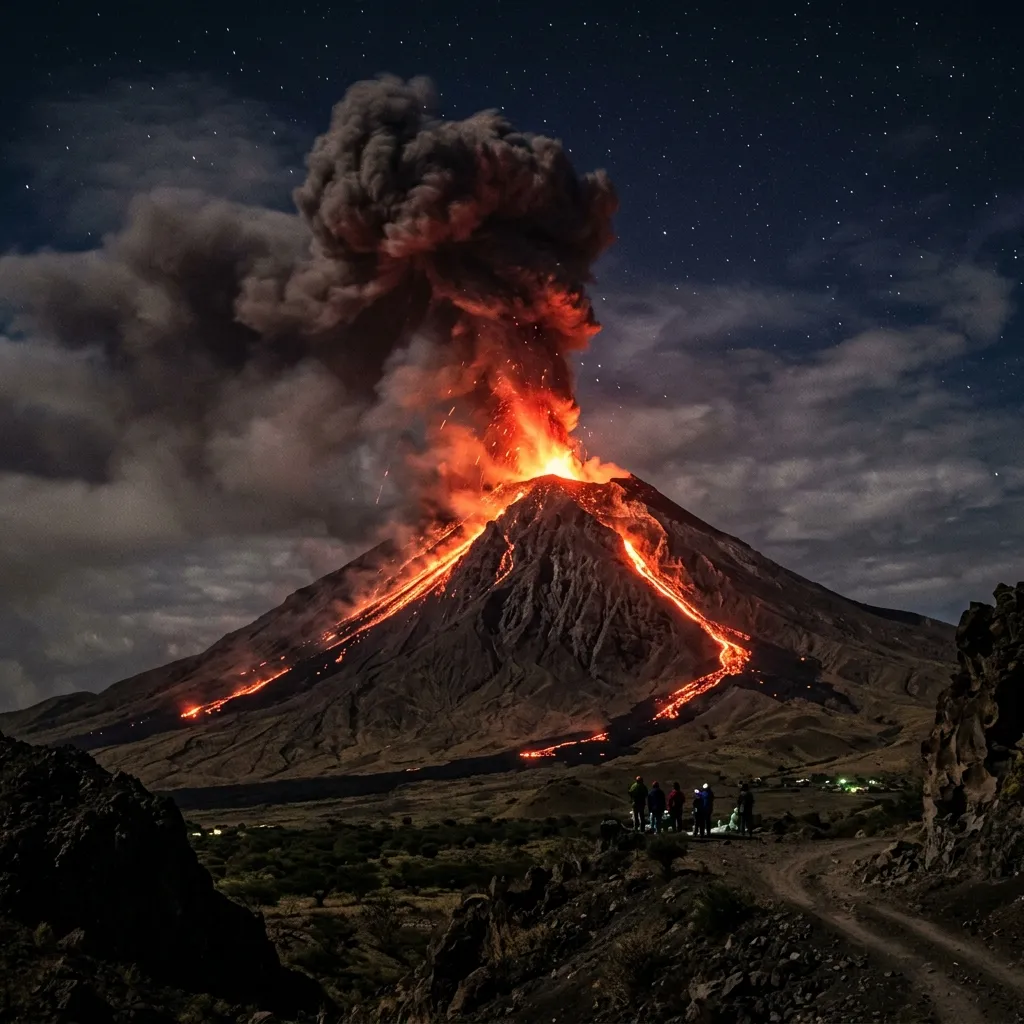
A volcano works almost exactly the same way. It is a geological soda bottle, and the Earth is shaking it. But instead of soda, the liquid is melted rock. And instead of a plastic cap, the lid is a mountain of solid stone.
The Chocolate Lava Cake
To understand volcanoes, you have to look inside the Earth. We live on the Crust—a thin, cool, solid shell of rock. It is like the chocolate shell on a candy bar. But underneath that shell, the Earth is incredibly hot. The Mantle is made of rock that is so hot it is gooey, like thick caramel. In some places, it melts completely into liquid Magma.
Technical Note:
- Magma: Liquid rock underground.
- Lava: Liquid rock above ground (after it erupts). It's just a name change based on location, like "fiancé" vs. "husband."
The Gas Giant
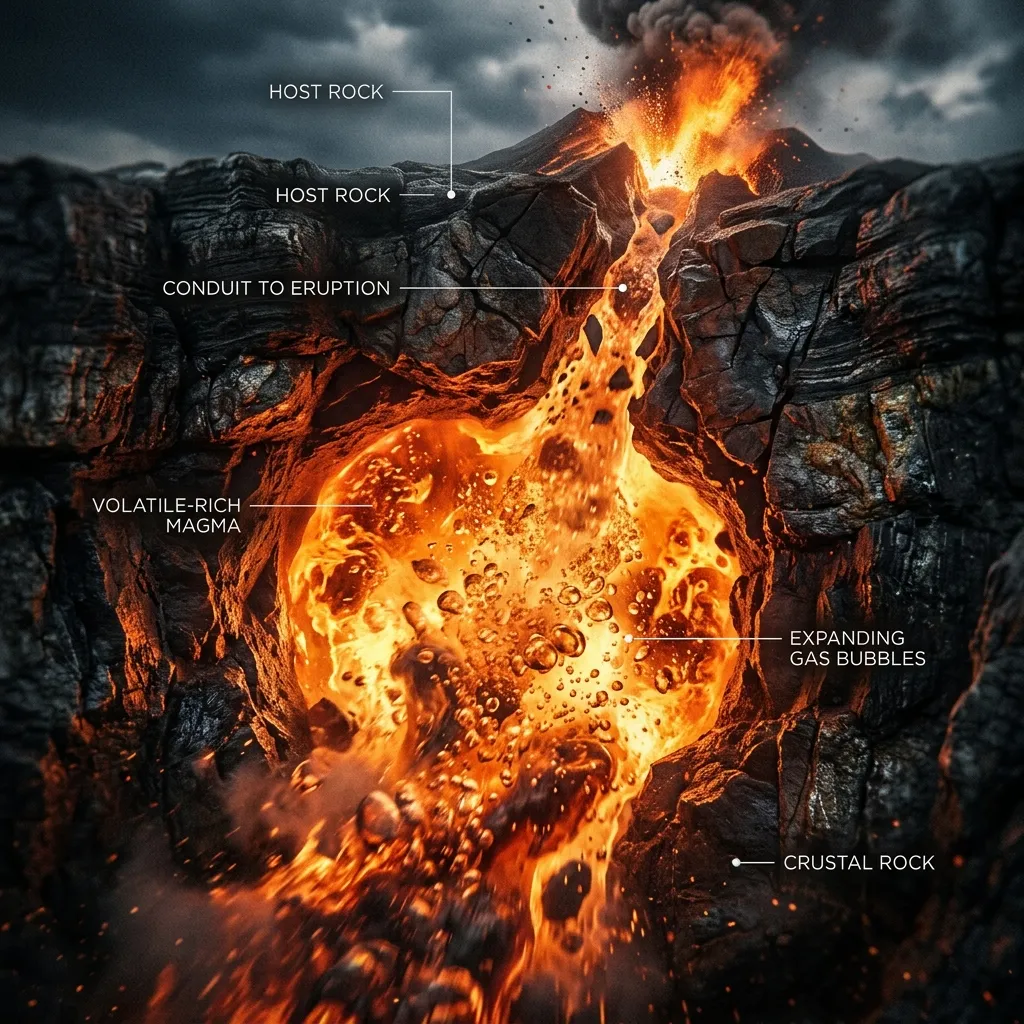
The secret to the explosion isn't just the heat; it is the Gas. Magma is full of dissolved gases (water vapor, carbon dioxide, sulfur). Deep underground, the pressure is immense. The weight of miles of rock pushes on the magma, keeping the gas bubbles dissolved in the liquid (just like the CO2 is invisible in a sealed soda bottle).
But magma is lighter than solid rock. So, it rises. It finds cracks in the crust and pushes upward toward the surface. As it rises, there is less rock on top of it. The pressure drops. Suddenly, the gas can't stay dissolved anymore. It expands. Rapidly. A tiny bubble of gas can expand to 1,000 times its original size.
This expansion pushes the magma up even faster, which lowers pressure even more, which causes more gas to expand. It is a runaway chain reaction. Eventually, the pressure becomes too great for the rock cap to hold. The mountain cracks open, and the magma blasts out into the sky.
The Ring of Fire
Volcanoes don't just happen anywhere. You won't find one in Kansas. They happen where the Earth's skin is broken. The Earth's crust is cracked into giant jigsaw pieces called Tectonic Plates. These plates are always moving.
Most volcanoes are found in the Ring of Fire—a giant horseshoe shape around the Pacific Ocean (Japan, Alaska, California, Chile, New Zealand). This is where the Pacific Ocean plate is crashing into the continents. The ocean floor is being shoved underneath the land (Subduction). As it sinks deep into the Earth, it melts. This fresh melted rock rises up like bubbles in a boiling pot, creating chains of volcanoes along the coast.
So, a volcanic eruption is actually the Earth recycling itself. It melts the old ocean floor and blasts it back out to make new mountains.