
Why Do We Dream?
The Big Idea
Explore the nightly theater of the human mind. Discover the science behind REM sleep and memory consolidation, and learn why we experience vivid, strange hallucinations in the dark every single night.
Key Vocabulary & Concepts

Hands-On Observation Checklist
Teacher & Parent Discussion Starters
- Why is understanding why do we dream? important in everyday real life?
- What variable or factor had the biggest impact when testing the simulation?
- How does this concept connect to another science topic you have learned about?
Why Do We Dream?
Explore the nightly theater of the human mind. Discover the science behind REM sleep and memory consolidation, and learn why we experience vivid, strange hallucinations in the dark every single night.
Why Do We Dream?
The Nightly Hallucination
Every single night, you hallucinate. You lie down in a dark, silent room, close your eyes, and enter a vivid alternate reality. You might fly above a glowing city, run from formless monsters, or simply show up to a very important school exam entirely without pants.
This is the strange, universal phenomenon of Dreaming. Over the course of your life, you will spend roughly six entire years actively dreaming. But why does the brain go through all this trouble? Is dreaming merely a biological screensaver for a resting mind, or does it serve a critical evolutionary purpose?
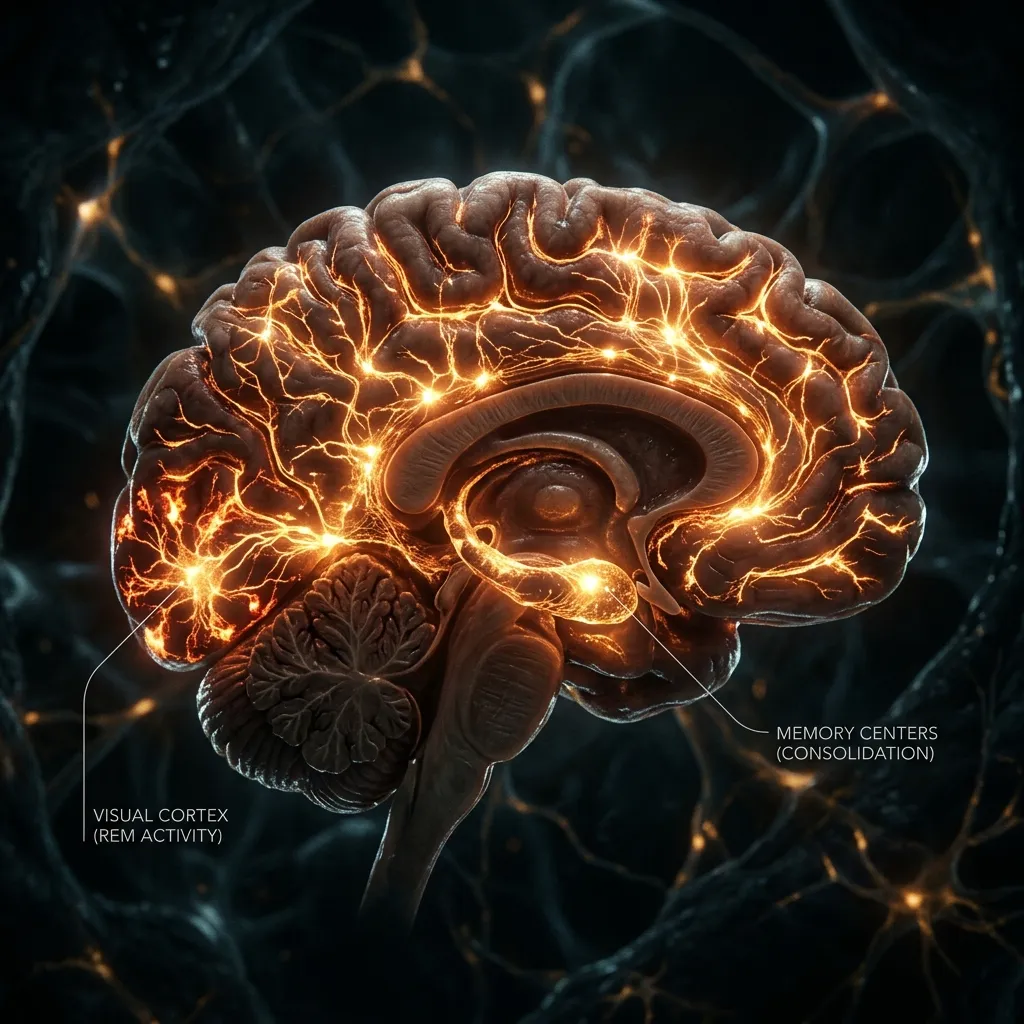 A cinematic representation of the active, glowing human brain during REM sleep
The Architecture of Sleep
Vivid, narrative dreams do not happen the moment you close your eyes. They occur during a very specific phase of the sleep cycle known as REM (Rapid Eye Movement).
If you watch a sleeping person enter this phase, you will see their eyes darting back and forth frantically beneath their closed eyelids, as if they are physically watching a movie. Inside the skull, the brain is wildly active. In fact, an MRI scan shows that a dreaming brain is almost as electrically active as a brain that is wide awake and solving a puzzle.
Because the brain is firing so intensely, it must deploy a biological safety switch to protect you. To stop you from physically acting out your dreams (and potentially running into a wall or punching a nightstand), the brain stem releases powerful chemicals that temporarily paralyze your voluntary muscles. This state is called Sleep Atonia. You are physically locked in place, while your mind runs completely free.
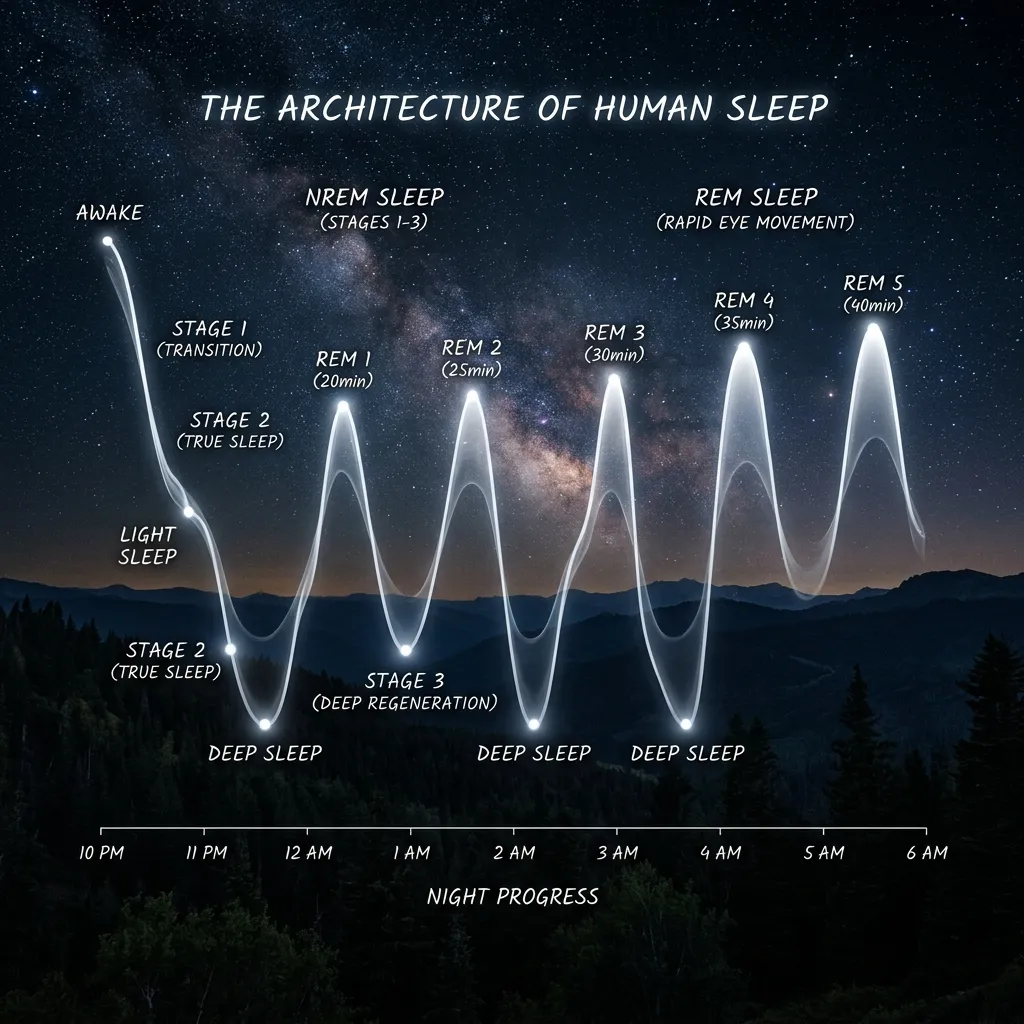 A cinematic documentary-style visualization of the human sleep cycle charting the descent into REM
The Filing Cabinet Theory
The leading scientific explanation for why we dream is known as Memory Consolidation.
During your waking hours, your brain is hit with a tsunami of sensory information: thousands of faces, conversations, smells, facts, and emotions. It is far too much data to organize in real-time. Sleep is the brain's dedicated "Processing Mode."
While you dream, the brain actively replays the day's events, deciding what is important enough to keep and what is useless enough to delete. It moves critical data from short-term "RAM" storage into the permanent "Hard Drive" of your long-term memory. Dreams, in this theory, are simply the bizarre, randomized side-effect of this massive data sorting process—flashes of imagery generated as the brain connects the smell of fresh cookies to a distant memory of your grandmother.
The Flight Simulator
Another highly regarded theory suggests that dreams act as a Survival Simulator. This explains why so many of our dreams are actually anxiety-inducing nightmares. Why do we constantly dream about falling, being chased, or showing up unprepared?
Evolutionary biologists believe this is vital night-time training. The brain places you in a simulated, highly dangerous situation while your physical body remains perfectly safe in bed. It is a virtual reality flight simulator for life. By practicing the emotions of fear and panic at night, our ancient ancestors honed their fight-or-flight reflexes, making them far better at surviving real-world dangers during the day.
Fast Facts
- Lucid Dreaming: Sometimes, the prefrontal cortex (the logic center of the brain) accidentally wakes up during REM sleep. When this happens, you realize you are dreaming while you are inside the dream, allowing you to take conscious control and fly at will.
- Black and White: Before the invention of color television, studies showed that a significant portion of the population dreamed only in black and white. Today, nearly everyone dreams in vibrant color.
- Face Blindness: Your brain cannot invent new faces from scratch. Every face you see in a dream belongs to someone you have seen in real life, even if it was just a stranger you passed on the street for a fraction of a second.