
Why Do We Get Goosebumps?
The Big Idea
Discover why your skin erupts in tiny bumps when you are cold or frightened. Learn about the tiny 'arrector pili' muscles and how this reflex connects you to your ancient, furry ancestors who used it for warmth and defense.
Key Vocabulary & Concepts
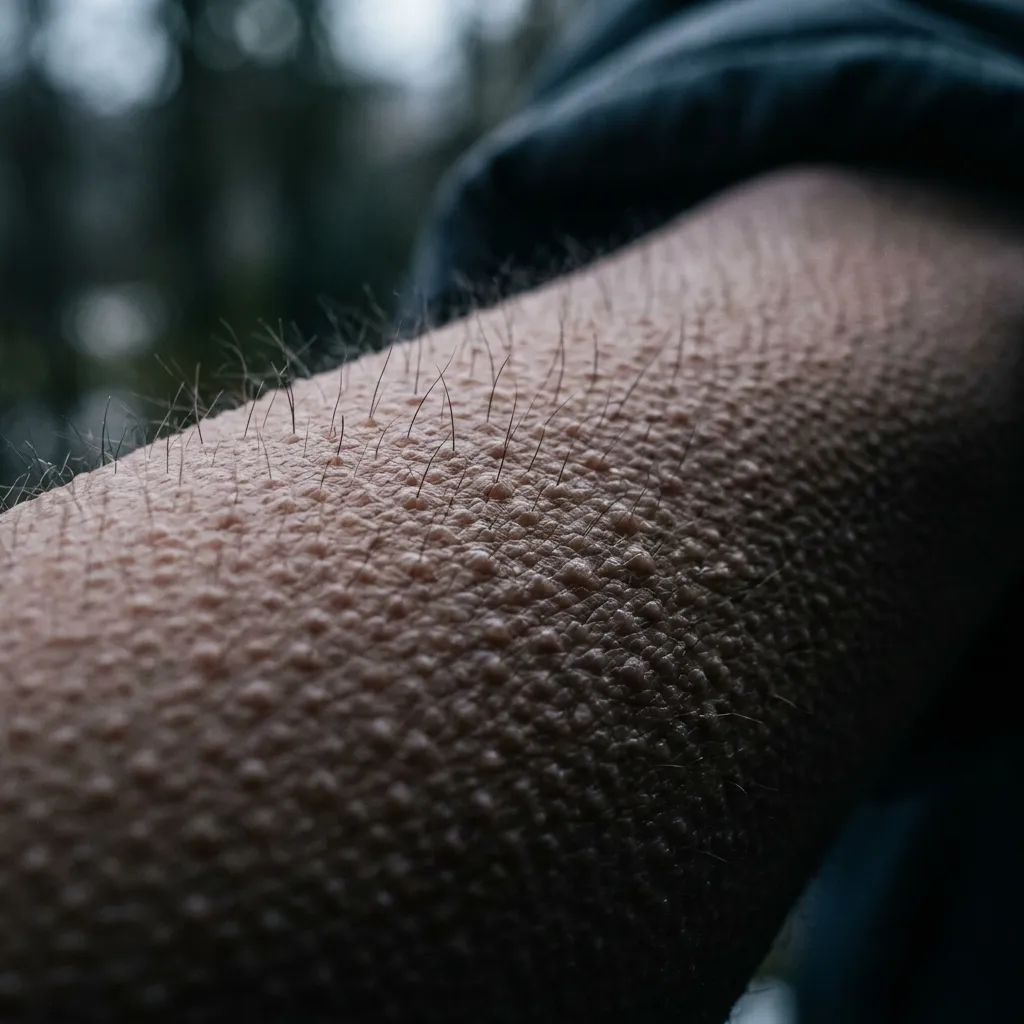
Hands-On Observation Checklist
Teacher & Parent Discussion Starters
- Why is understanding why do we get goosebumps? important in everyday real life?
- What variable or factor had the biggest impact when testing the simulation?
- How does this concept connect to another science topic you have learned about?
Why Do We Get Goosebumps?
Discover why your skin erupts in tiny bumps when you are cold or frightened. Learn about the tiny 'arrector pili' muscles and how this reflex connects you to your ancient, furry ancestors who used it for warmth and defense.
Why Do We Get Goosebumps?
The Ghost of Fur
You step out of a warm shower into a freezing bathroom. Instantly, your body reacts. The texture of your skin changes as thousands of tiny bumps erupt across your arms and legs. The fine hairs stand straight up at attention. You look, quite literally, like a plucked chicken.
We call these Goosebumps (or, scientifically, Piloerection). But why does this happen? It doesn't actually make you any warmer. In fact, standing in the cold covered in little bumps just feels strange. It turns out, your body is desperately trying to use a biological superpower that humanity lost millions of years ago.
Goosebumps are a Vestigial Reflex. This means they are a leftover feature from our evolutionary past—much like the tailbone or wisdom teeth. Millions of years ago, before the invention of heavy winter coats, our ancestors were covered in a thick, insulating layer of fur. When the temperature dropped, their bodies needed a way to trap heat.
The Arrector Pili
Hidden deep underground, at the root of every single hair on your body, lies a microscopic muscle called the Arrector Pili (Latin for "Hair Erector").
When you get cold, your brain sends an emergency signal: Deploy Insulation! The Arrector Pili muscle violently contracts. It yanks the hair follicle upright, pulling the surrounding skin up with it to create a visible bump on the surface.
For a furry mammal like a bear or a cat, this mechanism is flawless. The standing fur creates a thick barrier that traps a layer of warm air against the skin, acting exactly like a puffy down jacket. The animal survives the winter. For modern humans, however, nature plays a cruel joke. We lost our thick fur over millions of years of evolution, but we kept the microscopic muscles. So, when the temperature drops, we just stand there, naked and bumpy, shivering in the cold.
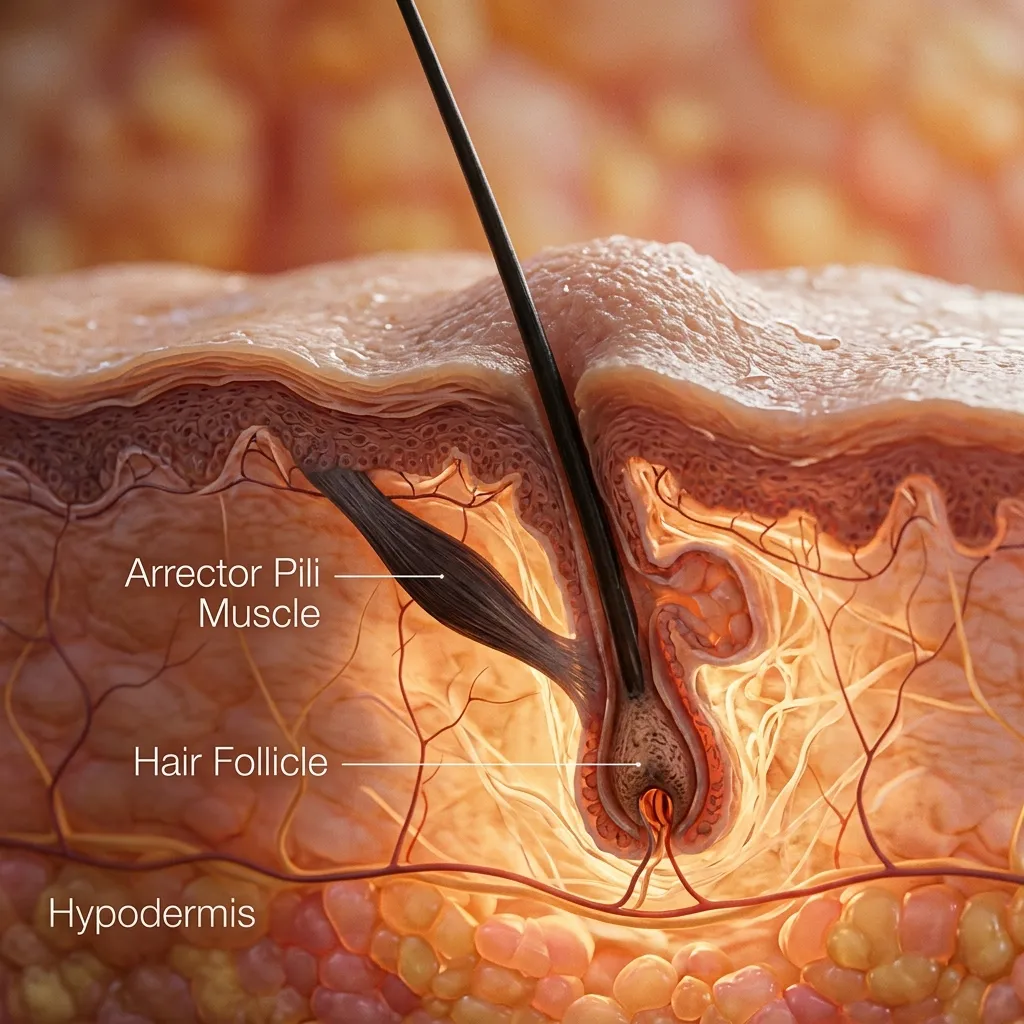 A cinematic cross-section of human skin showing the Arrector Pili muscle pulling a hair upright
The Fear Factor
But temperature isn't the only trigger. You also get goosebumps when you are terrified by a sudden noise in the dark, or when you listen to an incredibly epic piece of music. Why does fear or awe cause the same reaction as freezing cold?
It happens because the Arrector Pili is wired directly into your body's Adrenaline system—the "fight-or-flight" response. In the wild, looking physically larger is a highly effective way to avoid being eaten. When a housecat is confronted by a dog, it instantly arches its back and puffs out its fur, doubling in size to say, "Don't mess with me, I am huge."
Our ancient ancestors utilized the exact same defense mechanism. When they heard a predator snap a twig in the dark, a flood of adrenaline caused their fur to instantly puff up, making them look far more intimidating in the shadows.
Today, when you watch a terrifying horror movie or hear a beautiful, emotional swell of music (a phenomenon known as Frisson), you experience that exact same sudden adrenaline rush. Your body is trying to poof up your fur to fight a ghost. So the next time you get the chills, remember: it is just your inner caveman trying to look scary.