
Why Do Zebras Have Stripes?
The Big Idea
Separate myth from reality in the world of African wildlife. Discover why zebras actually have stripes, from confusing biting flies to creating an optical 'dazzle' effect that makes it impossible for predators to target individuals.
Key Vocabulary & Concepts
Hands-On Observation Checklist
Teacher & Parent Discussion Starters
- Why is understanding why do zebras have stripes? important in everyday real life?
- What variable or factor had the biggest impact when testing the simulation?
- How does this concept connect to another science topic you have learned about?
Why Do Zebras Have Stripes?
The Walking Barcode
The Zebra is nature's most stylish rebel. In the dusty, brown and green savannas of Africa, almost every animal tries to blend in. Lions are tawny gold like the dry grass. Gazelles are brown. Elephants are grey like the dust.
And then there is the Zebra. High-contrast Black and White. It stands out like a sore thumb. It looks like a horse wearing a prison uniform designed by a pop-artist.
For 150 years, biologists (including Charles Darwin) argued about this. Why would an animal that is hunted by lions wear a costume that screams "I AM HERE"?
The Failed Theories
People have come up with many guesses. Most of them are wrong.
Theory 1: Camouflage The classic idea is that the stripes help the zebra hide in tall grass. The vertical lines match the vertical grass stalks.
- Why it fails: Lions, the main predator of zebras, are colorblind. They don't see the black-and-white contrast the way we do. Also, zebras are noisy and smelly. Lions find them by ear and nose, not by spotting a black-and-white pattern from miles away.
Theory 2: The "Dazzle" Effect This theory says that when a herd of zebras runs together, the moving stripes create an optical illusion. It turns the herd into a blurring mass of lines, making it hard for a lion to pick out a single individual to attack.
- Why it fails: Lions are smart. Studies show they have no trouble picking a target, regardless of the confusing stripes.
Theory 3: Cooling Some scientists thought the black stripes get hot and the white stripes stay cool, creating tiny air currents (micro-wind) that cool the zebra down.
- Why it fails: Thermometers show that zebras have the same body temperature as solid-colored horses in the same area.
The Real Enemy: The Fly
So if it's not for hiding from lions, what is it for? The answer isn't a 400-pound cat. It is a tiny, buzzing insect.
The Tsetse Fly (and the Horsefly).
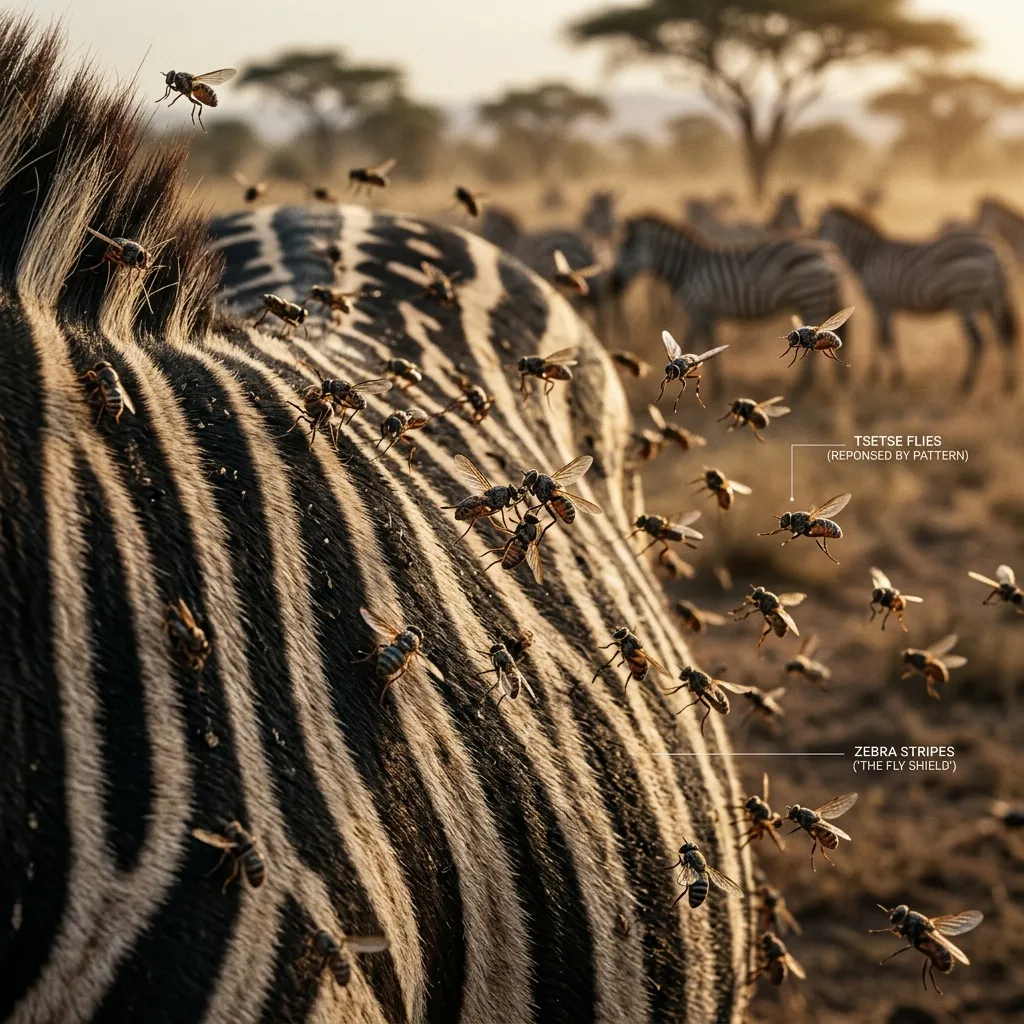
These biting flies are a nightmare on the African savannah. They carry deadly diseases (like sleeping sickness) and their bites are incredibly painful. A herd of horses can lose pints of blood to these swarms.
But zebras are barely bothered by them.
In 2014, scientists finally tested this. They dressed solid-colored horses in different coats:
- All Black
- All White
- Zebra Striped
They then watched the flies. The results were shocking. Flies would hover over the black and white horses and land easily. But when they approached the striped horse, they got confused. They would fly in fast, but at the last second, they wouldn't decelerate. They would often crash into the stripes or veer off in a panic. The flies simply could not land.
The Optical Illusion
Stripes act like a forcefield against insects. The leading theory is that the high-contrast stripes disrupt the "optic flow" of the fly's vision.
Flies have low-resolution eyes. To land, they need to see a stable surface growing larger. The black and white stripes create a "Dazzle" effect (similar to a barber pole illusion) that messes with the fly's motion detection. The fly thinks the surface is moving or that it's further away than it is. It causes a navigation error in the fly's tiny brain, and it aborts the landing.
A Fingerprint of Stripes
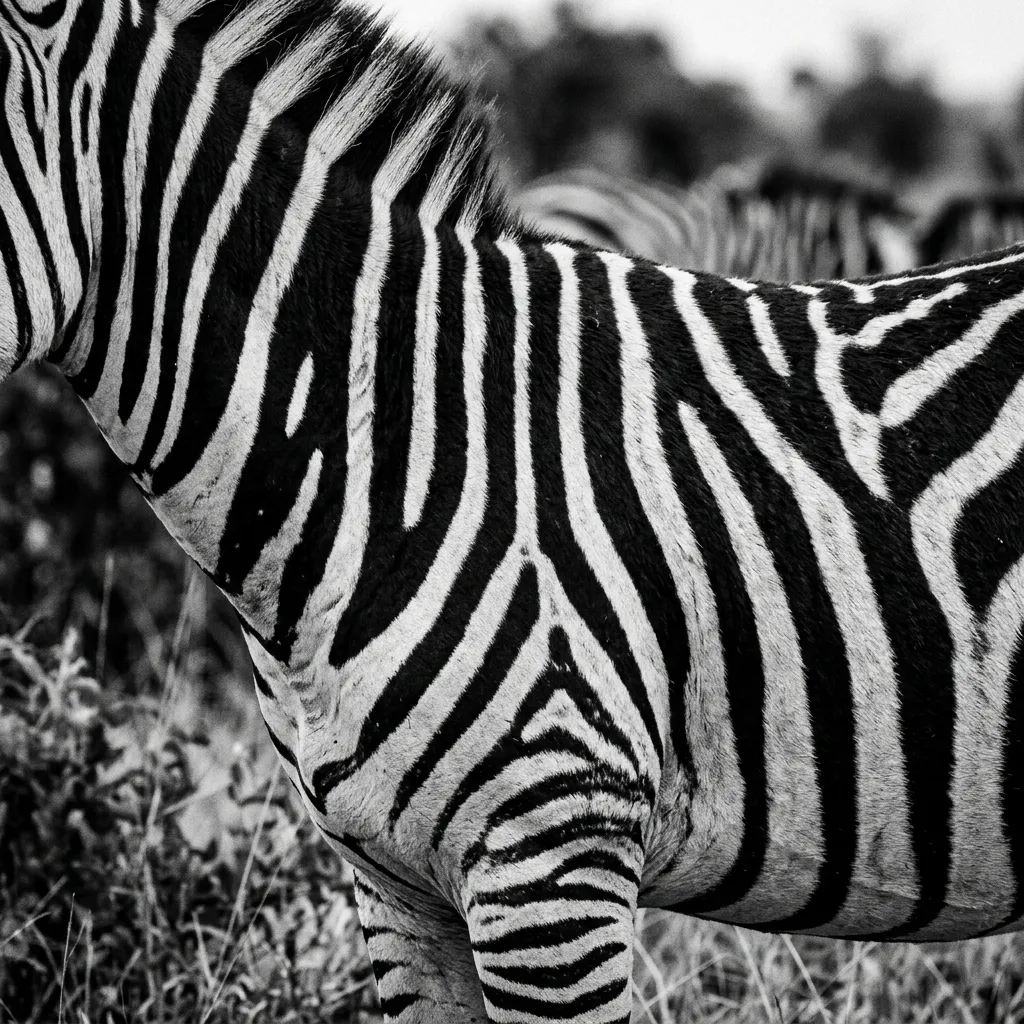
There is one other benefit to the stripes: Identity. Just like a human fingerprint, every zebra's stripe pattern is 100% unique. No two are the same. Mothers use the pattern to recognize their foals in a crowded herd. It is a barcode that says "This one is mine."
So, the zebra's suit is a multi-purpose marvel. It is a nametag for family, and an anti-missile defense system against the deadliest hunter on the plains: the fly.