
Why Does Ice Float?
The Big Idea
Explore the unique physics of water that allows ice to float. Discover how water molecules expand as they freeze, creating a less dense solid that protects life in frozen ponds and keeps icebergs adrift.
Key Vocabulary & Concepts
Hands-On Observation Checklist
Teacher & Parent Discussion Starters
- Why is understanding why does ice float? important in everyday real life?
- What variable or factor had the biggest impact when testing the simulation?
- How does this concept connect to another science topic you have learned about?
Why Does Ice Float?
The Weirdness of Water
Next time you put an ice cube in your drink, watch it. It bobs to the top. This seems normal to us, but to a chemist, it is bizarre.
In almost every other substance in the universe, the Solid form is heavier than the Liquid form.
- Solid iron sinks in molten iron.
- Solid rock sinks in lava.
- Solid butter sinks in melted butter.
When things get cold, molecules usually slow down and pack tighter together. Denser things sink. But water breaks the rule. When water freezes, it gets lighter. It expands. If water obeyed the normal laws of physics, ice would sink. And if ice sank, life on Earth would probably not exist.
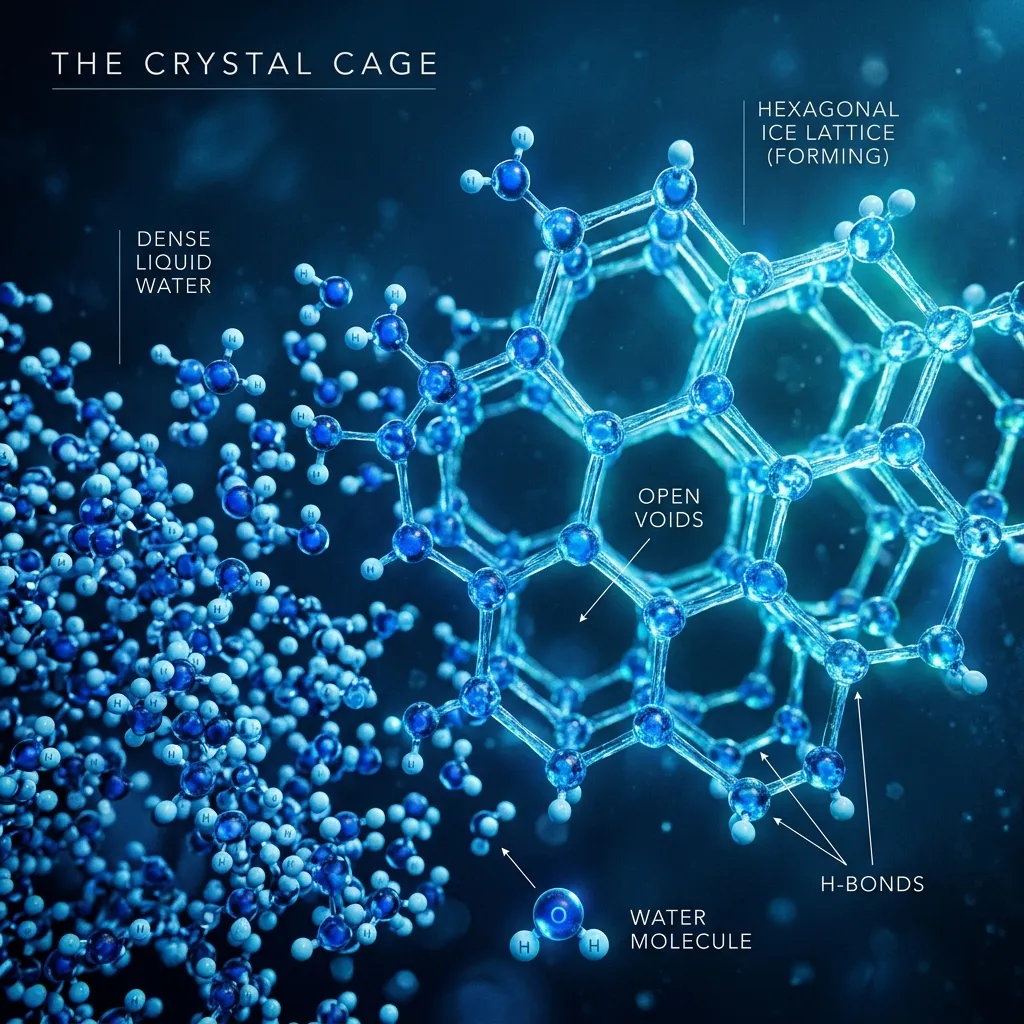
The Crystal Cage
The secret lies in the shape of the water molecule: H2O. It looks like Mickey Mouse. One big Oxygen head and two little Hydrogen ears.
In liquid water, these molecules are chaotic. They are sliding past each other, bumping around, and getting intimately close. They are a crowded dance floor.
But as the temperature drops to 0°C (32°F), the molecules have to stop dancing and hold hands. Because of the electrical charges (Positive Hydrogen, Negative Oxygen), they can only connect in a very specific pattern. They form a six-sided, hexagonal Crystal Lattice.
Here is the trick: This crystal shape requires personal space. To form the hexagon, the molecules have to push each other slightly apart. They engage at arm's length. This creates a structure with a lot of Empty Space in the middle of the ring.
This expansion makes ice 9% less dense than liquid water. It takes up more space for the same amount of matter. (This is why a soda can explodes in the freezer—the water expands as it turns to ice and rips the aluminum apart).
The Blanket Effect
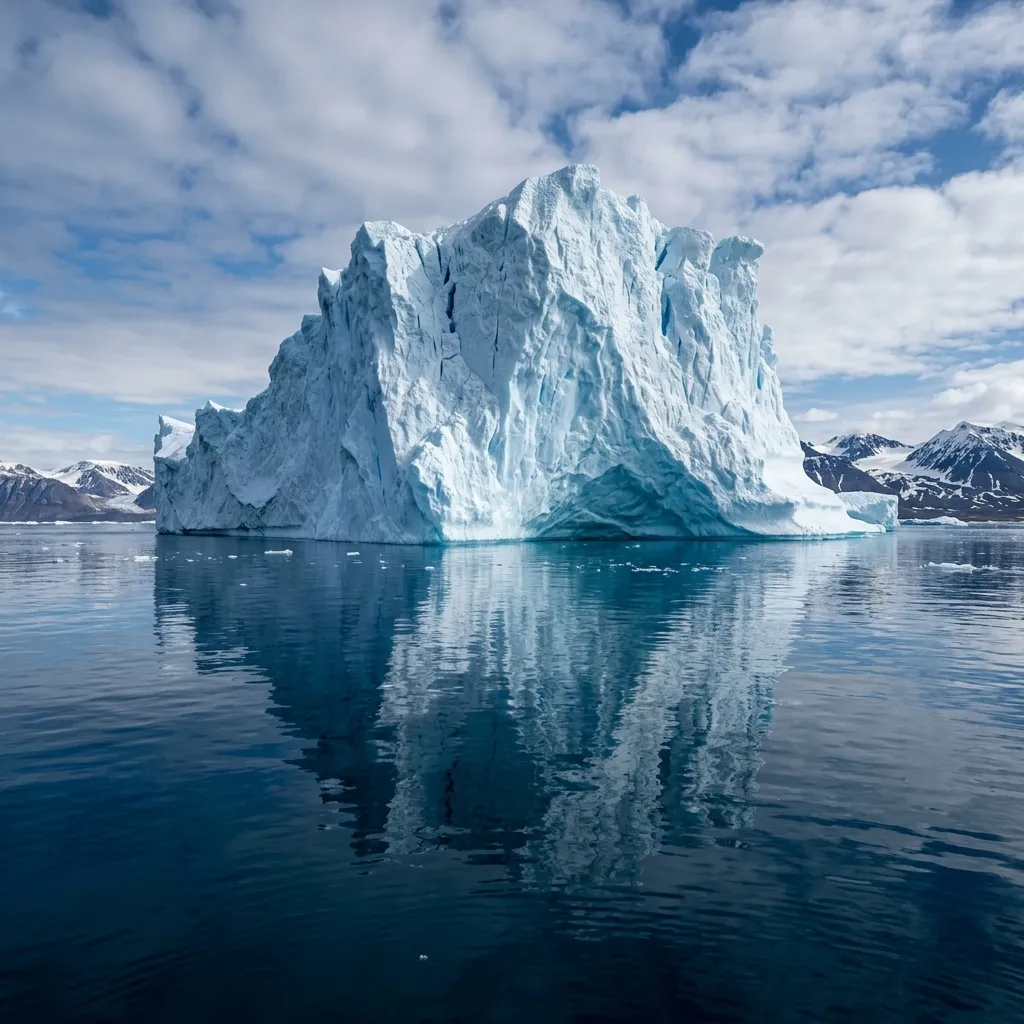
Because ice is lighter, it floats to the top of the lake. This is incredibly important for biology.
When winter comes, the ice forms a layer on the surface. This layer acts like a down blanket or styrofoam insulation. It separates the freezing cold air above from the liquid water below. Because the ice floats, the bottom of the lake stays liquid (and relatively warm, around 4°C). The fish can swim happily underneath the ceiling of ice.
If water were "normal"—if ice sank—it would fall to the bottom. The lake bottom would fill with ice. Then the next layer would freeze and sink. Eventually, the entire ocean and every lake would freeze solid from the bottom up. Fish would be frozen in blocks of ice. The ocean currents would stop. The planet would be a snowball.
So, water's strange ability to expand when it freezes is the only reason our oceans stay liquid and our fish stay alive.