
Why Does Iron Rust?
The Big Idea
Uncover the slow, silent chemical fire that eats away at bridges and cars. Learn how iron reacts with oxygen and water to create brittle rust, a process that even turns the surface of Mars red.
Key Vocabulary & Concepts
Hands-On Observation Checklist
Teacher & Parent Discussion Starters
- Why is understanding why does iron rust? important in everyday real life?
- What variable or factor had the biggest impact when testing the simulation?
- How does this concept connect to another science topic you have learned about?
Why Does Iron Rust?
The Red Cancer
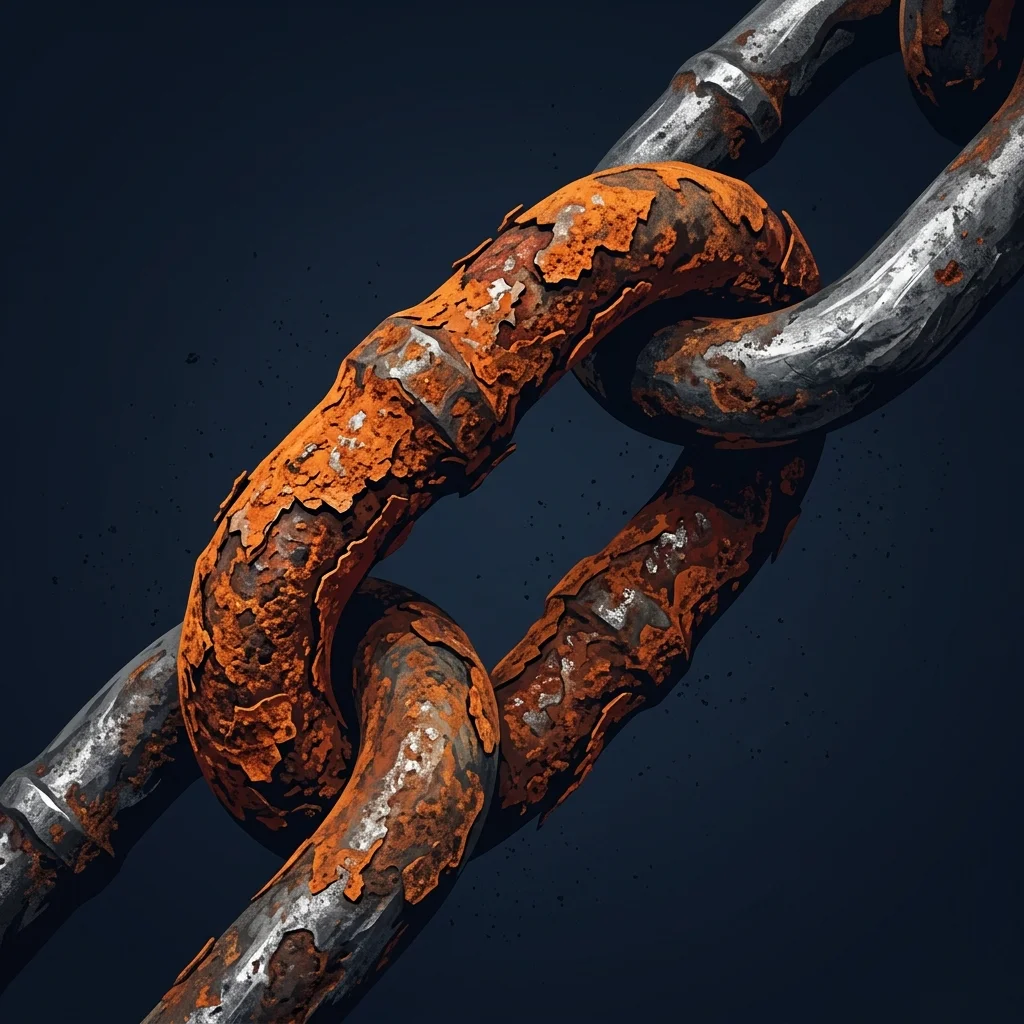
Leave a shiny, brand-new bicycle out in the rain for a month, and you will watch it slowly succumb to a disease. The brilliant silver metal will turn dull. Patches of flaky, orange-red crust will blister on the surface. Given enough years, the solid metal frame will completely crumble into orange dust in your hands.
We call this Rust. It is the absolute nemesis of every car, skyscraper, and suspension bridge in the world. But biologically and chemically speaking, rust is something much simpler: It is the metal trying to return to its natural state in the earth.
A breathtaking macro photograph of a thick iron chain slowly decaying into orange rust
The Oxygen Thief
Pure Iron is incredibly strong, but chemically, it is lonely and unstable. It desperately wants to bond with something else. Oxygen is the neighborhood thief. It floats in the air, constantly looking to steal electrons from other elements.
When Iron meets Oxygen, they fall in chemical love. But they need a matchmaker to get the reaction started: Water.
Water acts as an invisible bridge (an electrolyte) that allows electrons to freely flow. Once water is present, the Oxygen aggressively steals electrons from the Iron. The Iron atoms break down and bond with the Oxygen to form a completely new reddish powder: Iron Oxide (Fe2O3).
This powder isn't strong like metal. It is brittle and weak. Worse, it takes up more physical space than the iron did, so it puffs up, blisters, and flakes off. This flaking exposes fresh, shiny metal underneath, allowing the oxygen to eat deeper and deeper until the entire beam is destroyed.
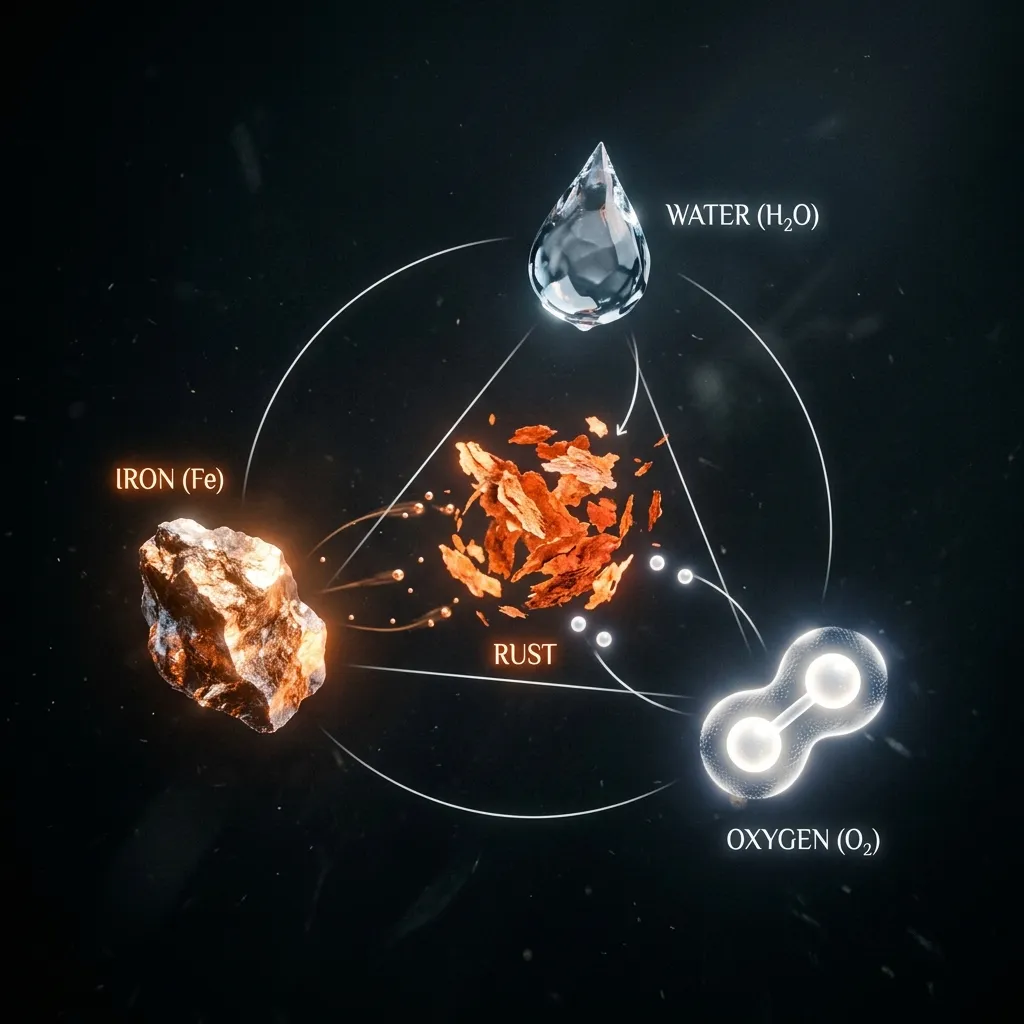 A cinematic visualization of the Rust Triangle: Iron, Water, and Oxygen
The Slow Fire
Here is the most mind-blowing fact about this process: Rusting is actually Burning.
Chemically speaking, the decay of your bicycle is the exact same reaction as a massive log burning in a roaring fireplace.
- Fire: Rapid Oxidation. (Wood + Oxygen = Huge Heat + Ash).
- Rust: Slow Oxidation. (Iron + Oxygen = Tiny Heat + Rust).
Rusting actually releases heat! But it happens so incredibly slowly that the heat dissipates before you can ever feel it. If you could speed up time by a thousand times, a rusting car sitting in a field would actually look like it was burning with a slow, cold, orange flame.
The Red Planet
You have actually seen rust on a massive, planetary scale. Look up at the night sky at Mars. Why is the famous "Red Planet" so incredibly red?
Because it is completely covered in rust. Billions of years ago, the raw iron in Mars's soil reacted with the oxygen in its atmosphere (and likely ancient, flowing water). The entire surface of the planet literally rusted. When you look at Mars glowing red in the darkness of space, you are looking at a giant ball of old, rusty dust.
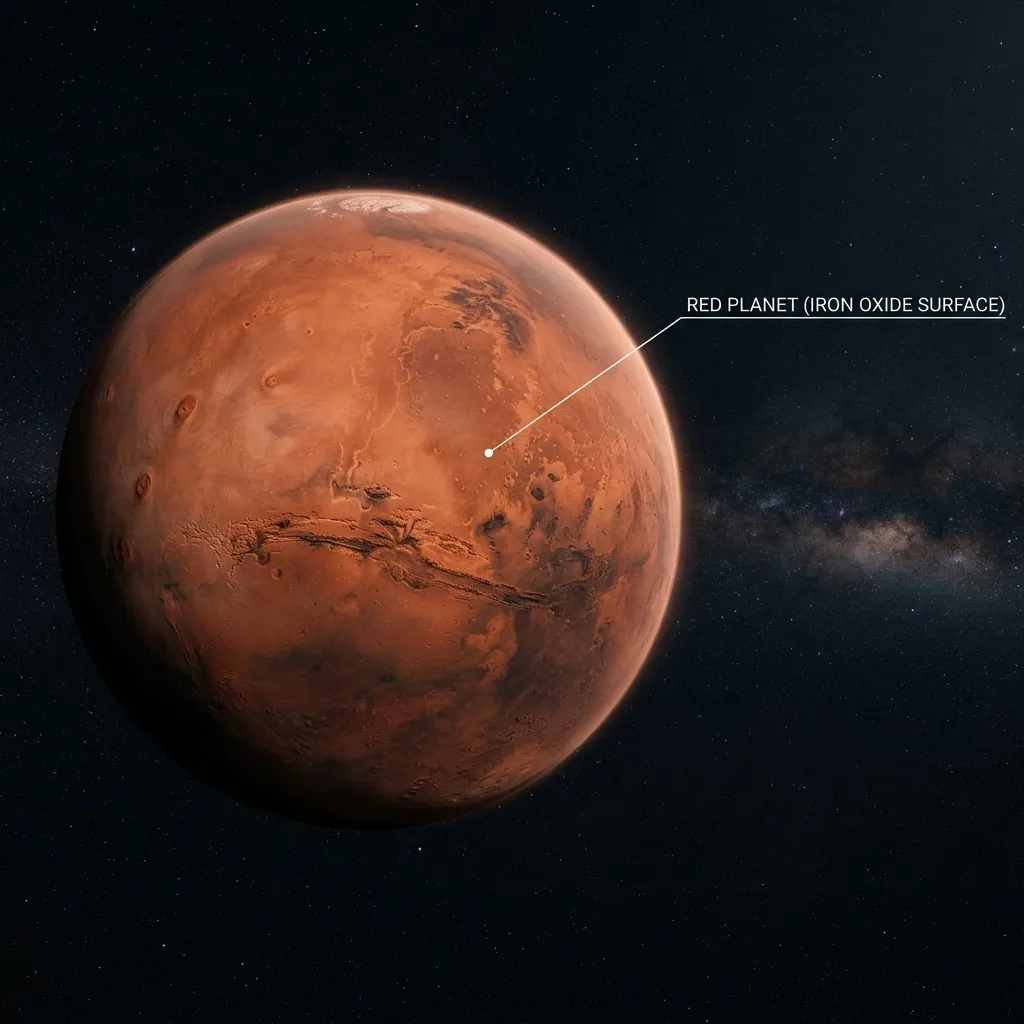 A cinematic visualization of the planet Mars covered in red iron oxide dust