
Why Does Our Stomach Growl?
The Big Idea
Discover the noisy biological plumbing happening inside your digestive system. Learn why your stomach 'talks' when you're hungry, and how gas and fluid moving through your intestines create those iconic rumbling sounds.
Key Vocabulary & Concepts

Hands-On Observation Checklist
Teacher & Parent Discussion Starters
- Why is understanding why does our stomach growl? important in everyday real life?
- What variable or factor had the biggest impact when testing the simulation?
- How does this concept connect to another science topic you have learned about?
Why Does Our Stomach Growl?
Discover the noisy biological plumbing happening inside your digestive system. Learn why your stomach 'talks' when you're hungry, and how gas and fluid moving through your intestines create those iconic rumbling sounds.
Why Does Our Stomach Growl?
The Rumbling Pipes
We have all experienced the deep rumbling embarrassment of a loud stomach growl inside a quiet classroom. Your digestive tract is a massive biological pipeline constantly working to absorb nutrients. A medical doctor playfully calls this growling 'borborygmi'.
Unlike the popular myths, the growling noise has nothing to inherently do with your physical stomach actually being empty or starving for food. It happens constantly all day long!
Echoing Gas Bubbles
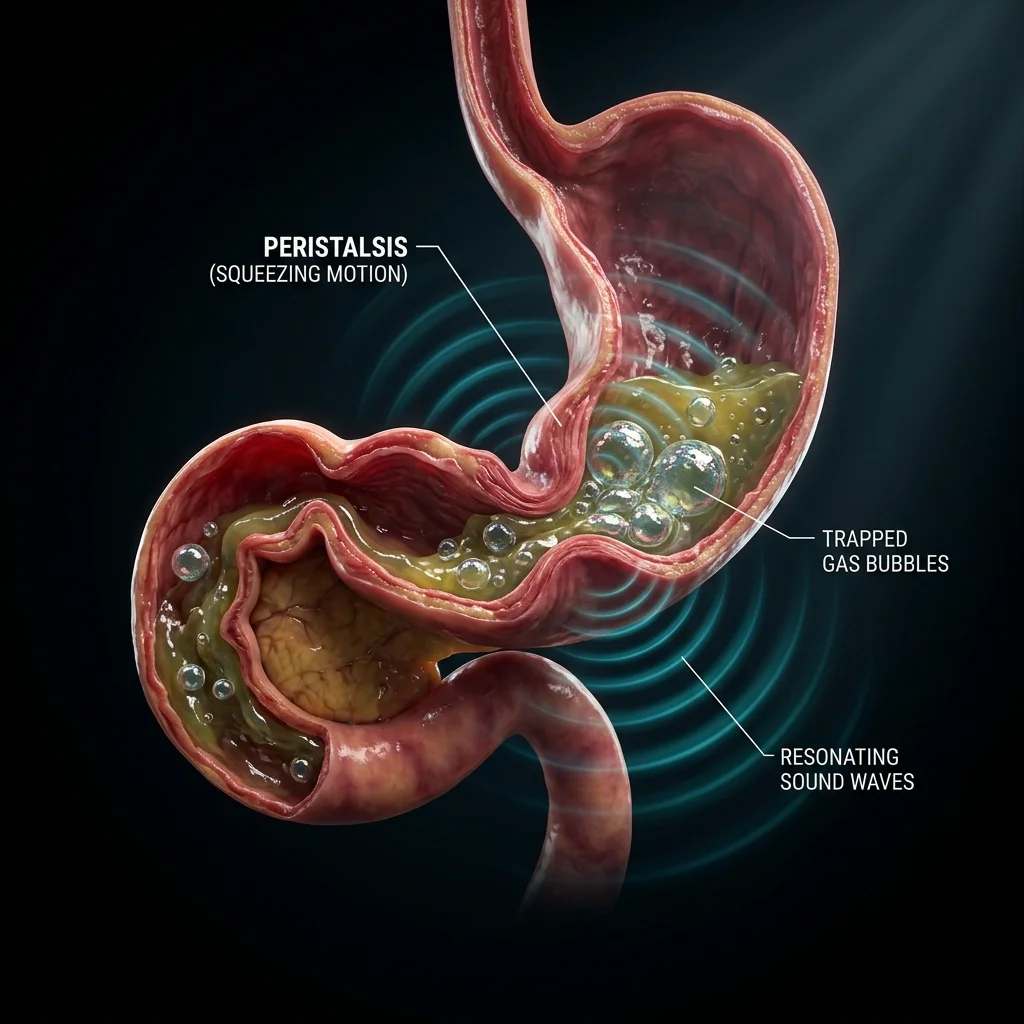
When the muscular walls of your intestines rhythmically squeeze digested food, trap gas bubbles, and push liquid downward, it acts like a massive hydraulic pump. This squeezing motion is called peristalsis.
The trapped gas bubbles violently pop and echo loudly through the hollow tubes of your intestines, creating a deep loud growl. These noises are strictly always happening while you digest food. However, when your stomach is full, the heavy, dense solid food acts like acoustic foam, effectively absorbing and muffling the loud sound! When your stomach is empty, the tubes are hollow, allowing the gas bubbles to echo loudly for everyone to hear.