Why Does Swiss Cheese Have Holes?
The Big Idea
Explore the microscopic world of cheesemaking. Discover how helpful bacteria blow bubbles of carbon dioxide to create the iconic 'eyes' in Swiss cheese, and why some modern cheeses are losing their holes.
Key Vocabulary & Concepts
Hands-On Observation Checklist
Teacher & Parent Discussion Starters
- Why is understanding why does swiss cheese have holes? important in everyday real life?
- What variable or factor had the biggest impact when testing the simulation?
- How does this concept connect to another science topic you have learned about?
Why Does Swiss Cheese Have Holes?
The Secret Bacteria
Swiss cheese is universally recognizable across the entire globe entirely because of its iconic large, round holes. While classic children's cartoons heavily imply that tiny, hungry mice actively chew these perfect holes into the massive cheese blocks during the night, the real culinary science relies on microscopic biology and living chemistry.
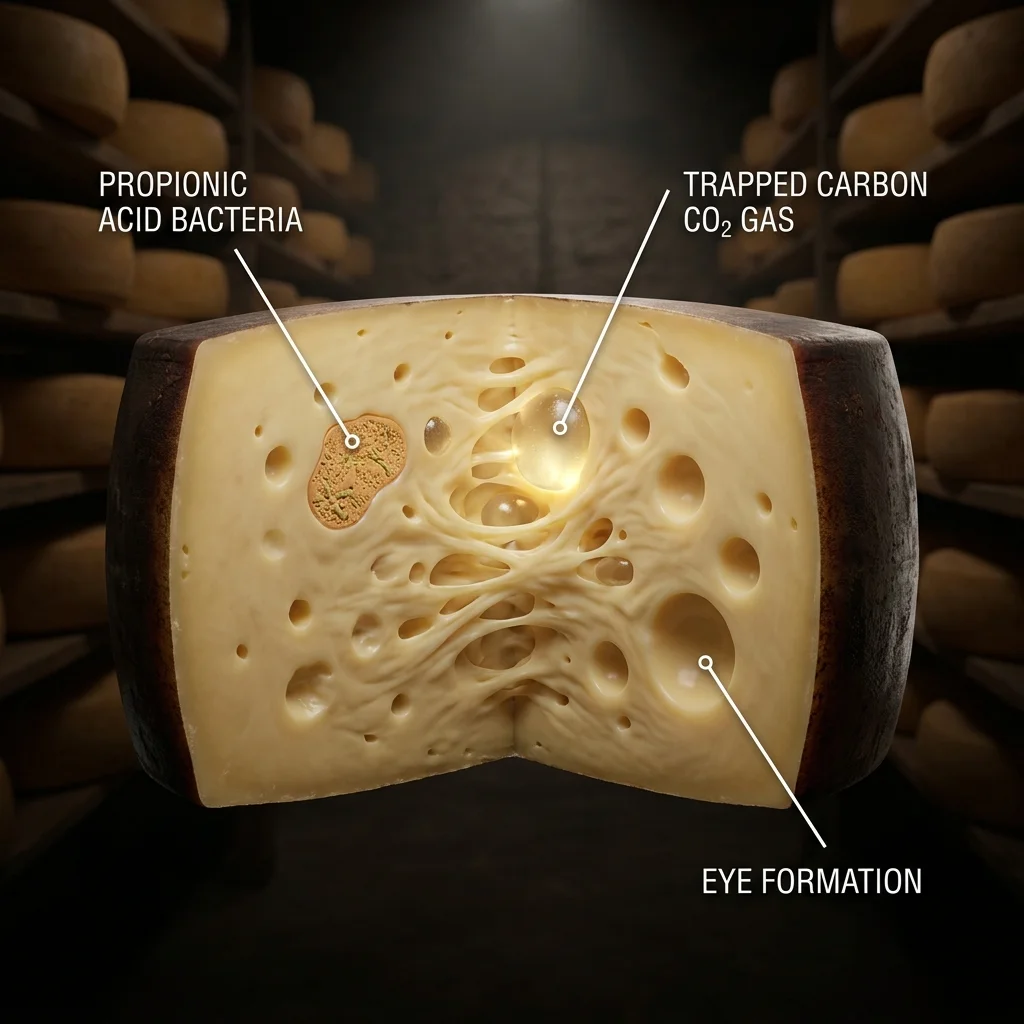
When professional cheesemakers begin rapidly crafting a massive batch of Swiss cheese, they physically inject highly specialized, completely harmless living microscopic bacteria specifically called Propionibacterium freudenreichii directly into the warm, liquid curds along with the milk.
The Trapped Gas Bubbles
As the massive, heavy wheel of freshly made cheese sits quietly on a wooden shelf inside a dark, carefully temperature-controlled aging room tightly wrapped together, these microscopic bacteria eagerly begin powerfully digesting the heavy lactic acid enclosed deep inside the forming cheese block.
As they actively and happily consume the lactic acid, they naturally generate and aggressively release a massive, steady stream of completely invisible carbon dioxide gas as a direct chemical byproduct. Because the outer crust of the heavy cheese wheel is highly dense and completely solid, this newly generated gas is totally trapped and has literally nowhere to effectively escape.
So, the pure gas forcefully pushes the warm, highly elastic inner cheese completely apart, securely creating numerous tiny physical gas bubbles directly inside the cheese wheel.
The "Eyes" of the Cheese
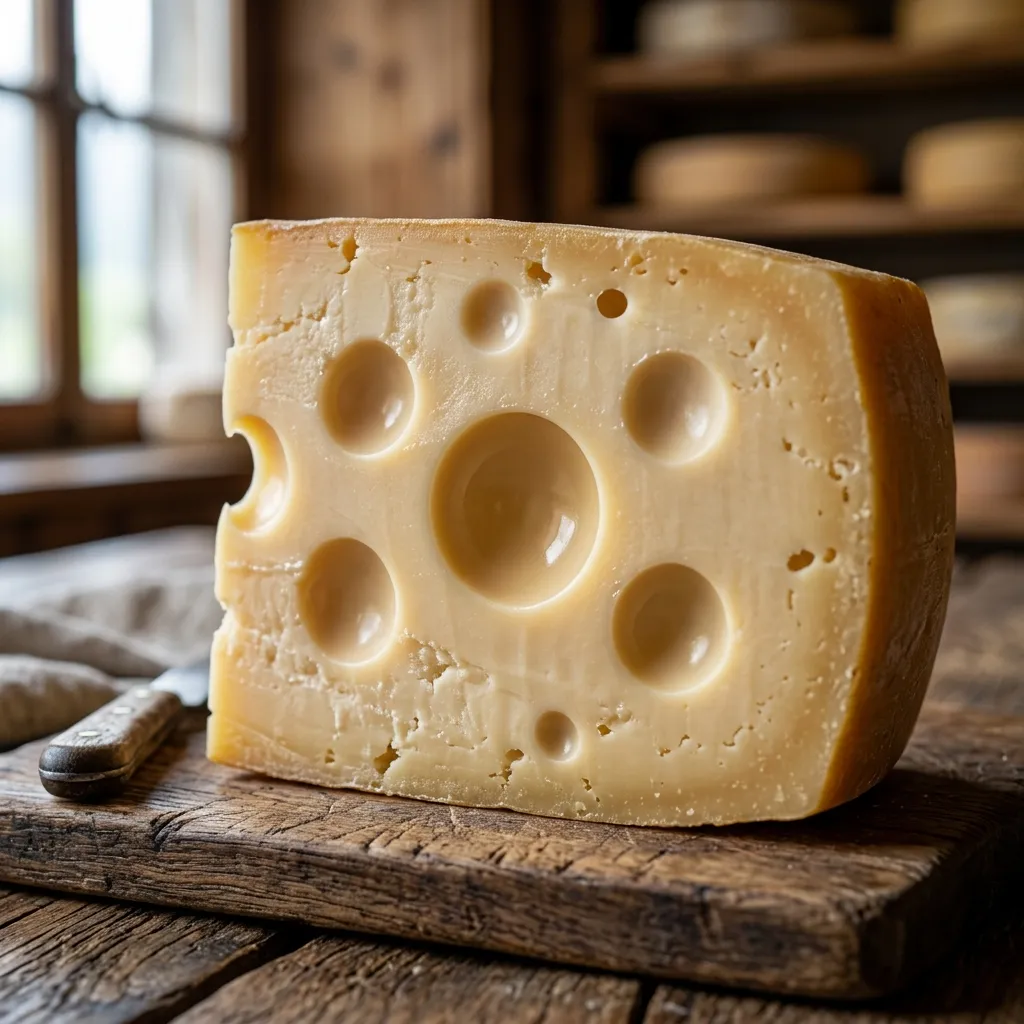
Because the cheese is completely soft and flexible during the long aging process, the bubbles naturally form perfect, smooth spheres. When the massive cheese wheel finally completely hardens and you ultimately slice exactly deeply straight into the block, those beautiful trapped gas bubbles are elegantly revealed as empty circular voids.
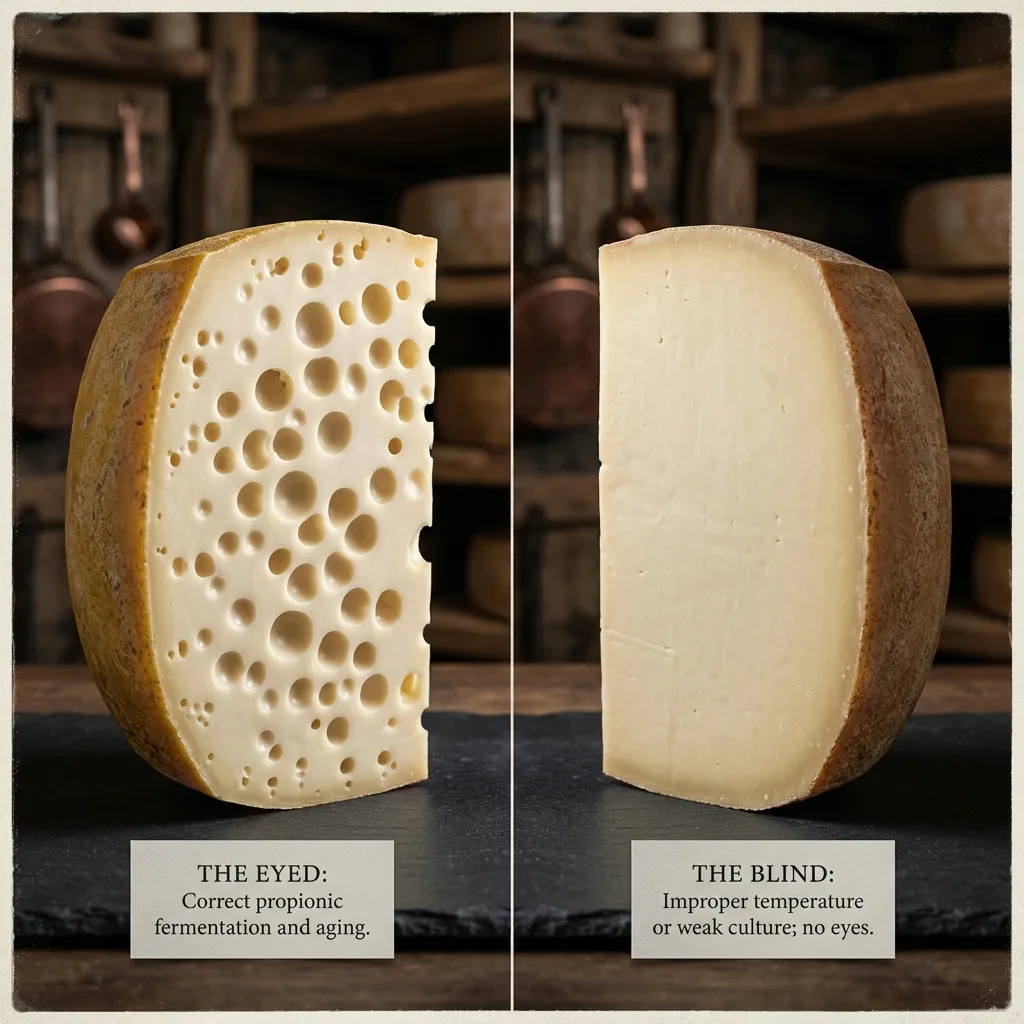
In the professional cheesemaking world, perfectly formed holes are not referred to as simple holes or bubbles; they are officially proudly called "eyes." A massive block of Swiss cheese that accidentally completely fails to properly form these bubbles due to incorrect aging temperatures is technically referred to in the dairy industry as a "blind" cheese block!