
Why Is The Moon Up During The Day?
The Big Idea
Solve the mystery of the daytime moon. Discover how the Moon’s orbit and brightness allow it to remain visible even when the Sun is shining, and why we only see it at certain times of the month.
Key Vocabulary & Concepts
Hands-On Observation Checklist
Teacher & Parent Discussion Starters
- Why is understanding why is the moon up during the day? important in everyday real life?
- What variable or factor had the biggest impact when testing the simulation?
- How does this concept connect to another science topic you have learned about?
Why Is The Moon Up During The Day?
The Ghost in the Blue Sky
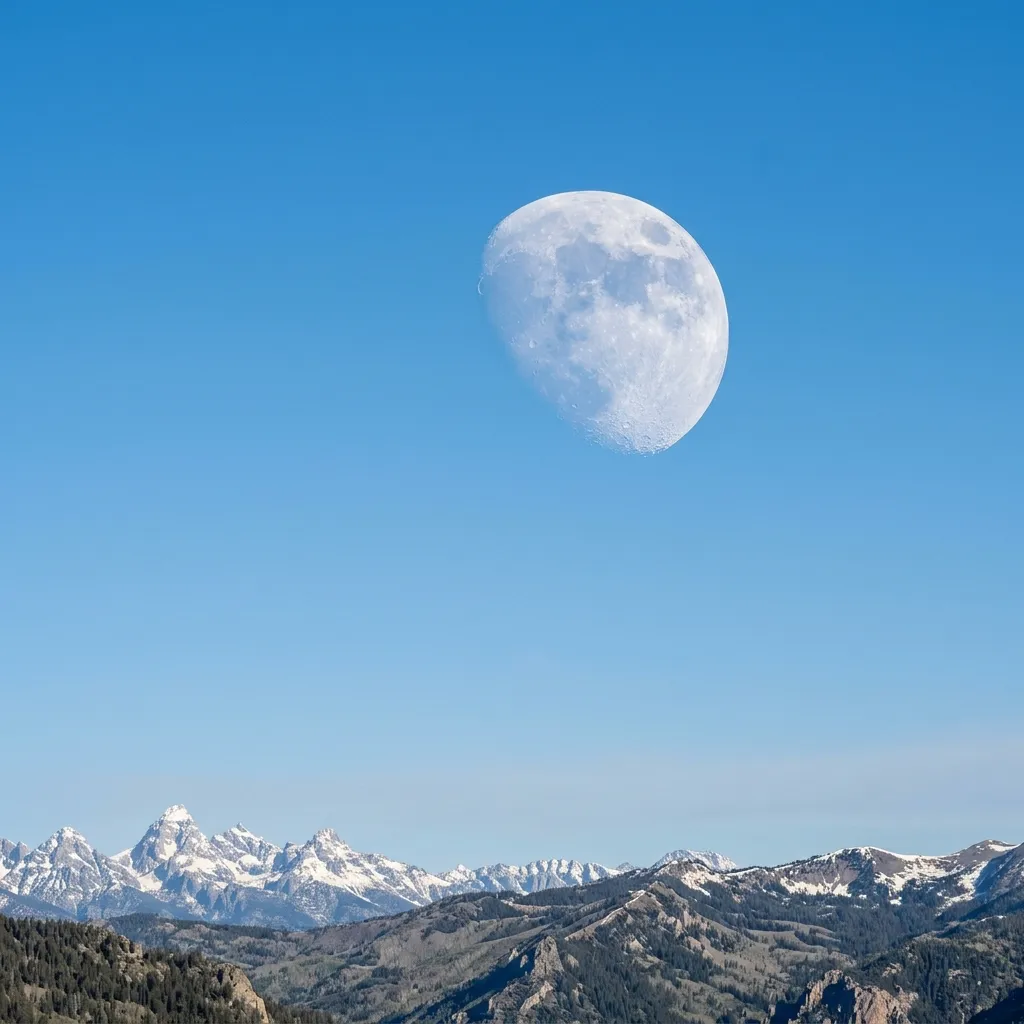
You are walking to school or work at 10:00 AM. The sun is shining, the sky is bright blue. You look up, and there it is: a pale, ghostly white half-circle hanging in the sky.
It feels like a glitch in the matrix. We are taught that the Sun belongs to the Day and the Moon belongs to the Night. Seeing them share the sky feels wrong, like seeing a teacher at the grocery store.
But the Moon doesn't follow our work schedule. It doesn't clock out when the sun comes up.
The Geometry of the Dance
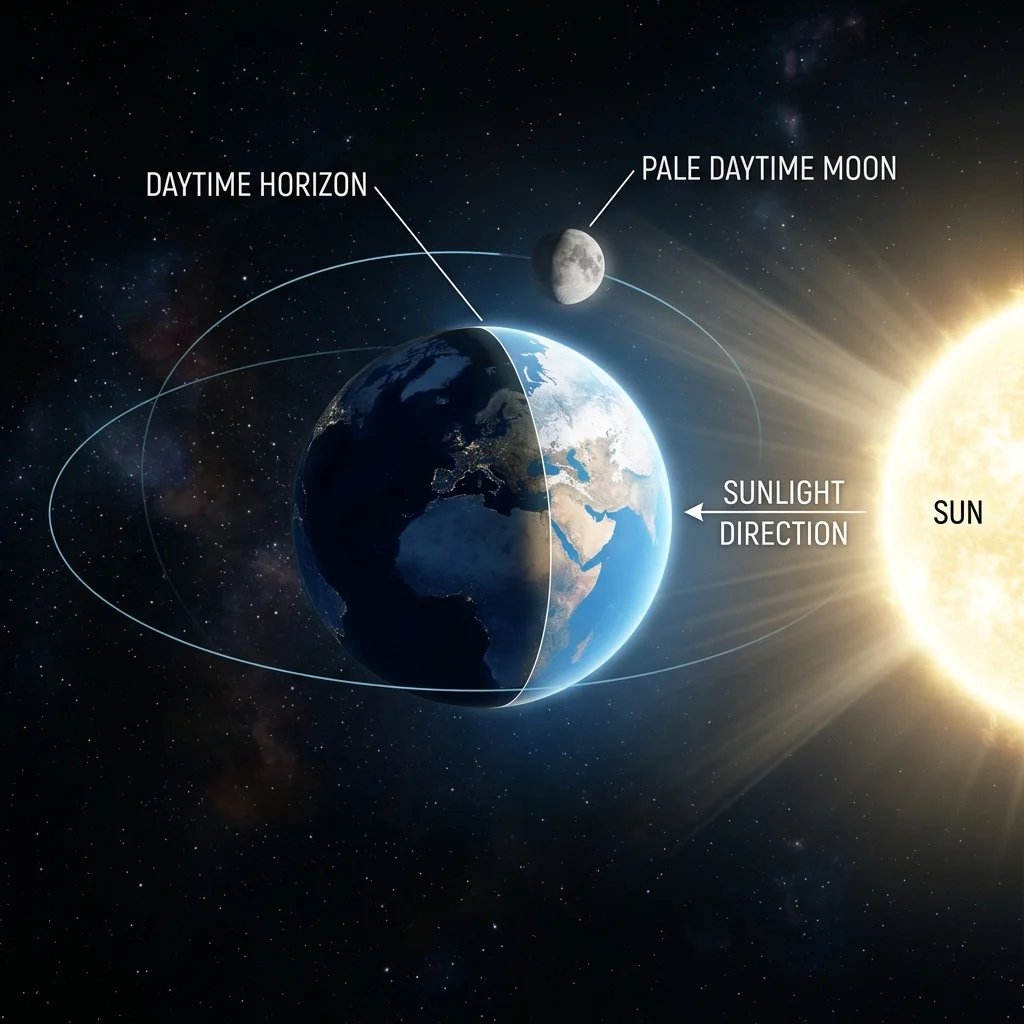
The Moon is a rock that is always orbiting Earth. It takes about 27 days to do a full lap. Because it is always moving around us, it spends roughly half its time (12 hours) above the horizon and half its time (12 hours) below the horizon.
This means that, on average, the Moon is actually in the sky during the daytime for about 6 hours every single day!
So why don't we notice it more often? Two reasons: Phase and Brightness.
1. The Phase Game
The Moon's position relative to the Sun determines when we see it.
- The Full Moon: This is the only time the Moon acts like a "night owl." During a full moon, the Moon is exactly opposite the Sun.
- Sun goes Down -> Moon comes Up.
- Sun comes Up -> Moon goes Down.
- They are on a seesaw. If the Sun is out, the Full Moon is hiding.
- The New Moon: The Moon is near the Sun. They rise and set together. But we can't see it because the Sun glares it out (and the shadowed side faces us).
- The Quarter Moons: This is prime daytime viewing. At First Quarter or Last Quarter, the Moon is 90 degrees away from the Sun. It might rise at noon and set at midnight. This means it spends half the day hanging out in the blue sky.
2. The Battle for Brightness
The Sun is a bully. Its light hits our atmosphere and scatters, turning the sky a bright, opaque blue. This blue glare washes out everything else—stars, planets, and galaxies.
The stars are still there during the day; you just can't see them against the blue wall.
But the Moon is different. Because it is so close to Earth and made of reflective grey rock, it is incredibly bright. It reflects enough sunlight to punch through the blue atmosphere. It is roughly 100,000 times brighter than the brightest star.
So, when the geometry is right (during the quarter phases) and the brightness is enough, the Moon happily shares the stage with the Sun. It is a reminder that the universe keeps spinning, regardless of whether we are awake or asleep.